
The U.S. Catholic Church Today
A Quick Look at its Size and Charities.

| The U.S. has some 20,000 parishes, and each individual church depends on its members' weekly donations, the major source of funding. Congregations are growing larger, averaging 3,000 members, even as the number of priests is falling, straining resources. At the same time, the ranks of U.S. Catholics are increasing with the arrival of new immigrants. |
 The
Church is the largest operator of private schools in the U.S., with over 2.6
million students enrolled in its 6,900 elementary schools and some 1,200
high schools, costing roughly $10 billion a year. Most of the elementary
schools are attached to local parishes, while high schools are often run by
a Catholic religious order, such as the Jesuits or Christian Brothers.
Although tuition has been rising sharply, schools still receive large
subsidies from the Church. There are 230 Catholic colleges and universities with a combined total of 670,000 students. Most colleges are sponsored by a religious congregation, like the Jesuits, who have 28 colleges (including Georgetown, Boston College, and Holy Cross). |
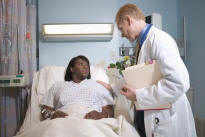 Catholic
ministries have played a major role in the history of American health care,
with orders of nuns establishing and running many early hospitals. Four of
the 10 largest U.S. healthcare systems in 2010 as ranked by revenue were
Catholic, according to Modern Healthcare, a trade publication. There are now
629 Catholic hospitals and 56 Catholic hospital systems, according to the
Catholic Health Association. The nonprofit Catholic health-care system,
accounting for 17% of all U.S. hospital admissions. The Church also runs 122
home health-care agencies and nearly 700 other service providers, including
assisted living, adult day care, and senior housing. The hospitals alone
have annual expenses of $65 billion and account for 5% of U.S. health-care
spending. |
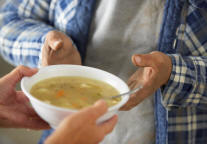 The
Catholic Church is the largest charitable organization on the planet,
bringing relief and comfort to those in need. One example of this is
"Catholic Charities USA" which consists of 1,400 agencies that run soup
kitchens, temporary shelters, child care, and refugee resettlement. In terms of charitable dollars spent, if we add Just Catholic Charities, Food for the Poor, Catholic Relief Services, St. Jude's, and America's Second Harvest the total is a staggering $5,570,000,000 spent on charitable works by the Catholic Church in the U.S. alone. If we add the thousands of other Catholic U.S. charities, for example:
The total amount of dollars spent on charitable works by the Catholic Church goes a lot higher. |