
How Did the Early Christians depict the Cross in their art work?
" But God forbid that I should glory, save in the cross of our Lord Jesus Christ, by whom the world is crucified unto me, and I unto the world." [Galatians 6:14 (King James Version)]
EZCODE CENTER START
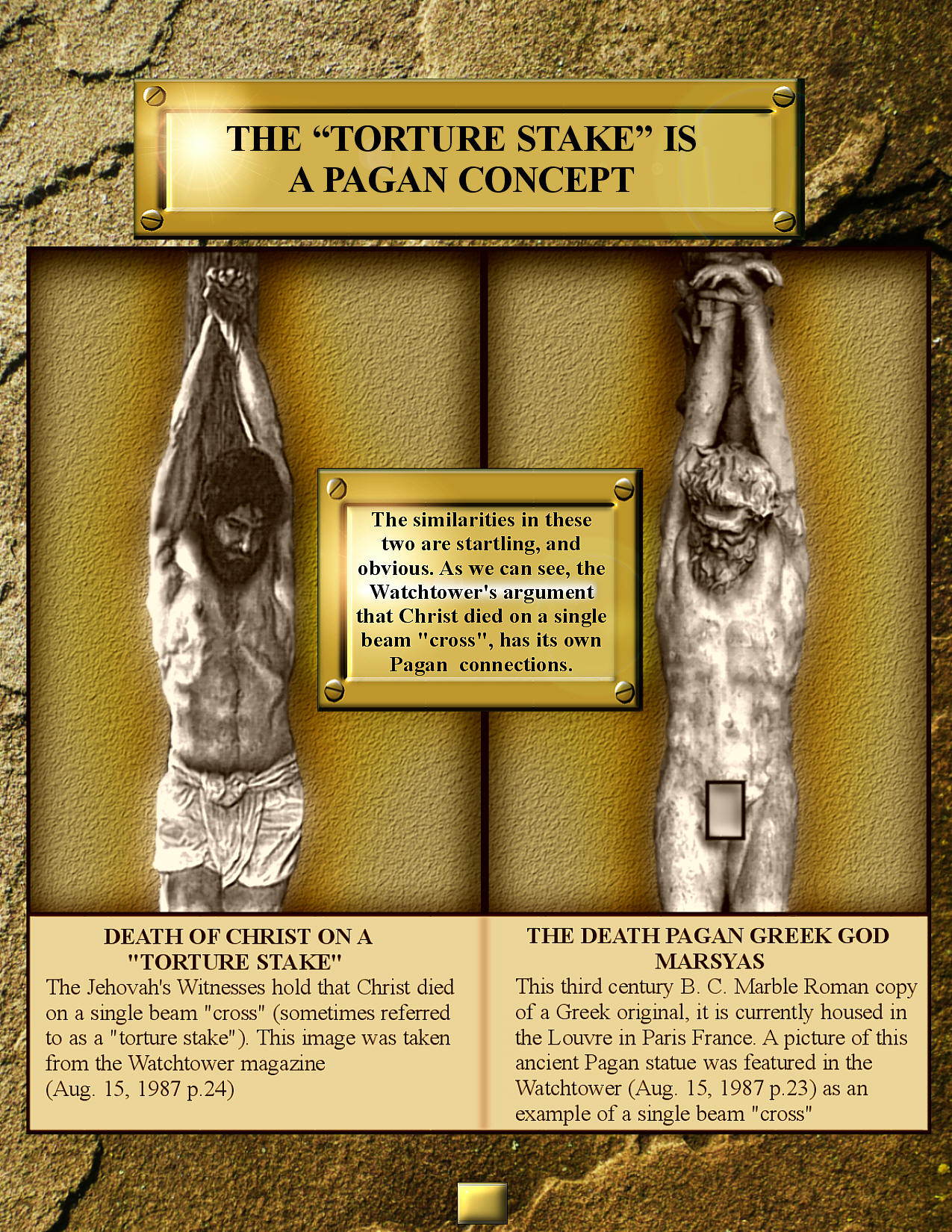
The ancient art work of the early Christians shows exactly how they understood the form of Christ's cross to be. even before the last book of the New Testament was written, before death of the last apostle, we find examples of Christian art work depicting the cross as we know it (with a crossbar or patibulum). It should be noted that there are no examples of ancient Christian art work depicting a Christ on "torture stake", or anything similar to in.
The testimony of the early Christian's (through their art) is clear. They understood the meaning of the Greek word "Stauros", they understood the Roman method of crucifixion, and they depicted their art work accordingly.
|
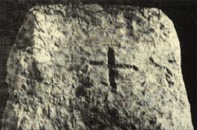
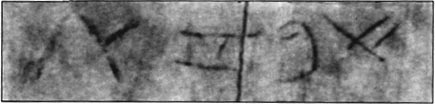
To the right is the inscription from one of the first-century ossuary (A small limestone burial boxes containing human bones) found on the Mt. of Olives, it is inscribed with crosses and the unique name "Shappira". |
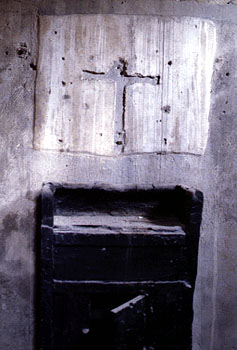 In
1939 excavations at Herculaneum, the sister city of Pompeii (destroyed in 78
A.D. by volcano) produced a example of Christian house from that time period. In
a primitive Christian oratory in the upper room of the so-called ‘House of
Bicentenary’, a whitish stuccoed panel shows the imprint of a large cross,
probably metallic, Before it are the remains of a small wooden altar, charred by
lava from the eruption of Mt. Vesuvius in 79 A.D. |
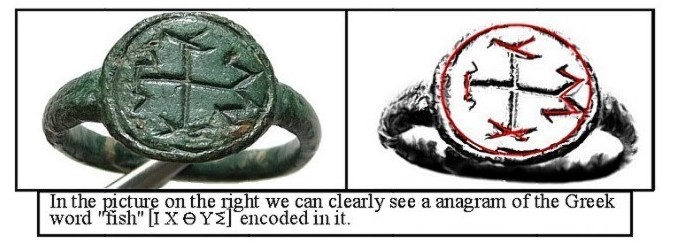 This
ancient Bronze Ring is Circa 100 AD and was Discovered in the Roman
Province of Judea (Jerusalem In the region now known as Israel). The
ring has a unique cross engraved on the bezel. Each terminator the hand
engraved cross depicts a different letter for the word fish. The Greek
word "fish" was used by early Christian as a acrostic for "Jesus Christ,
God's Son, Savior." The word fish would not be an obvious Christian
symbol to persecutors. This ring is in the webmasters personal
collection. |
|
|
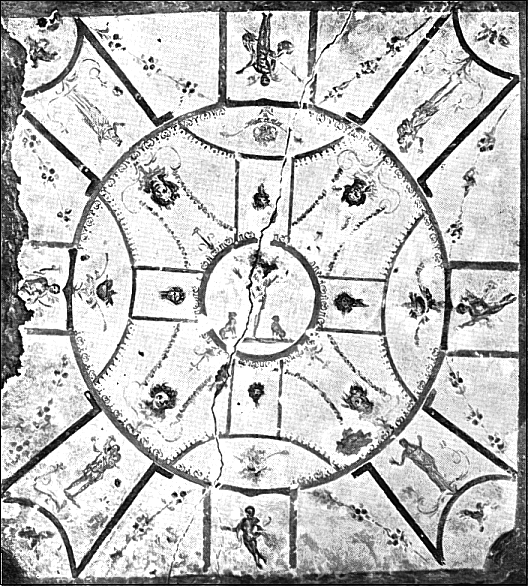
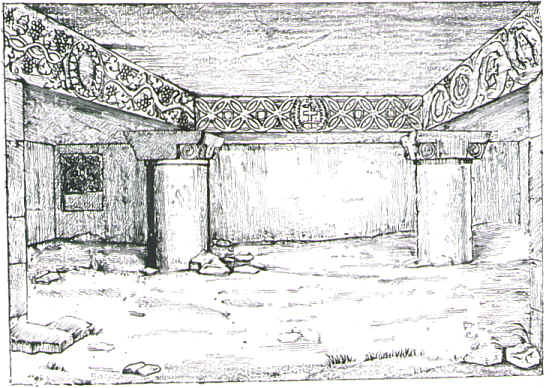 To the left is a drawing of a Fresco found in a early Christian
crypt, we can
clearly see cross, and grape vines decorating the ceiling, it dates from around
200 A.D.
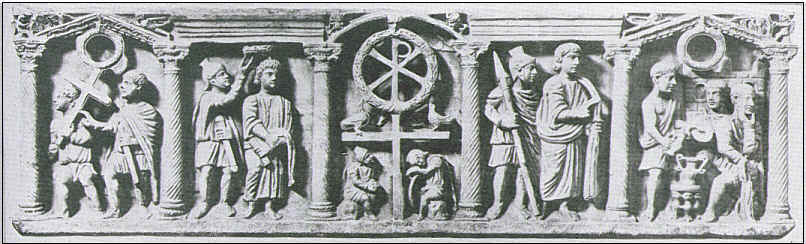 To
the left is a engraving depicting the cross is from a Early Christian
Sarcophagus dating from about 270. A.D.
 To
the left are two engravings depicting the cross, they are from early Christian
Sarcophaguses dating from the 350 A.D.
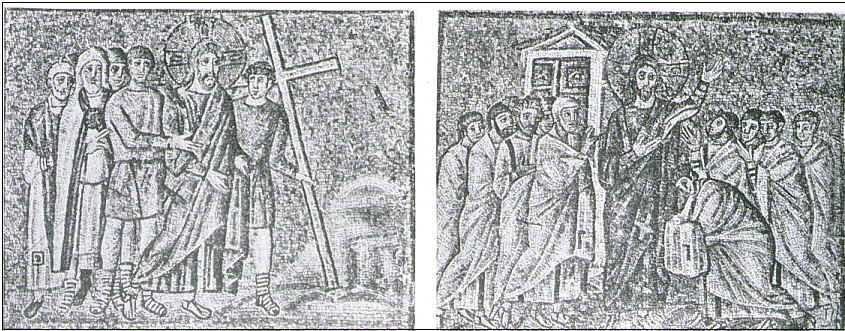 To
the left are two early Christian mosaics is a image
depicting the Christ and the cross from around 500 A.D.
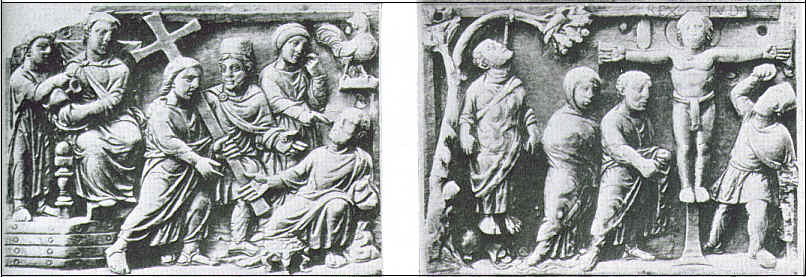 To
the left are two engravings is a image depicting the cross found
on a ivory box in the British Museum, it dates from around 650 A.D.
Please sign our Guest book!
This page has helped
People find the truth since November 1999