
Scholarly reference Showing Immersion is not the only Meaning of "Baptizo"
The citations bellow are taken from some of the most scholarly and respected Greek Lexicons, Greek Dictionaries, New Testament word studies, Bible Dictionaries, Bible Encyclopedias.
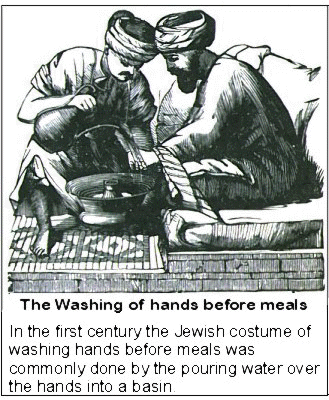
"Baptizo which means, etymologically, to immerse, this does not prove that immersion was the mode always practiced, nor that it is necessary. In fact, instances occur where the word plainly does not mean immerse (e.g., Luke 11: 38, in AV, RSV, wash). The Scriptures nowhere describe, much less prescribe, the mode. In the postapostolic times both immersion and affusion were used." (The New Westminster Dictionary of the Bible, Edited by Henry Snyder Gehman, p. 92)
"The rite is nowhere described in detail. Immersion was commonly used (Mark 1:9; Acts 8:38). The outdoor environment facilitated this. It is implied in Rom. 6:4; Col. 2:12 as a picturesque symbol, if not as the essential method; but immersion was hardly possible in the prison at Philippi (Acts 16:33) or in the house of Cornelius (Acts 10:48)." (Harper’s Bible Dictionary, General Editor Paul J. Achtemeier, 1971, P. 60)
"While there is widespread agreement that baptizein in classical Greek means "to immerse," because baptizein has become a technical theological term in the NT it is maintained that the classical and secular usage cannot by itself be normative. The term diatheke, for example, universally means "testament" in the Greek of the NT period, but it cannot be given that meaning in its NT usage. That in its biblical and theological use baptizein has come to mean simply "to wash" or "to purify with water" is indicated by certain occurrences of the term in the LXX and NT where baptizein cannot mean immerse (Sir. 34:25; Luke 11:38; Acts 1:5; 2:3_4, 17; 1 Cor. 10:1_2; Heb. 9:10_23). The last text in particular is a reminder that the purificatory water rites of the OT, the biblical antecedents of baptism, were never immersions. It is further maintained that it is at least implausible that certain baptisms recorded in the NT were immersions (Acts 2:41; 10:47_48; 16:33). Nor, it is contended, can appeal be made to the use of the prepositions "in" and "into" which are ambiguous and, if pressed, in Acts 8:38 would require the immersion of both subject and minister. " (Elwell’s Evangelical Dictionary, from CD ROM)
"Baptizo which means, etymologically, to immerse, this does not prove that immersion was the mode always practiced, nor that it is necessary. In fact, instances occur where the word plainly does not mean immerse (e.g., Luke 11: 38, in AV, RSV, wash). The Scriptures nowhere describe, much less prescribe, the mode. In the postapostolic times both immersion and affusion were used." (The Bible Dictionary, By Baker Book House, Copyright 1954, Page 83)
"The argument that Gk. baptizo means immersion assumes that a given word can have only one meaning as if use of the term ‘the Lord's Supper’ today must necessarily mean an ample meal served only in the evening. If the word for baptism can mean nothing except immersion, the references from Peter and Paul make no sense, since neither in the great Deluge nor in the escape through the sea were people covered with water. Certainly the use of the word in Luke 11:38 does not imply a full bath." (Eerdmans Dictionary of the Bible, Edited by David Noel Freedman, 2000, P.148)
"The words "baptize" and "baptism" are simply Greek words transferred into English. . .(2.) to put an element or liquid over or on it. Nothing therefore as to the mode of baptism can be concluded from the mere word used. The word has a wide latitude of meaning, not only in the New Testament, but also in the LXX. Version of the Old Testament, where it is used of the ablutions and baptisms required by the Mosaic law. These were effected by immersion, and by affusion and sprinkling; and the same word, "washings" (Heb. 9:10, 13, 19, 21) or "baptisms," designates them all." (Easton’s Bible Dictionary, by Matthew George Easton, 1897, from CD ROM)
"Baptizo which means, etymologically, to immerse, this does not prove that immersion was the mode always practiced, nor that it is necessary. In fact, instances occur where the word plainly does not mean immerse (e.g., Luke 11: 38, in AV, RSV, wash). The Scriptures nowhere describe, much less prescribe, the mode. In the postapostolic times both immersion and affusion were used." (New Illustrated Davis Dictionary of the Bible, By John D. Davies, 1973 p. 80)
"baptizo. . .The New Testament use of the word to denote submersion for a religious purpose, may be traced back to the Levitical washings. See Lev. xi. 32 (of vessels); xi. 40 (of clothes); Num. viii. 6, 7 (sprinkling with purifying water); Exod. xxx. 19, 21 (of washing hands and feet). The word appears to have been at that time the technical term for such washings (compare Luke xi. 38; Heb. ix. 10; Mark vii. 4), and could not therefore have been limited to the meaning immerse. Thus the washing of pots and vessels for ceremonial purification could not have been by plunging them in water, which would have rendered impure the whole body of purifying water. The word may be taken in the sense of washing or sprinkling." ( Vincent's Word Studies In The New Testament, By Marvin R. Vincent, D.D., Vol. 1, p. 199)
"The mode of Christian baptism, like John's, was total or partial immersion when possible, preferably in 'living' (running) water. Yet, as in Jewish illustrations, affusion or sprinkling appears fairly soon as an allowable form, as in Did. vii 3 (a secondary addition) and in early pictorial representations (.studia Bibl. et Eccles., Vol. V, pt. iv)." (New Standard Bible Dictionary, Edited by Melancthon W. Jacobus D.D., 1936, P. 95)
" In some cases baptizo probably means only ‘washing’ (Luke 11: 38; Mark 7:4; Heb. 9:10); (2) Insufficient water for immersion is felt to be the case on Pentecost (Acts 2) and in the deserted area of Acts 8:26-39. (3) While historians hold that immersion was the prevailing type of baptism in the first century, sprinkling or pouring began to be practiced in early centuries. Thus, it is felt that sprinkling, pouring or immersion are equally valid as baptism." (The New Combined Bible Dictionary and Concordance, by Charles F. Pfeiffer, 1965, P. 53)
"The mode of baptism varies in different religious groups. Immersion was the original form of the rite. Affusion, or the pouring of large amounts of water over the subject, was introduced rather early as an alternative method of administration. Aspersion, or sprinkling, was first introduced to accommodate the sick and infirm" (The Layman's Bible Encyclopedia, by William C. Martin M.A. B.D., 1964, p.80)
Back to the main the main article: Is the Greek word "Baptizo" Limited to "immersion" only?