
The Catholic Contributions to the Bible
By Charles the Hammer
Luther himself noted "it was an effect of God power, that the Papacy should have remained, in the first place, sacred baptism; secondly, the text of the Holy Gospels which it was custom to read from the pulpit in the vernacular tongue of every nation..." (14) Many people both Catholic and Protestant do not realize exactly how much They owe the Catholic Church for the progression of the bible as we know it today. for example before Luther made his German Transition in September of 1522, there were seventeen German Transitions (all before 1518) already in print, twelve of these in the Low-German dialect. (7)

38-61 A.D. THE FIRST GOSPEL WAS WRITTEN: St. Matthew one of the twelve apostles of Christ, Catholic Bishop and martyr for the faith, writes the first gospel of the life of Christ in his native language of Hebrew. This gospel would eventually be followed by three other gospels written in Greek language these were the gospel of St. Mark (64 A.D.), the gospel of St. Luke (63 or 64 A.D.) and the gospel of St. John (97 A.D.).
52 A.D. THE FIRST EPISTLE WAS WRITTEN:
St. Paul, apostle of Christ, Catholic Bishop and martyr for the faith writes the first epistle to a part of the Church. This is known today as "First Thessalonians". This writting would soon be followed by 21 other apostolic epistles by various Catholic authors the last one being written by St. John the apostle in 69 A.D.64 A.D. ACTS OF THE APOSTLES WAS WRITTEN:
St. Luke disciple of St. Paul and Bishop of the Catholic Church and martyr for the faith, Writes "Acts of the Apostles" a history of the Catholic church from Easter to the death of St. Paul. The two contributions Acts and his gospel make St. Luke the author of the largest portion of the New Testament about twenty-eight percent.98-99 A.D. THE LAST DIVINELY INSPIRED WRITING OF THE APOSTLES IS COMPLETED:
St. John, apostle of Christ and Bishop of the Catholic Church writes the last divinely inspired writing of the apostles. This is known today as "Revelations"153-170 A.D. THE FIRST TREATISE ON "THE HARMONY OF THE GOSPELS.": The earliest attempt at constructing a Harmony was that of Tatian (died a.d. 172). and its title, Diatessaron, furnishes abundant evidence of the early acceptance in the Catholic Church of our four canonical Gospels The next Harmony was that of Ammonius of Alexandria, the teacher of Origen, It appeared about A.D. 220, but has been lost. (17)
2nd - 3rd A.D. CENTURY THE FIRST BIBLE SCHOOL: The early Catholics started a school in Alexandria for the learning the Gospels and other early Catholic writings.(6)
250 A.D. THE FIRST PARALLEL
LANGUAGE BIBLE: The Catholic Origen creates the Hexapla edition of the Old Testament which contained parallel Hebrew and Greek versions. (5)250 A.D. THE FIRST CATHOLIC LIBRARY: The Catholic Origen creates a very well-stocked library in Caesarea, for the purpose of studing the Gospels and other early Catholic writings. (19)
250-300 A.D. THE FIRST BIBLE IN BOOK FORM: The Jews used long papyrus scrolls, the Early Catholics were the first to use the book (codex) form for scarred scriptures. (10)
4TH CENTURY THE FIRST USE OF THE WORD "BIBLE": It came from the Greek word "biblos" which means the inner bark of the papyrus, paper-reed, from which paper was originally made, in Egypt. The Latin form "Biblia" spelled with a capital letter, came to mean "the Book of Books," "The Book" by way of pre-eminence, the inspired Book, etc. The Holy Scriptures were first called the Bible by St. Chrysostom, the Catholic Archbishop of Constantinople, in the 4th century. (12)
4TH CENTURY THE OLDEST EXISTING BIBLES
: The two oldest existing Bible containing both the Old and most the (Note not the complete) the New Testaments called today the Codex Vaticanus (325-350 A.D.), the Codex Sinaiticus (340-350 A.D.), the Codex Ephraemi (345 A.D.), and the Codex Alexandrinus (450 A.D) were hand copied by Catholic monks.(6)367 A.D. THE FIRST USE OF THE WORD "CANON":
St. Athanasius, the Catholic bishop of Alexandria, is the first to apply the term Canon to the contents of the Bible, he introduced the verb canonize, meaning "To give official sanction to" a written document. (6)367 A.D. THE CANON OF THE NEW TESTAMENT: The 39th festal letter of St. Athanasius, the Catholic bishop of Alexandria, sent to the churches under his jurisdiction in 367, ended all uncertainty about the limits of the New Testament canon. In the so-called festal letter, preserved in a collection of annual Lenten messages given by Athanasius, he listed as canonical the 27 books that remain the contents of the New Testament, although he arranged them in a different order. Those books of the New Testament, in their present-day order, are the four Gospels (Matthew, Mark, Luke, John), the Acts of the Apostles, Romans, 1 Corinthians, 2 Corinthians, Galatians, Ephesians, Philippians, Colossians, 1 Thessalonians, 2 Thessalonians, 1 Timothy, 2 Timothy, Titus, Philemon, Hebrews, James, 1 Peter, 2 Peter, 1 John, 2 John, 3 John, Jude, and Revelation. (1)
388 A.D. THE FIRST GLOSSARY OF PROPER NAMES IN THE BIBLE: St. Jerome compiled the "Book of Hebrew names, or Glossary of Proper Names in the Old Testament," The Book of Hebrew Names was no doubt of much use in the ages is which men were ignorant of Hebrew, although it's arrangement is rather clumsy with a separate glossary for each book of the Bible; (17)
388 A.D. THE BOOK OF THE SITE AND NAMES OF HEBREW PLACES: St. Jerome compiled the "The Book of the Site and Names of Hebrew Places" which was first compiled by Eusebius athough St. Jerome's has additions. the names under each letter being placed in separate groups in the order of the books of Scripture in which they occur; for instance, under the letter A we have first the names in Genesis, then those in Exodus, and so on. But there is less room here for what is fanciful, and the testimony of men who lived in Palestine in the fourth and fifth centuries is of great value still to the student of sacred topography. When the places are outside the writer's knowledge, credulity is apt to creep in, as when the author tells us that on Ararat portions of the ark are still to be found.(17)
390 A.D. THE FIRST COMPILING OF THE COMPLETE NEW & OLD TESTAMENT: At the Council of Hippo, the Catholic Church gathered together the various books which claimed to be scripture, passed on the merits and claims of each and this council decided which were inspired and which were not. The Catholic Church put all the inspired books and epistles together in one volume with The Septuagint Version of the Old Testament (which was translated by seventy scholars at Alexandria, Egypt around the year 227 B.C., this was the version Christ and His apostles used) and That is the Bible as we have it today. The Catholic Church therefore gave to the people and the World, the Bible as we have it today (2)
400 A.D. MOST OF THE SACRED SCRIPTURES TRANSLATED:
In Syriac, Coptic, Ethhiopic, Georgian Languages(8). Across the Rhine and Danube from the Roman Empire A Gothic version was translated by the Gothic Bishop Ulfilas (318-388), who after devising an alphabet, produced a version of the Scriptures from the Septuagint Old Testament and from the Greek. (10)406 A.D. THE ARMENIAN TRANSLATION: In 406 the Armenian alphabet was invented by Mesrob, who five years later completed a translation of the Old and New Testament from the Syriac version into Armenian. (10)
405 A.D. THE FIRST TRANSLATION OF THE COMPLETE BIBLE IN THE COMMON LANGUAGE: Latin Vulgate, from the Latin editio vulgata: "common version", the Bible still used by the Roman Catholic Church, was translated by St. Jerome (Whom the translators of the 1611 Authorized Version in their original preface called " a most learned father, and the best linguist without controversy, of his age, or of any that went before him"). In 382 Pope Damasus commissioned Jerome, the leading biblical scholar of his day, to produce an acceptable Latin version of the Bible from the various translations then being used. His revised Latin translation of the Gospels appeared about 383. Using the Septuagint Greek version of the Old Testament, of which he produced a new Latin translation, a process that he completed about 405. (3) It is as a translator of Scripture that Jerome is best know. His Vulgate was made at the right moment and by the right man. The Latin language was still living, although Latin civilization was dying; and Jerome was a master of it.(17)
450-550 A.D THE BEZAE CANTABRIGIENSIS (ALSO CALLED CODEX BEZAE): This is the oldest existing bilingual manuscript, with Greek on the left page, and Latin on the right. Bezae Cantabrigiensis was a western text copied c. 450-550 A.D. It has preserved most of the four Gospels, parts of Acts.
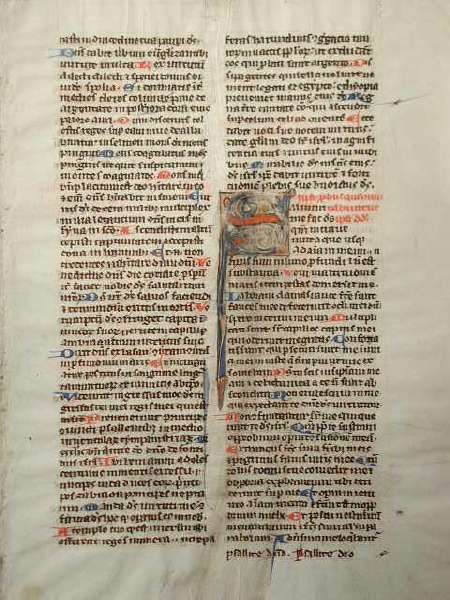
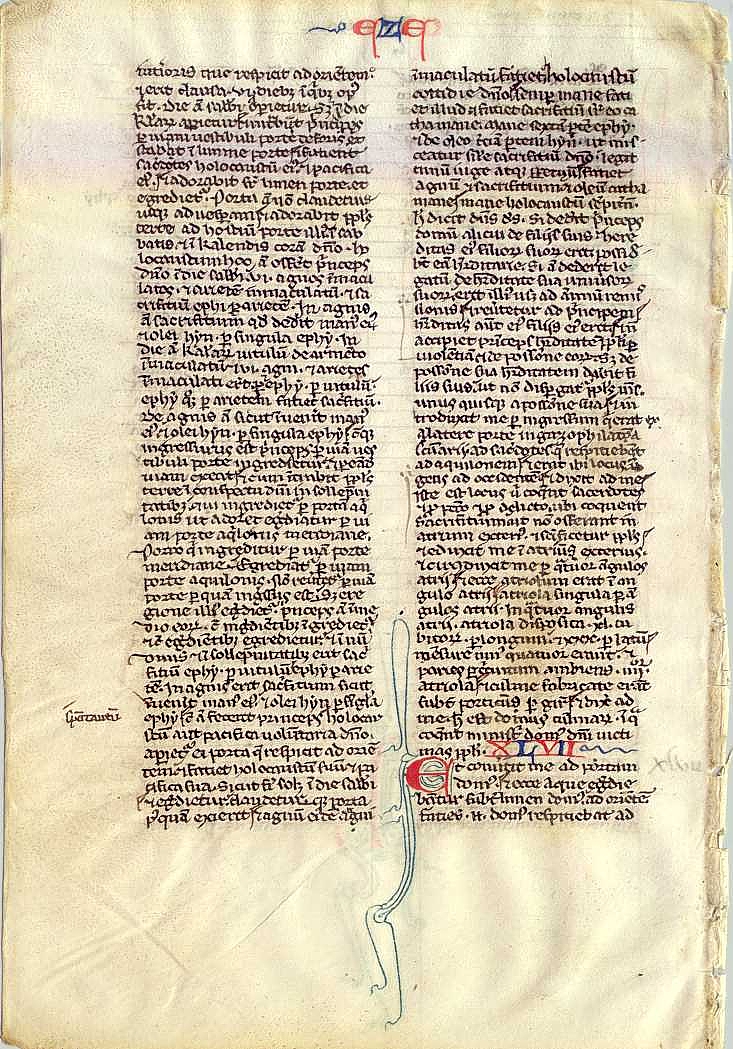
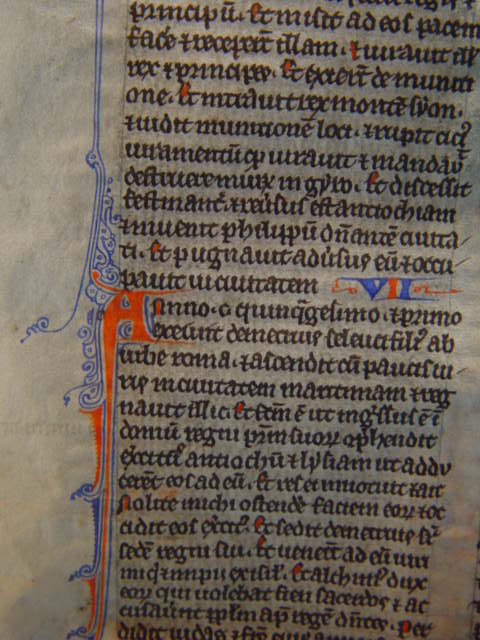
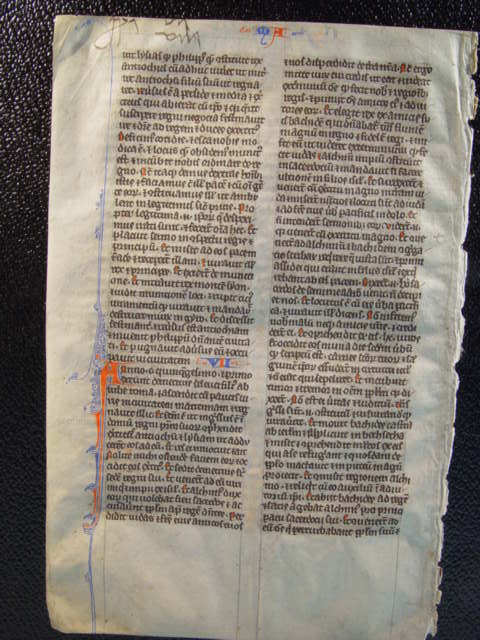
7TH CENTURY THE FIRST TRANSLATION OF THE BIBLE IN TO FRENCH LANGUAGE: French Versions of the Psalms and the Apocalypse, and a metrical rendering of the Book of Kings, appeared as early as the seventh century.(9) In 1223 (A. D.) a complete translation was made under the Catholic King Louis the Pious. This was 320 years before the first Protestant French version. (7) Up to the fourteenth century, many Bible histories were produced. These two leaf are from different Bibles in French. They were both hand copied about the year 1250 (AD.) and are written in a very fine, regular, hand : The initials at the beginning of every chapter are very elaborate! 7TH CENTURY, THE FIRST GERMAN VERSION: The history of Biblical research in Germany shows that of the numerous partial versions in the vernacular some go back to the seventh and eighth centuries. It also establishes the certainty of such versions on a considerable scale in the thirteenth and fourteenth centuries, and points to a complete Bible of the fifteenth in general use before the invention of printing.(9)
7TH CENTURY, SPACES PLACED BETWEEN THE WORDS: In the seventh Century, Irish and English monks began to leave space between the words as they copied the biblical texts by hand, before this all the letters ran together making a entire book look like one giant word. (19)
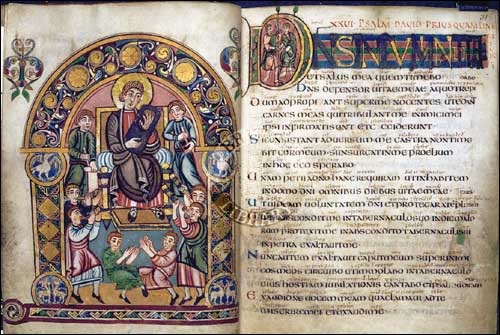
8TH CENTURY,THE FIRST TRANSLATION OF THE BIBLE IN TO ENGLISH LANGUAGE: By Aldhelm, the Bishop of Sherborne, and Bede. A 9th century translation of the Bible in to English (Anglo-Saxon the dialect of its time) was made by Alfred. A tenth century translation in to English was made by Aelfric.(7) , By 1361 a translation of most of Scripture in the English dialect (Anglo-Norman) of its time had been executed.(3) This was twenty years before Wycliffe's 1381 translation (3) This image is of the "Vespasian Psalter" a eighth century Catholic translation of the Book of Psalm in to English
8TH - 9TH CENTURY, THE USE OF THE FORM OF WRITING CALLED "MINUSCULE": As the breakdown of Oriental commerce took papyrus out of the western market in compelled to use of parchment, the factor of economy became increasingly potent. To get more words on page, the scribe had two use smaller letters and squeeze them close together. Some, to preserve their distinct shapes, were extended above the line, some below. The ultimate result was a form of writing called "Minuscule"— little letters, with capitals inserted for emphasis. It is this system which is still use today. This grammatically was a major change from the "Majuscule"— which consisted of only large letters as used by the Greeks, Romans, and Jews. (16)
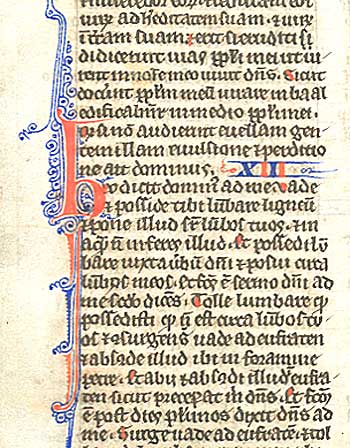
This is a close up of a leaf from a Latin Bible it hand copied minuscule script about the year 1260 (AD.). This leaf originates from Northern France (probably Paris) 9TH CENTURY, THE FIRST SLAVIC TRANSLATION OF THE BIBLE
: The Catholic Saints Cyril and Methodius preached the Gospel to the Slavs in the second half of the ninth century, and St. Cyril, having formed an alphabet, made for them, in Old Ecclesiastical Slavic, or Bulgarian, a translation of the Bible from the Greek. Toward the close of the tenth century this version found its way into Russia with Christianity, and after the twelfth century it underwent many linguistic and textual changes. A complete Slav Bible after an ancient codex of the time of Waldimir (d. 1008) was published at Ostrog in 1581.(9)
This leaf (circa 1260AD) has been written by hand in Latin, in black ink using miniature gothic texture on animal vellum. Rubricated initials and marginalia can be seen in red and blue. It was originally owned by William Foyle of Beeligh Abbey England. 1170 A.D. THE FIRST PARALLEL ENGLISH LANGUAGE BIBLE: Eadwine's Psalterium triplex, which contained the Latin version accompanied by Anglo-Norman and Anglo-Saxon renderings, appeared it became the basis of all subsequent Anglo-Norman versions.(3)
THIRTEENTH CENTURY, THE FIRST DIVISION OF CHAPTERS: It was the British Catholic Arch-Bishop of Canterbury, St. Stephen Langton (died 1228), was first to tabulate scripture into Chapters, and we follow his arrangement to this day: some 1,163 chapters in the Old Testament, and only 260 in the New Testament." (4)
THIRTEENTH CENTURY, THE FIRST TRANSLATION OF THE BIBLE IN TO SPANISH LANGUAGE: Under King Alfonso V of Spain. (7)
1230 A.D. THE FIRST CONCORDANCE: A concordance of the Latin Vulgate Bible was compiled by the Dominican Friar Hugo of Saint Cher. (5)
1300 A.D.
THE FIRST TRANSLATION OF THE BIBLE IN TO NORWEGIAN LANGUAGE: The earliest and most celebrated is that of Genesis-Kings in the so-called Stjórn ("Guidance"; i.e., of God) manuscript in the Old Norwegian language, probably to be dated about 1300. Swedish versions of the Pentateuch and of Acts have survived from the fourteenth century and a manuscript of Joshua-Judges by Nicholaus Ragnvaldi of Vadstena from c. 1500. The oldest Danish version covering Genesis-Kings derives from 1470. (11)1454 A.D. THE FIRST PRINTED BIBLE: A Catholic named Gutenberg caused great excitement when in the fall of that year he exhibited sample pages at the Frankfurt trade fair. Gutenberg quickly sold out all of the 180 copies of his Latin Vulgate Bible even before the printing was finished. (6)
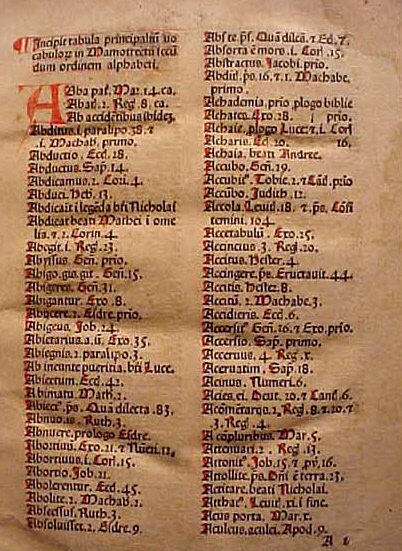
1470 A.D. THE FIRST PRINTED BIBLE DICTIONARY WAS PRINTED: It was written by Johannes Marchesinus ( a Franciscan friar). It was a guide to understanding the text of the Bible explains the grammatical constructs and etymology of difficult words in the Scriptures. Printed only 15 years after the First Book ever printed in the world, the Gutenberg Bible!
The image on the right is a scan if from the this historic Bible Dictionary
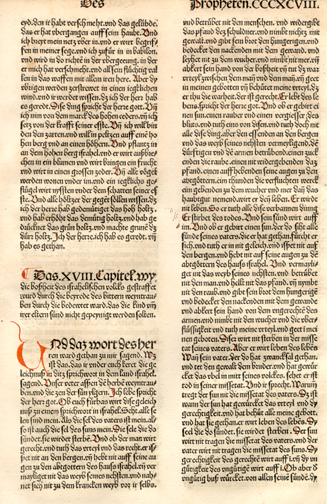
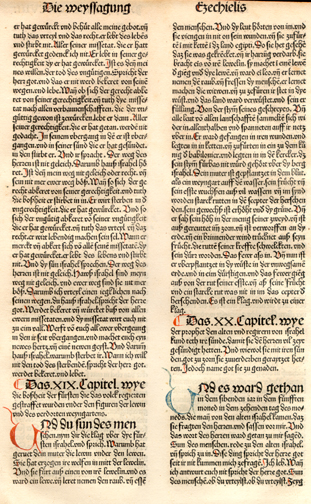
1466 A.D. THE FIRST PRINTED GERMAN BIBLE: This was fifty eight years before Luther made his German Translation in 1524. (8) In that fifty eight years the Catholics printed 30 different German editions of the Bible. These are two incunabula leafs from Pre-Luther Biblias Germanica or German Bibles. Printed by the Catholic Anton Koberger printed it on February 17, 1483 in the city of Nuremberg. 1470 A.D. THE FIRST PRINTED SCANDINAVIAN BIBLE: In the fourteenth century, versions of the Sunday Epistles and Gospels were made for popular use in Denmark. Large portions of the Bible, if not an entire version, were published about 1470. (9)
1471 A.D. THE FIRST PRINTED ITALIAN BIBLE:(8) In the years before Luther's Bible was published (Luther's Biblical translations, begun in 1522), the Catholics printed 20 different Italian editions of the Bible.
1475 A.D. THE FIRST PRINTED DUTCH BIBLE: The first Bible in Dutch was printed by Catholics in Holland at Delft in 1475. Among several issued from the press of Jacob van Leisveldt at Antwerp (9)
1478 A.D. THE FIRST PRINTED SPANISH BIBLE:(8) In the years before Luther's Bible was published (Luther's Biblical translations, begun in 1522) the Catholics printed 2 different Spanish editions of the Bible.
1466 A.D. THE FIRST PRINTED FRENCH BIBLE:(8) In the years before Luther's Bible was published (Luther's Biblical translations, begun in 1522), the Catholics printed 26 different French editions of the Bible.
1516 A.D. THE FIRST PRINTED GREEK NEW TESTAMENT: A Catholic named Erasmus first printed his Greek New Testament. (8) In the years before Luther's Bible was published (Luther's Biblical translations, begun in 1522), the Catholics printed 22 different Greek editions of the Bible.
1534 A.D. THE FIRST USE OF ITALICS TO INDICATE WORDS NOT IN THE ORIGINAL: A Catholic named Munster was the first to use italics to indicate words not in the original Greek or Hebrew texts, in his version of the Latin Vulgate.(13)
1535 The First Bible Concordance Ever Printed: Done in Latin, and extensively accented in red ink, this is the very first concordance to the Bible ever printed. This scan is of the first concordance ever printed. 1548 A.D. THE FIRST CHINESE VERSIONS: Among earlier translations is a version of St. Matthew by Anger, a Japanese Catholic (Goa, 1548). The Jesuit Father de Mailla wrote an explanation of the Gospels for Sundays and feasts in 1740, (9)
1551 A.D. THE FIRST DIVISION OF VERSES: The first division of the Bible into its present verses is found for the first time in an edition of the Greek New Testament published in Paris by the Catholic Robert Stephens. (10)
1555 A.D. THE FIRST PRINTED COMPLETE BIBLE WITH CHAPTERS AND VERSES: The first division of the Bible into its present chapters and verses is found for the first time in an edition of the Vulgate published in Paris by the Catholic Robert Stephens. (10)
1561 A.D. THE FIRST COMPLETE POLISH BIBLE: Was printed at Cracow in 1561, 1574, and 1577. Jacob Wujek, S.J., undertook a new translation from the Vulgate (Cracow, 1593), which was praised by Clement VIII, and reprinted frequently. (9)
1579 A.D. THE FIRST MEXICAN VERSION:
The first known Biblical undertaking in Mexico was a version of the Gospels and Epistles in 1579 by Didacus de S. Maria, O.P., and the Book of Proverbs by Louis Rodríguez, O.S.F. A version of the New Testament was made in 1829, but only the Gospel of St. Luke was printed.(9)1836 A.D. THE FIRST TRANSLATION OF THE BIBLE IN TO THE JAPANESE LANGUAGE: A version of St. John's Gospel and of the Acts was edited in katakana (square type) at Singapore (1836) by Charles Gutzlaff (9)
Footnotes and References
1) Encarta Encyclopedia © 1997-20002) The Faith of Our Fathers, p. 68 © 1917. See also Who’s Who in the Bible © 1986
3) Encyclopedia Britannica © 1999-2000
4) The Only Begotten, Chapter 7, p. 130 by Michael Malone: CATHOLIC TREASURES, © 1997

5) Funk & Wagnalls Standard Reference Encyclopedia © 1951 Volume 4
6) The Bible Through the Ages © 1996, Readers Digest Association, New York.
7) Imperial Encyclopedia and Dictionary © 1904 Volume 4, Henry G. Allen & Company
8) Holman Bible Dictionary © 1991
9) The Catholic Encyclopedia, Volume XV Copyright © 1912
10)The Zondervan Pictorial Bible Dictionary © 1977
11)The Encyclopedia Britannica © 1999-2000
12)"What Say You?" p. 244-289 © 1945 By David Goldstein,
13)English Versions of the Bible © 1952
14)De Missa privata, ed by Jensen, VI, Pg 92
15)Eerdmans Dictionary of the Bible © 2000, Pg 828
16)Mediaeval history © 1967, pg 166-167
17)The Complete Christian Collection © 1999
18)The Age of Martyrs © 1959
19) Grolier Family Bible Cards © MCMXCVIII