The Mythological and Mysterious Unicorns in the KJV.

Unicorn is a legendary, one-horned animal described in ancient and medieval literature. Although there is no evidence that such an animal ever lived, many people believed in unicorns. About 2,400 years ago, a Greek physician named Ctesias wrote about a strange animal said to live in India. This animal resembled a wild ass and had a white body, blue eyes, and a single horn on its forehead. Unicorns make an appearance nine times in the KJV. Here's the verses, compared with some popular versions: Numbers 23:22; 24:8; Deuteronomy 33:17; Job 39:9, 10; Psalms 22:21; 29:6; 92:10; Isaiah 34:7.
What Does Ii Matter If The Word "UNICORN" Appears In The KJV?
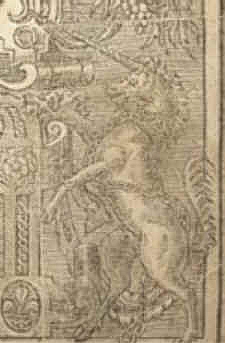
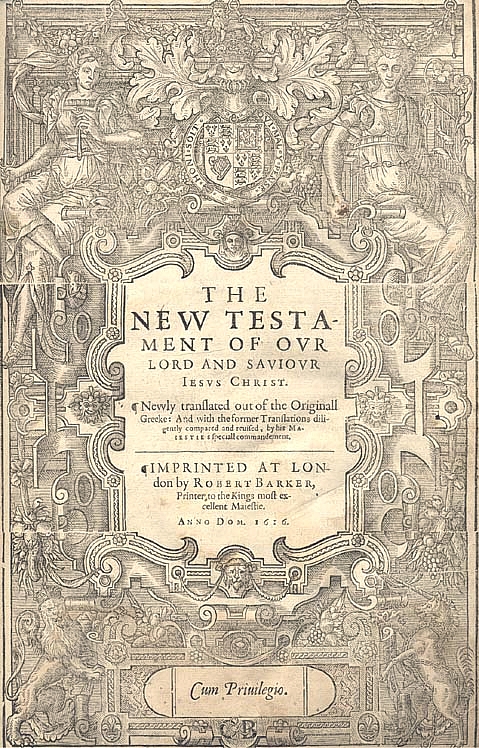
This image is from the Title Page of the 1616 printing of the KJV. This was actually printed while King James, who authorised this translation, was still alive and just five years after the original was printed. Click here to see the Title page of this edition. Some may say, so what if the KJV says unicorns, what does this prove, what is so bad about it?
I shall explain, besides the fact that the appearance of this factitious one horned horse in scripture is obvious a error showing the ignorance and inability of the 1611 translation comity. The King’s Bible use of it demeans, degrades and cheapens the one true God to a level equal to Pagan mythology.
For example Num. 23:22; 24:8 of the KJV disgracefully and blasphemously described Gods strength as equal to that of this PAGAN creature derived solely from the minds of men. The KJV has Joseph [Deut. 33:17 ] describing God with the "horns" of this imaginary man made PAGAN animal. Psalms 92:10 has God preposterously describing himself the "horn" of this PAGAN beast.
Psalms 22:21 of the KJV has King David ridiculously asking God to save him from a figment of mans imagination.
But don’t be fooled for none of this shocks or offends the KJV Onlyist, for what maters to them is not the truth, not the honer and dignity of God. The only thing that maters to them is faulse integrity of there leather bound man made translation.
It is a well known fact that the 1611 translators on many occasions sacrificed accuracy of rendering, to curry favor from the King and to aviod his wrath.
One [of many possible] such example of this is I Cor. xiii:5 the translators added the word "easily".
"The English version [the KJV] here has the adverb 'easily,' which is not in the original. it is said that the translators inserted that word to save the Christian character of King James, who had a very high temper" [Translation of the New Testament by Rev. W.B. Godbey 1910 pg. 7]
you see this addition to I Cor. 13:5 softens that which Christ made hard, and smooths what God made rough; thus letting down God's standard of Christianity to the level of human feebleness.
Another example is found in 1Cor 6:9-10 were two different Greek words: malakos [homosexuals] and arsenokoites.[sodomites] were softened in there rendering by the 1611 translation comity, the KJV reads "effeminate... abusers of themselves with mankind"
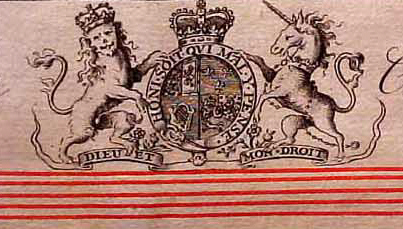
This image containing a unicorn was was on the front page of the 1717 printing of King James Version .It is King George I's Royal Crest. This curring the Kings favore very well could the case with the unicorn in the 1611 KJV. Since the reign of King Robert III in the late 1300s, The unicorn was the Royal symbol of Scotland, the birth place of King James I. James was very proud of his Scotish heritage. When James VI of Scotland became King James I of both England and Scotland on the death of Elizabeth I [when she died childless in 1603], he drew up a new royal coat-of- arms that included both the traditional English lion as well as the Scottish Unicorn, were it still reside today. There have even been some editions of the KJV printed with woodcuts of this royal emblem displaying the unicorn, a example of this if the 1717 printing.
King James I himself was a firm believer in the existence of unicorns, as a mater of fact he [as did his aunt Queen Elizabeth I,] had a unicorn horn listed in the inventories of his possessions. Once when the son of King James was ill, the doctors had him drink some powered "unicorn" horn to heal him (it didn't help).