Christmas in the Spring?
A look at a few of the Protestant arguments against Christ being born in December.

Today, many Protestants look upon the date of Christmas as another opportunity to attack Holy Mother Church, for it was the Catholic Church that determined the date of celebration for the birth of Christ. as may be expected, when examined the Protestant arguments against Christ being born in December are very weak, and verge upon ridiculous.
[Protestant argument]" Jesus was born in the spring, when new life comes to the earth."
This statement is half true, for Jesus was born at the time of year when the when the earth in Palestine brings forth new life, as the Harper's Encyclopedia of Bible Life [(C) 1971, pg. 7]explains:
[Protestant argument]"The Bible tells us that shepherds were staying out in the fields overnight when Jesus was born (Luke 2:8), but in that part of the world it would have been far too cold at night to do so in December. What is more likely is that He was born in the Spring, perhaps between March and May."
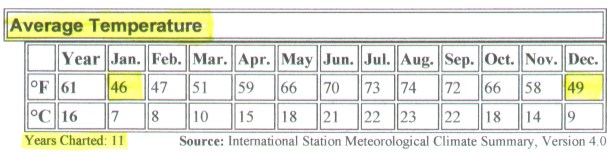
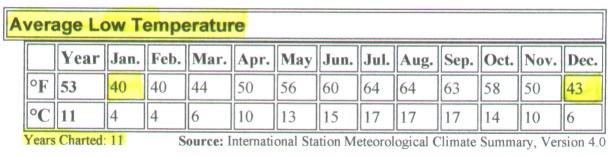
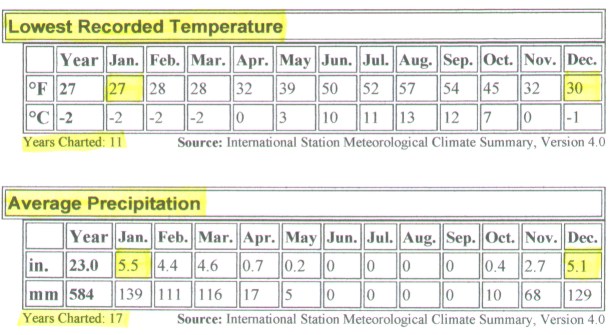
This is not so, for the average temperature in Bethlehem in December is 49 F. This is really a very mild winter by any standard. The average low [such as at night time] is about 43 F, this about eleven degrees above the freezing temperature of water [32 F]. The ISMCS [International Station Meteorological Climate Study] tells us that in the last eleven years the coldest temperature Bethlehem got in December was only 30 F.
[Protestant argument]" A common practice of shepherds was keeping their flocks in the field from April to October, but in the cold and rainy winter months they took their flocks back home and sheltered them."
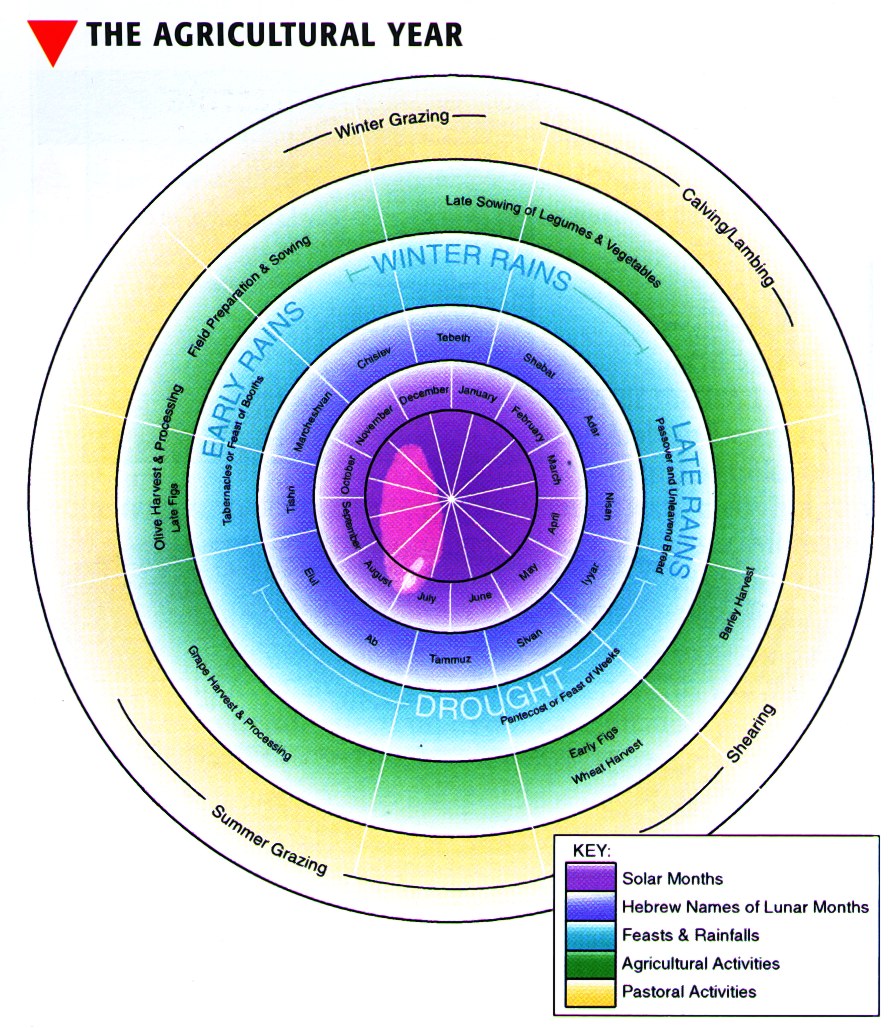
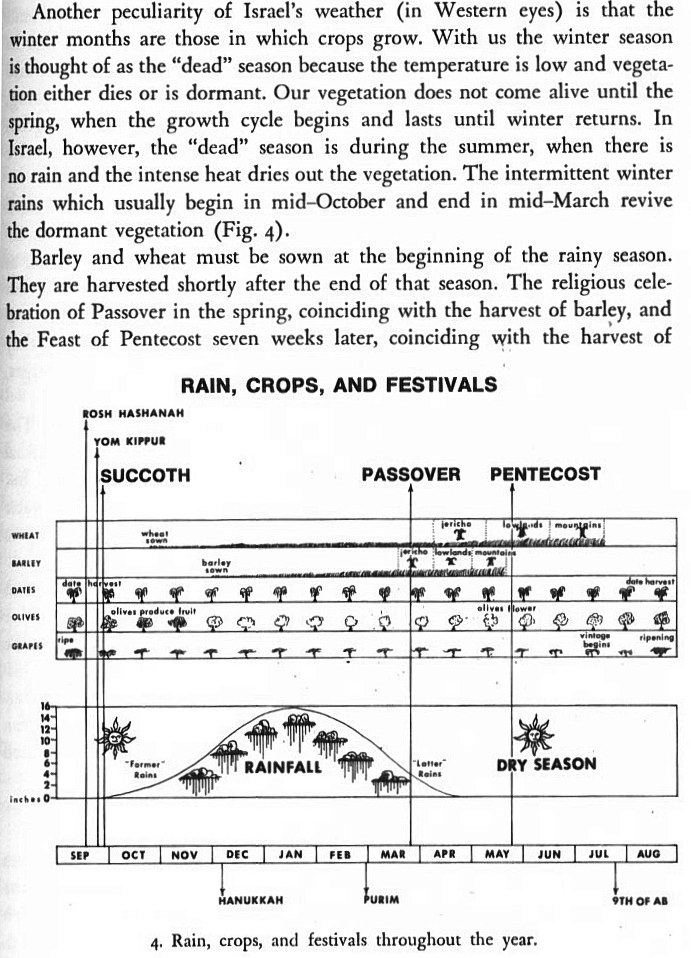
Above is a chart showing the two major grazing periods in first century Judea. First, as we have Just seen it really does not get cold in this region in December, they have a very mild winter climate. Second, this was not a "common practice". The scholar that their were two major grazing periods in first century Judea. The first one was the "summer grazing", it started about the middle May and lasted to the end of August. The second grazing was the "winter grazing", this lasted from the end of November to the end of January.
It make perfect sense to find shepherds and there flocks in the field in December, especially when we consider that the surrounding land had just come through six very arid and dry months [with less than a inch of rain total ], the landscape and fields are withered and parched. The month of December in Bethlehem has about five inches of rain. By the end of December the Land has come to life, the fields are green again, for the first time in months, it is only natural that the shepherds would wish to give there flocks as much opportunity to graze on these lush fields as possible before the dry season returned.
[Protestant argument]" Luke says the shepherds were watching their flocks at night and the only time that is done is during lambing"
Shepherd’s workday was twenty-four hours long, regardless of the season [Genesis 31:40 "Thus I was; in the day the drought consumed me, and the frost by night"] there were many dangers from which the sheep and goats had to be protected included wild beasts [such as lions, nerves, panthers and bears,(1 Samuel 17:34; Isaiah 31:4; Jeremiah 5:6; Amos 5:12)], theft from robbers or predators hordes. (Genesis 31:39 " stolen by day, or stolen by night."). If these dangers could not be controlled by the shepherd, the operation would soon fail. The shepherd’s office thus required great watchfulness, particularly by night. (Gen. 31:40; Luke 2:8)
All three were mentioned by Jacob in his angry retort to Lanban’s charge of having tricked him (Gen. 31:38-40: "By day the heat consumed me, and the cold by night," he concluded—neither of which is good for animals either—"and my sleep fled from my eyes"—because of nighttime dangers. In effect a shepherd’s workday was twenty-four hours long.
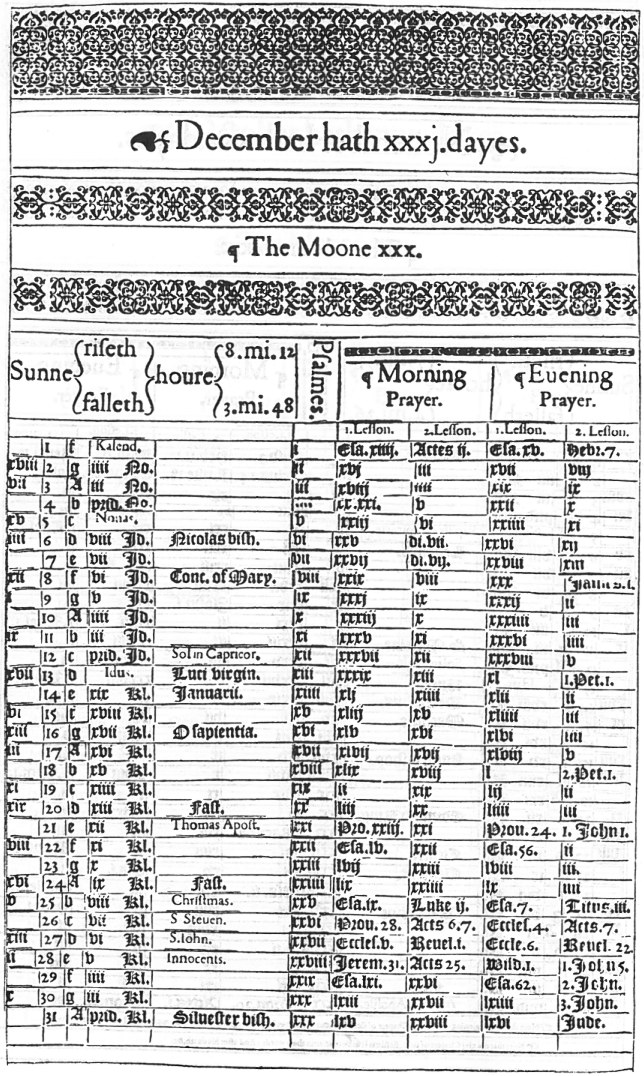
December 25 has been accepted as the Birthday for Christ, for hundreds of years. The original 1611 King James Version had a calendar for each month of the year. The above scan is of the month on Dec. it is from the Nelson reprint of the 1611 KJV.
As we can see it lists Dec. 25 as the birth of Christ.
If the flock was very large, requiring more than one shepherd, the normal practice was to set up an encampment near water and return to it at night, where a fire made from collected brushwood would provide warmth (the temperature drops at night in Palestine), add a bit of friendliness to the scene, and keep wild animals at a distance. Here a sheepfold would be built of stones, to be used again another year. Such an encampment is probably reflected in the story of Joseph and his brethren (Gen. 37:14). An encampment would surely be used if the flocks had been led a long distance from home. Booths—simple shelters to protect one from the murderous hot sun of midday, made of four or six poles supporting a roughly thatched roof—would be constructed at strategic lookout points.
Back at the camp in the evening, the sheep and goats would be separated (Matt. 25:32) each flock would be counted, and each animal checked quickly by sharp-eyed experts for injury or indications of disease. Then the shepherds would eat their evening meal, light a fire, and trust that the night would bring no peril to flock or themselves. Perhaps for a while one of them would play a flutelike instrument and they would all sing or tell stories until drowsiness came. From then on they would take turns watching the flock and trying to sort out the night cries, howls, and roars of the beasts of the lonely, uninhabited region.