"WATER BAPTISM IS TO BE DONE BY FULL IMMERSION"
This is a refutation of a deceitful Protestant article by the same name, found on the The "dokimose" websites.

The "dokimose" websites is for the most part, typical of Anti-Catholic websites in that it is severely lacking in the truth. The site is small, poorly set up, and overly colorful, it hurts the eyes to look at it. One of the interesting points about the site is it has almost no real articles. It one "big" (if you could call it that) item, is the "Fascinating Reading of the Holy Bible for Roman Catholics" section. The refutation bellow is from that section.
When I set out engage a anti-Catholic site I usually try to refute four or five articles from it. This better enables the reader to see the the dishonesty, and ignorance or the protestant site, providing multiple examples. For the ease of the reader, and to prevent confusion, all of "dokimose's" statements will be in "red" the verses they quote will be in "dark blue", and my replies will be in "Black".
[dokimose] "Water baptism is to be done by full immersion"
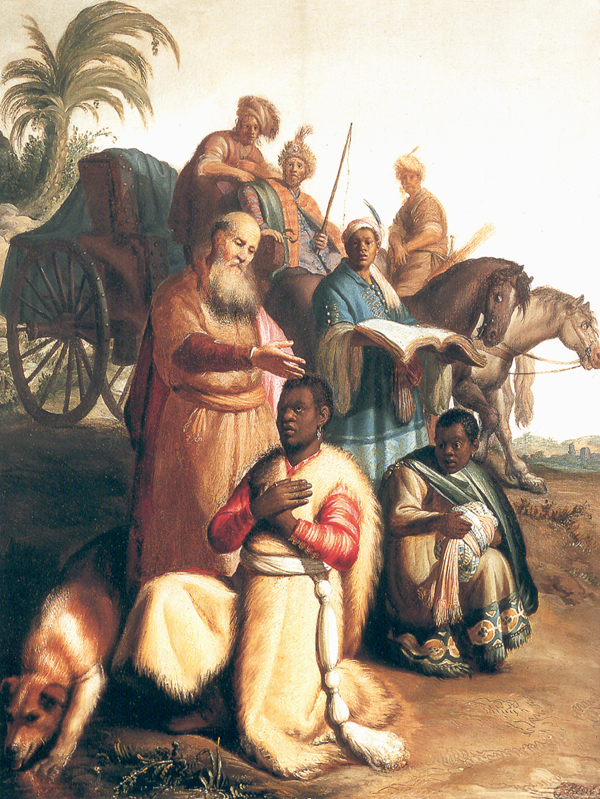
The Baptism of the the eunuch
[Misapplied Verses] "And he commanded the chariot to stand still: and they went down both into the water, both Philip and the eunuch; and he baptized him. And when they were come up out of the water, the Spirit of the Lord caught away Philip, that the eunuch saw him no more: and he went on his way rejoicing."
- ACTS 8:38-39 The most obvious problem with this argument is that if this text is a example of Baptism done by "full immersion", then it is the strangest baptism ever done. For the text say the both (Philip and the eunuch) went down into the water, if this is "full immersion", Philip dunked himself as well as the eunuch. which of course is ridicules.
The far more logical interpretation of these verses, is that they went down a small embankment to the water, preformed the baptism and then climbed back up the small embankment. This of course means the text does not show weather the baptism was done by immersion or pouring.
There are other factors found in the text that support this interpretation verse, Acts 8:26 tells us that the event took place in "Gaza, which is desert." meaning there was very little water. no were in the surrounding texts is there any reference to a river or lake. So the water source for the baptism must have been a very small one, prohibiting the use of "full immersion".
Last, contrary to what the Protestant webmaster of the "dokimose" website would like the reader to believe, the text itself does not place any requirements on the type of baptism, nor does it regulate the form that should be used. So this does not prove the Protestant argument on this mater.
One of the best scriptural examples of Baptism through sprinkling, is the baptism of St. Paul. The early Christian Ananias was sent by God to the House of Judas in Damascus to meet with the blinded Paul [Acts 9:11]. Ananias went over to Paul and laid his hands on him, immediately Paul regained his sight [Acts 9:18].
Then Ananias said: "And now why do you wait? Rise [Gr. anistemi] and be baptized, and wash away your sins, calling on his name" [Acts 22:16]. The Scriptures tell us that Paul then "rose" [Gr. anistemi] from the mat he was laying on and was baptized [Acts 9:18].
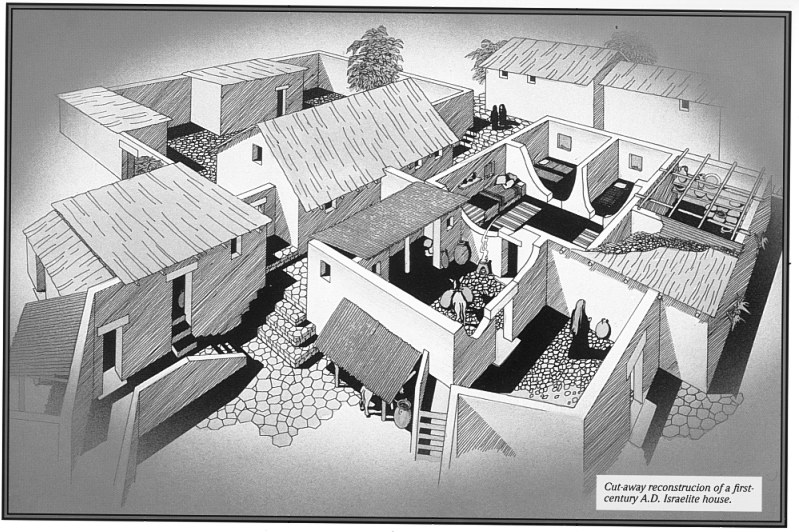
The scriptural fact is that Ananias baptized St. Paul where he found him, in the House of Judas in Damascus, and Paul was baptized standing up. We must remember that in first century, houses of common people did not have bathtubs. The scriptures provide no possible way for St. Paul to have been baptized by immersion. To read more on the legitimacy of baptism by sprinkling or pouring.
NOTES:
ANISTEMI: 1. To rise, stand up; used a. of persons laying down (on a couch or bed); [New Thayer's Greek- English Lexicon to the New Testament, By Joseph Henry Thayer D.D, 1979, p.47]