+++(Encyclopedia Americana 1995)" these earliest Gentile Christians had the Jewish
scriptures in a Greek translation... This
Greek Old Testament (the septuagint) had already been supplemented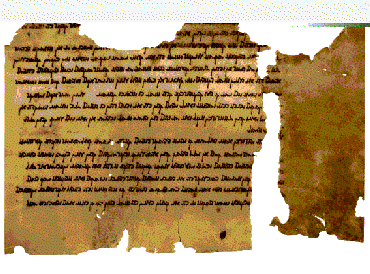 by the so-called Apocrypha... In the early Christian services of
worship, throughout the Greeks speaking Mediterranean world and even as for East as the
Euphrates, it is the Greek Bible that was read and expounded"(p. 690 through 691) it
+++(Background To The Bible, An introduction to Scripture Study 1978.)"The New testament quotes from the longer Septuagent Greek
[which did contain the Deutero Canonical books, Tb, Jdt, Wis, Sir, Bar, 1Mc, 2Mc, and parts of Est and Dn. Encyclopedic Dictionary of the Bible 1963, 310] canon no less than 350 times."+++(Catholic Information Network 1996)"
The earliest New Testament documents are Paul's. He used Septuagint citations; therefore he knew of the Deutero Canonicals. One supposes that Matthew, Mark, and John also knew the whole Septuagint.Luke is so familiar with it, that he is able closely to imitate itsstyle. It is from these writers that we have the words of Jesus."+++(Background To The Bible, An introduction to Scripture Study 1978.)"With the exception of Melito of Sardis (171 A.D.), writers of the first three centuries treated Deutero Canonical books as they did the Canonical ones.
The Greek Bible was received and used by the [early] Church."+++(Glossary of terms related to Judaism 1993)"Apocrypha: From the Greek, meaning "to hide" or "to uncover." It is used in a technical sense to refer to certain Jewish books written in the Hellenistic-Roman period that were included in the Old Greek Jewish (Septuagint) scriptures (and thus in the Eastern Christian biblical Canon) and in the Latin Vulgate Roman Catholic Canon,
but not in the Jewish or Protestant biblical canons. See also Bible, Septuagint."+++(Scripture alone? 1999)"The New Testament quotes the Old Testament about 350 times, and in approximately 300 of those instances (86%), the quotation is taken from the Septuagint, a Greek translation of the Old Testament in widespread use at the of Christ.
The septuagint contained the Deutero Canonical books. It is therefore unreasonable and present risk to say that Christ and his apostles accepted a shorter Old Testament Canon, as the clear majority of the time they used an Old Testament version which did contained the seven books in question."+++(The Bible Through the Ages 1996)"The Septuagint include all of the books or portions of books that now belong to the Apocrypha of the Protestant Bible and that are included in the canons of the Roman Catholic, Greek, and Slavonic Bibles.Interestingly, much of the Septuagint text diverges significantly from the authoritative Hebrew text that has come down to us. For example, the Septuagint version of the Book of Jeremiah appears rearranged when compared to the Hebrew text; the Book of Job is shorter; Esther and Daniel, longer. Some discrepancies suggest that the Greek translation reflects a version of the Hebrew of the Hebrew text dated earlier than the received, or standard, text. The fact that some of the Dead Sea Scroll manuscripts agree more closely with the Septuagint than with the received text supports such a conclusion."
+++(The Bible Through the Ages 1996)"Many scholars believe that the canonization of the Hebrew Bible took place over a long period of time and that the three divisions of the Bible represent the stages of canonization. The entire canon was probably complete sometime in the first century A. D."
+++(The Bible Through the Ages 1996)"The Apocrypha was included in the Septuagint, the Greek translation of the Hebrew Bible, Roman Catholic, Greek, Slavonic , Armenian, and Ethiopian Bibles follow the Septuagint and add the Apocrypha to their Old Testament canons."
+++(Scripture alone? 1999)"Take the case of St. Paul, whose missionary journeys and letters were directed to Hellenistic religions outside Palestine. It has been noted for example, that in his sermon at Antioch in Pisidia 'pre-supposed a thorough acquaintance among his hears with the Septuagint' and at that onces a Christian community had been founded, the content of his letters to its members ' breathed the Septuagint' obviously,
St. Paul was supporting a longer Canon of the Old Testament by his routine appeal to the Septuagint"+++(The Columbia Encyclopedia, Fifth Edition Copyright 1993)"
The Canon of the Septuagint included the books of the later Hebrew canon, with the addition of several others, most of which were those now reckoned Deutero Canonical by Roman Catholics and apocryphal by Protestants."+++(Errata of the King James 1965) " We know that by the time of Christ the
Deutero Canonical books were except part of the Septuagint."+++(Harrington in New Catholic Commentary, 1995.)"The Deutero Canonical books of the Bible are found in the Septuagint,the Greek translation of the Old Testament done in Alexandria fromthe 3rd to the 2nd centuries B.C. About 80% of the quotations and allusions to the Old Testament in the New Testament are to the Septuagint, not to the Hebrew Bible. This is particularly true of Paul (Auzou. Formation of the Bible, p. 331) and Paul's disciple Luke "
+++(Dictionary of Cultural Literacy 1993)"
Apocrypha From the Greek word "apokryphos", meaning "hidden" or "unknown" comprised of 14 books. Religious writings of uncertain origin which are accepted and regarded by some as inspired, such as Roman Catholics, they have been rejected by most authorities. They are not considered as having the same authority as the Canonical books. 7 of the 14 apocryphal books are included in the Septuagint and the Vulgate as part of the Old Testament, "+++(The Deutero Canonicals 1997)"The term "Deutero Canonicals" refers to those texts whose authoritative position in scripture was doubted or debated. These texts are 1 and 2 Esdras, Tobit, Judith, Wisdom, Sirach (also called Ecclesiasticus), Baruch, 1 and 2 Maccabees, the prayer of Manasseh, Bel and the Dragon, the Song of the Three Holy Children, the History of Susanna, and additions to the books of Esther and Daniel. These scriptures originated from the Septuagint translation of the Bible. This Greek translation was used by early Christian missionaries"
+++(The Imperial Encyclopedia and Dictionary volume 34 1903)"
Apocrypha applies to a number of writing Tb, Jdt, Wis, Sir, Bar, 1Mc, 2Mc, and parts of Est and Dn. which the Septuagint contained and circulated among the Jews, And were respected by the early Christians."+++(Pinfolplease A toZ Dictionary 1997)"
a•poc•ry•pha a group of 14 books, not considered canonical, included in the Septuagint and the Vulgate as part of the Old Testament, but usually omitted from Protestant editions of the Bible."+++(DEFENDING THE DEUTERO CANONICALS 1996)"
The Christian acceptance of the Deutero Canonical books was logical because the Deutero Canonicals were also included in the Septuagint"+++(The Apocrypha, copyrights: 1989,1959,1938)
The Apocrypha consists of the books that are found in the Greek version of the Jewish Bible—the Septuagint, the earliest complete version of the Bible was possess—but that were not included in the final, canonical version of the 90 A.D. Hebrew Bible. For this reason, they were called "Apocrypha," the hidden or secret book, and while they formed part of the original King James Version of 1611. (The Apocrypha, by Edgar J. Good speed, copyrights: 1989,1959,1938)+++(Abingdon Bible Handbook 1968)"
The wide use of the Greek Bible (The Septuagint) in the early church and its translation into Latin lead to the perpetuation of the books and portions Protestants now call the Apocrypha.... These books were later included by the councils of Hoppo (393 A.D.) , Carthage (397 A.D.) and Trent (1542 A.D.)"+++(DEFENDING THE DEUTERO CANONICALS 1996)""the Greek edition of the Old Testament which the apostles used to evangelize the world.More than two thirds of the Old Testament quotations in the New are from the Septuagint. Yet the apostles no where told their converts to avoid seven books (Baruch, Sirach, 1 and 2 Maccabees, Tobit, Judith, and the Wisdom of Solomon, plus portions of Esther and Daniel) of it. Like the Jews all over the world who used the Septuagint, the early Christians accepted the books they found in it. They knew that the apostles would not mislead them and endanger their souls by putting false scriptures in their hands -- especially without warning them against them."
+++(The Concise Columbia Electronic Encyclopedia, Third Edition Copyright © 1994,)"
The Old Testament long used in the Christian church was based on a different text, the Septuagint, a Hellenistic Jewish translation into Greek about the 3d cent. B.C."+++(DEFENDING THE DEUTERO CANONICALS 1996)But
the apostles did not merely place the Deutero Canonicals in the hands of their converts as part of the Septuagint. They regularly referred to the Deutero Canonicals in their writings. For example, Hebrews 11 encourages us to emulate the heroes of the Old Testament and in the Old Testament "Women received their dead by resurrection. Some were tortured, refusing to accept release, that they might rise again to a better life" (Heb. 11:35).+++(The Deutero Canonicals 1995)"
The Apostles and Christians in general, used the 'Septuagint', also called LXX, as their Bible in the first century. This upset the Jews, so they decided to call a council to deal with the matter. The Septuagint is the Old Testament translation into Greek from Hebrew, which the Jews completed at Alexandria in the second century B.C., and it had all 46 books including the Deutero-Canonicals."+++(The Columbia Encyclopedia, Fifth Edition Copyright1993)"
Septuagint...The Greek... included the books of the Apocrypha... It was the version used by Hellenistic Jews and the Greek-speaking Christians, including St. Paul; it is still used in the Greek Church."+++(Encarta Concise Encyclopedia 1998)"Septuagint, ancient Greek translation of the Hebrew Old Testament. The name derives from the Latin word septuaginta (seventy), which refers to the number of people once believed to have translated the Hebrew Bible into Greek. The Torah (first five books of the Old Testament) probably had been translated into Greek by the 3rd century BC to accommodate Greek-speaking Jews outside of Palestine. The translation of the remaining books of the Hebrew Old Testament, which together with the Apocrypha became the Bible of the early Christian church, forms a complicated history."
+++(Encyclopedia Judaica, vol. 6, p. 1147).There are approximately 350 quotations in the New Testament of the Old Testament. Of these 350 quotations 300 come from the Greek Septuagint. It was the Old Testament Bible of the first century Christians. Jesus quoted from it.
The Septuagint included the Deutero Canonical books which Protestants call the "Apocrypha." The Jews in Ethiopia to this day still follow the same identical canon which is found in the Catholic Old Testament which includes these seven Deutero Canonical books " +++(Encarta Concise Encyclopedia 1998)"Apocrypha: the biblical books received by the church of the time as part of the Greek version of the Old Testament (see Septuagint), but not included in the Hebrew Bible"+++(A Dictionary of the Bible, 1954 p.799)"
Christ's frequent references to the Deutero Canonical clearly shows them part of the Jewish Septuagint in the first century"+++(The Encyclopaedia Britannica), in its Micropaedia, the article "Septuagint," states "
The Septuagint has four (divisions): law, history, poetry, and prophets, with the books of the Apocrypha inserted where appropriate."+++(A Dictionary of the Bible, 1954 p.799)"
As late as the close of the first century A.D., the right of the seven books and the third division now call the Apocrypha books to remain in the Canon was discussed by the jews."+++(New Catholic Encyclopedia 1967)The Hellenistic Jews before the fall of the theocracy in Palestine looked reverently toward Jerusalem and favored religious currents coming from it. Doubts were referred there for solution (Josephus, Contra Apion 1.30-36). They turned to Jerusalem for their Scriptures (2 Mc 2.13-15) and for its translation [Est 11.1 (Vulg); 10.31 (LXX)]. If they used the Deutero Canonical books in the Diaspora, it was because they had received them from Palestine… Palestine, then, was the source of the esteem for the Deutero Canonical works (Baruch, Sirach, 1 and 2 Maccabees, Tobit, Judith, and the Wisdom of Solomon, plus portions of Esther and Daniel). The Old Testament, as it is found in the LXX, reflects, therefore, a tradition older than the present Hebrew Bible in regard to its list of sacred books…"
+++(New Catholic Encyclopedia 1967)"
M. Jugie has shown conclusively that from the earliest times through the Middle Ages there was general agreement in the Byzantine Church that the disputed books were Canonical."+++(The Century Dictionary and Cyclopedia 1904)" The Septuagint which contained Deutero Canonical books is of great importance from its effects upon the direction of the New Testament, and as a source of a large part of the religious and theological vocabulary of the Greek fathers and (through the Latin version of the Greek the Vulgate) its influence on the the Latin fathers and all the Western nations to the present-day"
+++(The Pocket Bible Dictionary 1996)"The Apocrypha comprise a number of books that are not in the Hebrew Bible but are in the Septuagint or Greek translation of the Old Testament dating from the third century B.C."
+++(The Canon of The Christians 1987 )" The Early Christians followed Septuagint and listed 44 books which agreed with today's Catholic Old Testament of 46 books. The difference in total number is because he combined Lamentation and Baruch (with Letter of Jeremiah) with Jeremiah. "