

Astrology and the Zodiac is the supposed science which determines the influence of the stars, especially of the five older planets, on the fate of man. The history of astrology is an important part of the history of the development of civilization, it goes back to the early days of the human race. The unchangeable, harmonious course of the heavenly bodies, the profound impression made on the soul of man by the power of such heavenly phenomena as eclipses, the feeling of dependence on the sun, the giver of daylight--all these probably suggested in the early ages of the the human race, the question whether the fate of man was not dependent on these majestic manifestations of Divine power. Astrology was, therefore the foster-sister of astronomy, the science of the investigation of the heavens. From the start astrology was
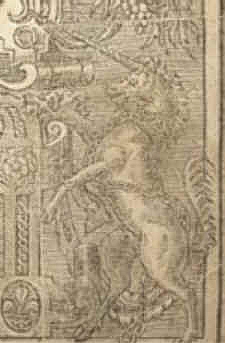
This image is from the Title Page of the 1616 printing of the KJV. This was actually printed while King James, who authorised this translation, was still alive and just five years after the original was printed. Click here to see the Title page of this edition. employed for the needs and benefit of daily life; the astrologers were astronomers only incidentally and in so far as astronomy assisted astrology in the functions which the latter had to perform in connection with religious worship. According to the belief of the early civilized races of the East, the stars were the source and at the same time the heralds of everything that happened, and the right to study the "godlike science" of astrology was a privilege of the priesthood. This was the case in Mesopotamia and Egypt, the oldest centres of civilization known to us in the East. The most ancient dwellers on the Euphrates the Akkado-Sumerians were believers in judicial astrology which was closely Interwoven with their worship of the stars. The same is true of their successors, the Babylonians and Assyrians, who were the chief exponents of astrology in antiquity. The Babylonians and Assyrians developed astrology, especially judicial, to the status of a science, and thus advanced in pure astronomical knowledge by a circuitous course through the labyrinth of astrological predictions. The Assyro-Babylonian priests (Chaldeans) were the professional astrologers of classic antiquity. In its origin Chaldaic astrology also goes back to the worship of stars; this is proved by the religious [Pagan] symbolism of the most ancient cuneiform texts of the zodiac.
The word "zodiac" comes from the Greek zodiakos kyrklos meaning "circle of little animals". [The concept was "adopted" (stolen?) from the Babylonians, who had previously determined that the sun passed through twelve "signs" whose figures (lion, bull, crab, etc.) could be "drawn" by connecting the "dots" (stars) in certain constellations.] The Greeks then explained, with myths, how the figures (animals and people) came to be in the sky. The zodiac was initially divided by the ancients into 12 equal parts, proceeding from west to east (each part 30 degrees), and distinguished by a sign; these originally corresponded to the constellations bearing their names, but through the inexorable precession of equinoxes, this is nolonger the case. The Egyptian zodiac (Denderah) depicts the northern constellations at the center surrounded by the signs and has a Scarab replacing Cancer. The Arabian zodiac is represented as a fruit tree with twelve branches on which the stars appear as fruits.
Astrology and the Zodiac Condemned by the The Ancient Jews:
The Bible is free from any base admixture of astrological delusions. There is no reason for dragging the passage Josue x, 12, into historito-astrological discussions; the facts there related --the standing still of the sun in the valley of Gabaon and of the moon in the valley of Ajalon--are of purely astronomical interest. Only a few indicatiors in the Old Testament suggest that, notwithstanding the Divine prohibitinn (Ex., xxii, 18, Deut, xviii, 10, etc.), the Jews, especially after they were exposed to the influence of Egyptian and BabyIonian errors, may have practised astrology in secret, along with other superstitions. The Prophets warned the people against the pernicious ascendancy of soothsayers and diviners of dreams (Jer., xxix, 8; Zach., X. 1-2), among whom astrologers were included. Thus in the Book of Wisdom (xiii, l-2) it is said: "All men are vain . . . who . . . have either . . . the swift air, or the circle of stars, or the great water, or the sun and the moon, to be the gods that rule the world." The Book of Job, a writing of importance in the history of astronomy and star nomenclature, is also free from astrological fatalism. But to this fatalism the Jews had a natural predisposition, when Hellenism gained footing in the Holy Land it was accompanied by the spread of astrology, largely among the learned, the "philosophers", at whom even in an ealier age the passage in Wisdom had probably been aimed. Again, Isaias (xlvii, 13-14) derides the Babylonian astrologers ( Let now the astrologers, stand and save thee, they that gazed at the stars . . . Behold they are as stubble fire hath burnt them"), and Jeremias exclaims (x, 2): "Be not afraid of the signs of heaven, which the heathen fear".
After the Exile, however, astrology spread so rapidly, above all among the educated classes of Israel, that as early as the Hellenistic era a Jewish astrological literature existed, which showed a strong Persico-Chaldean influence. The prophets had been opponents of astrology and of a relapse into fatalism. If, when they were phophesying of the great events to come, the contemplation of nature, and especially of the stars, filled them with sympathetic enthusiasm, by reason of their poetic inspiration and power of divination, this had nothing to do with
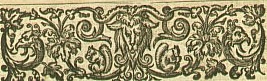
Here we have a gravin image of a the Greek Mythological monster the Chimaera, placed at the top of a page in the 1625 printing of King James version. The Chimaera is a legendary beast taking its shape from both a goat and a lion. Some stories say that it had the hindquarters of a snake and the head of a lion on the bodyof a goat. Others claimed that it had two heads, one goat and one lion, and it breathed fire. This being was brought up by Amisodares, the king of Caria at Patera. The king of Lycia, Iobates, commanded Bellerophon to kill it since the monster made many raids on his kingdom; with the help of Pegasus, the winged horse, Bellerophon succeeded. The Chimaera often appears in architecture, although the monster is usually greatly changed from the form known to classical Greek mythology.
astrology. On the other hand it does not appear impossible that in Daniel's time exiled Jews practised astrology. Judging from Daniel, v, 7, 11, it is possible that the prophet himself held a high rank among the astrologers of the Babylonian court. After the Exile an attempt was made to separate astrology from sorcery and forbidden magical arts, by denying a direct Biblical prohibition of astrology and by pretending to find encouragement for such speculations in Genesis, i, 14. It is a characteristic fact that in ancient Israel astrology received no direct encouragement, but that its spread was associated with the relapse of many Jews into the old Semitic star-worship which was aided by Persico-Chaldean influence. For this Jeremias is a witness (vii, 18; xix, 13; xliv, 17-19, 25). Co-incident with the spread of old astrology in old Israel and the decline of the nation was the diffusion of demonology. The Jewish prayers to the planets, in the form in which they are preserved with others in Codex Paris, 2419 (folio 277r), came into existence at the time when Hellenism first flourished in the East, namely, the third and second centuries B.C. In these prayers special angels and demons are assigned to the different planets; the greatest and most powerful planet Saturn having only one angel, Ktetoel, and one demon, Beelzebub. These planetary demons regulated the destiny of men.
Astrology and the Zodiac Condemned Under Christianity:
From the start the Christian Church strongly opposed the false teachings of astrology. The Fathers energeticaly demanded the expulsion of the Chaldeans who did so much harm to the State and the citizens by employing a fantastic mysticism to play upon the ineradicable impulses of the common people, keeping their heathen conceptions alive and fostering a soul-perplexing cult which, with its fatalistic tendencies created difficulties in the discernment of right and wrong and weakened the moral foundations of all human conduct. There was no room in the early Christian Church for followers of this pseudo-science. The noted mathematician Aguila Ponticus was expelled from the Christian communion about the year 120, on account of his astrological heresies. The early Christians of Rome, therefore, regarded the astrological as their bitterest and, unfortunately, their too powerful enemies; and the astrologers probably did their part in stirring up the cruel persecutions of the Christians. As Christianity spread, the astrologers lost their influence and reputation, and gradually sank to the position of mere quacks. The conversion of Constantine the Great put an end to the importance of this so-called science, which for five hundred years had ruled the public life of Rome. In 321 Constantine issued an edict threatening all Chaldeans, Magi, and their followers with death. Astrology now disappeared for centuries from the Christian parts of Western Europe. Only the Arabic schools of learning, especially those in Spain after the Moors had conquered the Iberian peninsula, accepted this dubious inheritance from the wisdom of classic times, and among Arabs it became incentive to pure Astronomical research. Arabian and Jewish scholars were the representatives of astrology in the Middle Ages, while both Church and State in Christian countries rejected and persecuted this false doctrine and its heathen tendencies. Unfortunately, at the same time the development of astronony was checked, excepting so far as it was needed to establish certain necessary astronomic principles and to calculate the date of Easter. Yet early Christian legend dstinguished between astronomy and astrology by ascribing the introduction of the former to the good angels and to Abraham, while the latter was ascribed to Cham. In particular, St. Augustine ("De civitate Dei", VIII, xix, and in other places) fought against astrology and sought to prevent its amalgamation with pure natutal science.
The Zodiac
The Astrologers created charts called horoscopes, which map the position of astronomical bodies at certain times, such as when a person is born. A horoscope is illustrated by a circle, called the ecliptic. The ecliptic is the plane on which the earth orbits around the sun in a year. It is divided into twelve sections, called the signs of the Zodiac, which include Aries, Taurus, Gemini, Cancer, Leo, Virgo, Libra, Scorpio, Sagittarius, Capricorn, Aquarius, and Pisces. Astrologers assign every planet (which in astrology includes the sun and moon) with a particular sign, depending on where that planet appears on the ecliptic at the time for which the horoscope is cast. Each planet represents basic human drives, and each sign represents a set of human characteristics. When astrologers designate a person as a certain sign—a Leo or a Pisces, for example—they are referring to the person's sun sign— that is, the sign that the sun occupied at the time of the person's birth.
The horoscope also is divided into twelve houses, which make up the 24-hour period during which the earth rotates once on its axis. Each house deals with certain areas of a person's life, such as marriage, health, work, travel, and death. Astrologers make predictions by interpreting the position of astronomical bodies within the signs and houses of the horoscope.
The constellations will again coincide with the sections of the zodiac in about 25,800 years. The zodiac probably had its origins among the Pagan Assyrians or Chaldaeans, although it may have originated among the ancient pagan Babylonians as early as 2000 B.C. The zodiac was very popular among Pagan Celtic druids of England. the Celtic Lunar Zodiac, where each month is associated with a tree was sacred to the Druids. Each tree-sign is broken down into its Celtic mythology and meaning. I the occult the Zodiac, "power points" are symbolized by animals such as the Bull, The other three major power symbols are the Lion, the Eagle, and the Spirit. Astrologers know these four figures as the symbols of the four "fixed" signs of the Zodiac (Taurus, Leo, Scorpio, and Aquarius), and these naturally align with the four Great Sabbats of Witchcraft.
A Look at the Pagan Symbols found in the Zodiac Calendar:
Aquarius
Means "The Water Bearer" in Latin. Greek word is Hydrochoös. A constellation in the equatorial region of the Southern Hemisphere near Pisces and Aquila. The eleventh sign, 20 January to 19 February.
Pisces
Means "The Fishes" in Latin. Greek word is Ichtyes. A constellation in the equatorial region of the Northern Hemisphere near Aries and Pegasus. The twelfth sign, 20 February to 21 March.Aries
Means "The Ram" in Latin. Greek word is Krios. A constellation in the Northern Hemisphere near Taurus and Pisces. The first sign, 22 March to 20 April.
The friendly, talkative ram with the Golden Fleece who was sought by Jason and the Argonauts in their famous adventure. One legend is that it rescued Phrixus and Helle from being sacrificed as an oracle had decreed[brother and sister, repectively, who were borne upon its back and carried across the sea (named Hellespont because Helle fell off into
it)]. It was sacrificed as a thank you offering to Zeus by Phrixus and elevated to the heavens as a reward by him afterwards.
Taurus
Means "The Bull" in Greek. Greek word is Tauros. A constellation in the Northern Hemisphere near Orion and Aries. The second sign, 21 April to 21 May. This is the bull who carried Europa across the sea when Zeus became "interested" after seeing her bathing or, as in many versions, Zeus himself disguised as a bull.
Gemini
Means "The Twins" in Latin. Greek word is Didymoi. A constellation in the Northern Hemisphere containing the stars Castor and Pollux (sometimes called Polydeuces).
The third sign, 22 May to 22 June. Their mother, Leda, was seduced by Zeus, in the form of a swan, and later that night had intercourse with her husband, Tyndareus. Two pairs of twins were born as a result of these matings; Pollux and Helen by Zeus, and Castor
and Clytemnestra by Tyndareus (confusing, isn't it?). So though Castor and
Pollux were really half-brothers, they are called "the twins" (did I say
confusing?). They were inseparable; in battle, in love, in all kind of adventures.
Castor (mortal father) was killed in a fight; Pollux (immortal father) was
brought up to heaven by his father Zeus. He did not want to be separated from
Castor and begged Zeus to re-unite them. Zeus agreed, and brought them
together as the constellation Gemini.
Cancer
Means "The Crab" in Latin. Greek word is Karkinos. A constellation in the Northern Hemisphere near Leo and Gemini. The fourth sign, 23 June to 23 July. Supposedly the monster sent by Hera to bedevil Heracles in his second labor. That was the battle against the Hydra (one of Typhon's monster offspring) who had nine heads, each of which grew back as two when cut off. As Heracles fought the Hydra, Hera sent a giant crab as backup support for the Hydra. During the battle Heracles crushed the crab under his foot. Hera rescued it and placed it in the sky as a constellation.
Leo
Means "The Lion" in Latin. Greek word is Leon. A constellation in the Northern Hemisphere near Cancer and Virgo, containing the bright stars Regulus and Denebola.
The fifth sign, 24 July to 23 August. Another of the monsters (The Nemean Lion) that Heracles had to contend with in his labors; the first of his twelve labors. In this fight Heracles discovered that the lion's skin was invulnerable, so he reverted to the technique he had discovered in his crib and choked the lion to death. He then peeled off the lion's skin (using the lion's claws to accomplish that job) and donned it as armor, thereby making himself invulnerable. Why Zeus brought this beast into the heavens as a constellation is unknown.
Virgo
Means "The Virgin" in Latin. Greek word is Parthenos. A constellation in the region of the celestial equator between Leo and Libra. The sixth sign, 24 August to 23 September.
Many candidates for whom this virgin might be. Most probable is Dike (Astraea), personification of justice, removed to the heavens by Zeus when justice on earth seemed to have been degradedbeyond hope.
Libra
Means "The Balance" in Latin (hence the scales). Greek word is Zygos. A constellation in the Southern Hemisphere near Scorpius and Virgo. The seventh sign, 24 September to 23 October.
Scorpio
Means "The Scorpion" in Latin. Greek word is Skorpios. A constellation (Scorpius) in the Southern Hemisphere near Libra and Sagittarius, containing the red star Antares. The eighth sign, 23 October to 22 November. Orion, the hunter, had boasted that he could kill any animal the earth produced. Artemis, who considered herself to be the greatest of hunters, was offended and sent her deadly scorpion to punish his vanity. It stung Orion to death and was thereupon raised to the heavens by Zeus, who also brought Orion into the heavens as a
constellation.
Sagittarius
Means "The Archer" in Latin. Greek word is Toxotes. A constellation in the Southern Hemisphere near Scorpius and Capricorn. The ninth sign, 23 November to 22 December.
Supposedly the centaur Chiron brought into the heavens as a reward for his exemplary life.
Capricorn
Means "The She-goat with Horns" in Latin (Capricornus). Greek word is Aigokeros. A constellation in the equatorial region of the Southern Hemisphere near Aquarius and Sagittarius. The tenth sign, 23 December to 19 January. Mayhap Capricorn was Pan, who changed himself into a goat when he fled in
fear from Typhon.The Pagan Zodiac was Placed in the 1611 King James Version:
The King James Version [past and present editions] has many examples Pagon symbolism. the King James Version of the Bible (and only the KJV.) contains many imaginary pagan creatures, who are more deserving to be found in the Dungeons and Dragons role playing game than sacred scripture:
THE UNICORNS: A legendary, one-horned animal described in ancient and medieval literature. Although there is no evidence that such an animal ever lived. Unicorns first appear in Pagan writings About 2,400 years ago, a Greek physician named Ctesias wrote about a strange animal said to live in India. This animal resembled a wild ass and had a white body, blue eyes, and a single horn on its forehead. Unicorns make an appearance nine times in the KJV. Here's the verses: Numbers 23:22, 24:8; Deuteronomy 33:17; Job 39:9, 10; Psalms 22:21, 29:6, 92:10; Isaiah 34:7.THE WITCHES: an ugly old woman supposed to have magic power. It was thought that witches generally used their power to do evil. Witches make an appearance two times in the KJV. Here's the verses: Exodus 22:18; Exodus 22:18;
THE NIGHT MONSTERS AND SEA MONSTERS: In Isa 34:14 it mentions the "screech owl" ("night creatures" in NIV, "NIGHT MONSTER" in 1611 KJV marginal note). In Lamentations we find SEA MONSTERS (Lamentations 4:3)
THE SATYR: A creature from Greek mythology, and is half man (top half) and half goat (bottom half) except for the ears and horns which also are from the goat. It is a very lustful creature, and is often portrayed carrying a flute of some sort. Satyrs make an appearance two times in the KJV. Here's the verses Isaiah 13:21, 34:14
THE COCKATRICE: A creature from Greek mythology, a serpent in old stories whose look was supposed to cause death. The cockatrice was believed to be hatched by a serpent from a cock's egg. It was usually represented as part cock and part serpent. The cockatrice make an appearance four times in the KJV. Here's the verses: Genesis 1:1; Isaiah 14:29, 59:5; Jeremiah 8:17
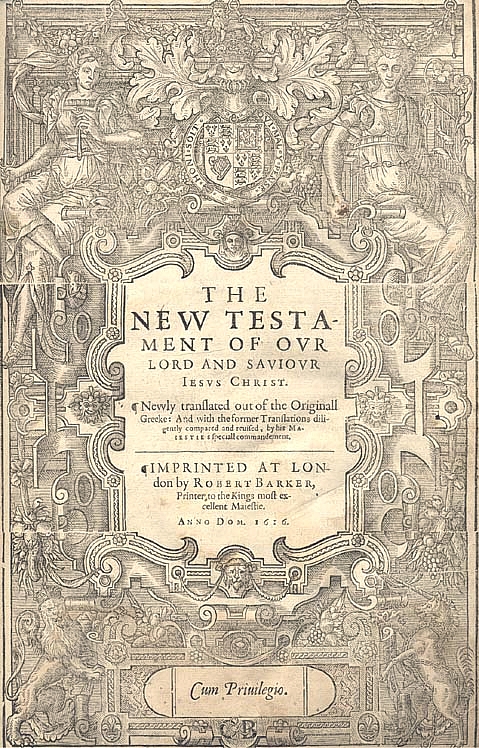
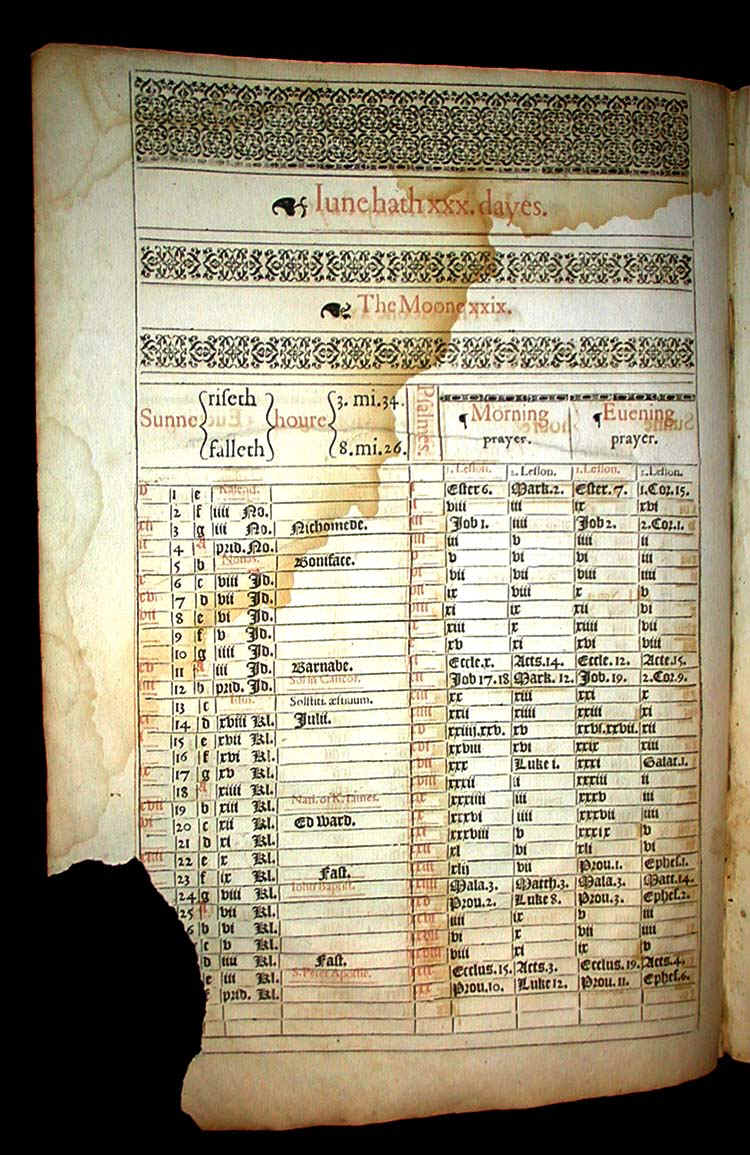
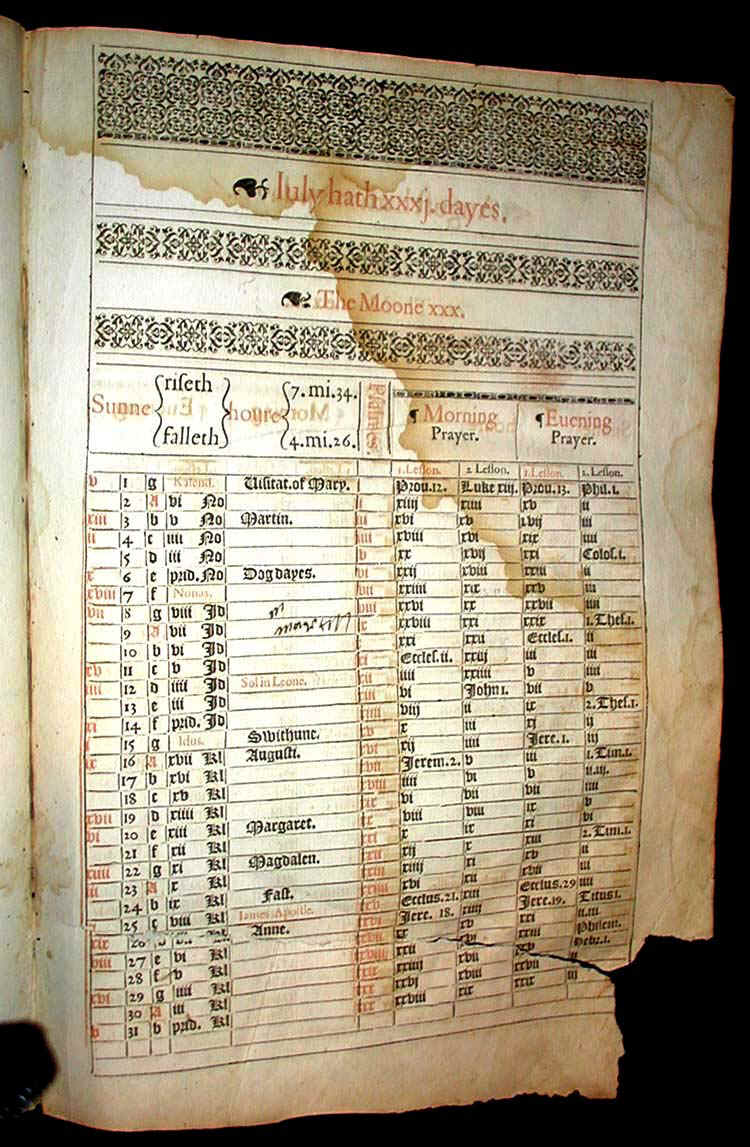
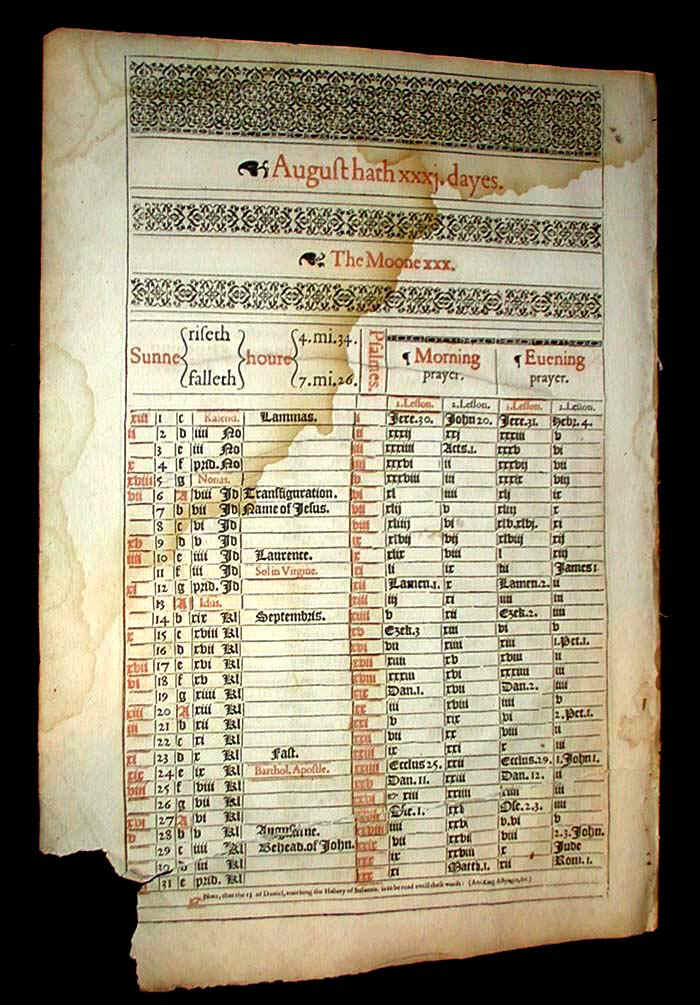
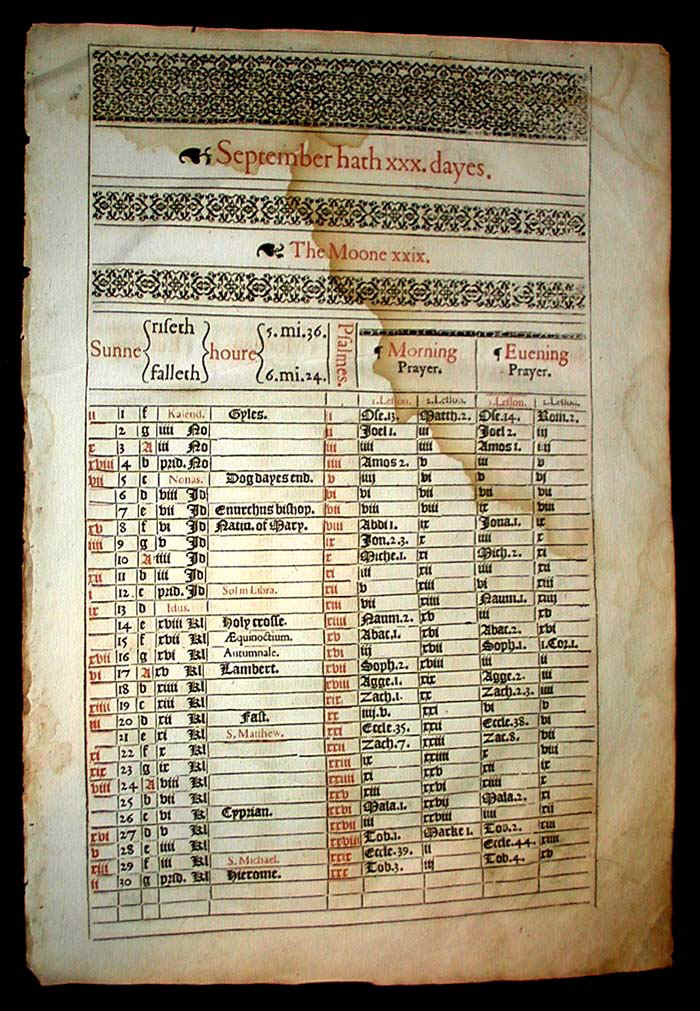
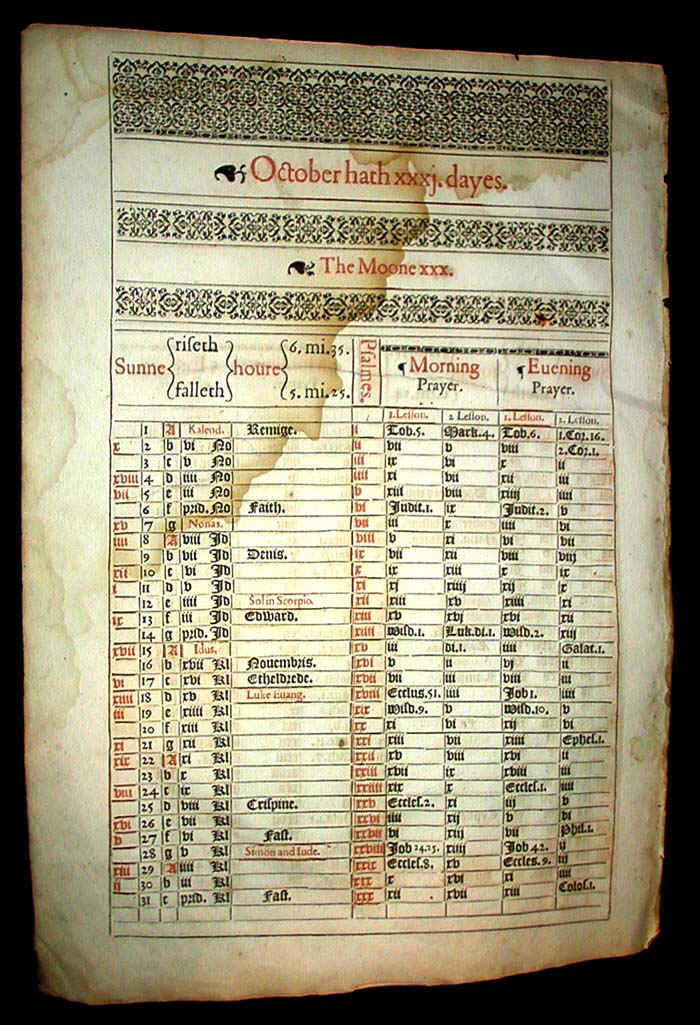
It is well known that Besides the liturgical calendar, The original printings of the King James Version also contained a Calendar / Almanac for each individual month of the year. These included the Pagan Zodiac.
The 1611 KJV had a calendar for each month of the year. These scans of the calendars for the months of May, June, July, Aug, Sept., and Oct. All of these leafs were printed by Robert Barker at London, England in 1613. These are Original leafs from the true Second Folio of the King James Bible. The spelling in the list bellow is in seventeenth century English as would have been [and is] found in the early editions of the KJV.
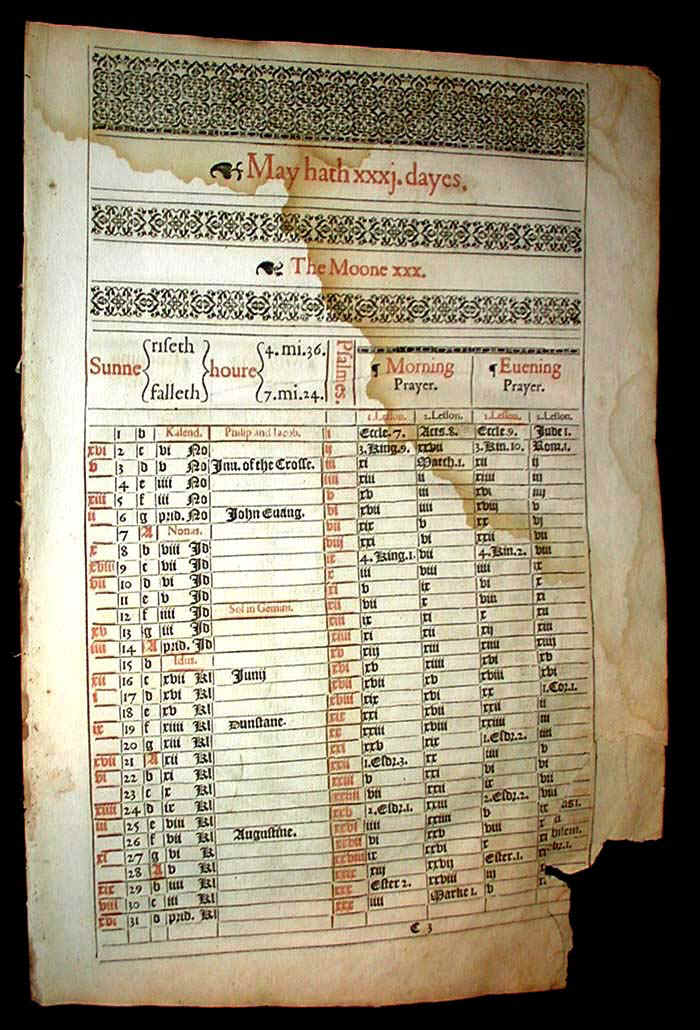
JANUARY, 12 :Sol in Aquario
FEBRUARY, 11 :Sol in Piscbes
MARCH, 13 :Sol in Aries
APRIL, 11 :Sol in Tauro
MAY, 12 :Sol in Gemini
JUNE, 12 :Sol in Cancro
JULY, 12 :Sol in Leonc
AUGUST, 10 :Sol in Virgine
SEPTEMBER, 12 :Sol in Libra
OCTOBER, 12 :Sol in Scorpio
NOVEMBER, 13 :Sol in Sagit.
DECEMBER, 12 :Sol in Capicor.