"Who was the Other Mary"
This is a refutation of a deceitful Protestant article by the same name, found on the Anti-Catholic Christians Evangelizing to Catholics websites.
ARTICLE NEED WEB ADDRESS

When I set out engage a anti-Catholic site I usually try to refute four or five articles from it. This better enables the reader to see the the dishonesty, and ignorance or the protestant site, providing multiple examples. The site this article came from is a very small and poorly designed site run by a man name Bill Jackson. Normally I would not pay attention to such a small site, but Mr. Jackson posted a article attacking a pamphlet put out by some friends of mine at Our Lady of the Rosary Library, (based out of Louisville Kentucky).
In this refutation I will address Mr. Jackson's point one by one in the order in which they were posted. for the ease of the reader, and to prevent confusion, all of Mr. Jackson's statements will be in "red" and my replies will be Black. Mr. Jackson started his article with a brief statement outlining what he felt was the Catholic position on the topic. Since The goal of this refutation is to address Mr. Jackson's anti-Catholic arguments, I felt this portion was not necessary, and removed it, allowing us to immediately begin dealing with his Protestant arguments.
(Note to the Reader: a brief statement made by Mr. Jackson outlining what he felt was the Catholic position on the topic was removed for it is not necessary.)
PROBLEMS WITH THIS INTERPRETATION
[Mr. Jackson's] James the son of Alphaeus (or Cleopas) is never called "James the Less" as James the brother of John is never called "James the Greater."
This is not even a legitimate argument, and is based on faulty logic. One could easily point out that the sacred scriptures do not deny that James the Less was the son of Alphaeus, Just as they do not deny James the Greater was the brother of John. One could write volumes on what is not written in the sacred text, but the fact that it was not written proves nothing.
[Mr. Jackson's] James the son of Alphaeus (Luke 6:15) could not be one of Jesus' brethren of Matthew 13:55, as these brethren did not believe on Him (John 7:5).
This is true, and it proves nothing, the "brethren" mentioned in John 7:5 are not even identified by name, they could be anyone. The Greek term used here is "adelphos" and can mean any male relatives that is not a blood brothers including cousins, uncles and grandparents. As we can see this verse is vague that it proves nothing.
"adelphos: a brother, or near kinsman;" in the plural, "a community based on identity of origin or life." (Vine's complete Expository Dictionary Of New Testament Words, by W. E Vine, copyright 1996, pg 82)
"adelphos: a brother, near kinsman or relative; one of the same nation or nature; one of equal rank or dignity; an associate, a member of the Christian community" (Mounce's Complete Expository Dictionary of old and New Testament words, Edited by William D. Mounce, copyright 2006, pg. 1072)
"adelphos: a brother, near kinsman or relative; one of the same nation or nature; one of equal rank or dignity; an associate, a member of the Christian community" (The Analytical Greek Lexicon, By Harold K. Moulton, copyright 1970, pg. 6)
"adelphos: a brother, or near kinsman;" in the plural, "a community based on identity of origin or life." (The New Strong's Expanded Dictionary of Bible Words, James Strong, LL.D., S.T.D., copyright 2001, pg 913)
"adelphos: a brother, near kinsman or relative; one of the same nation or nature; one of equal rank or dignity; an associate, a member of the Christian community" (A Greek-English Lexicon to the New Testament, by Rev. Thomas Sheldon Green, copyright 1970, pg. 3)
"adelphos: a brother, near kinsman or relative; one of the same nation or nature; one of equal rank or dignity; an associate, a member of the Christian community" (The New Analytical Greek Lexicon, By Wesley J. Perschbacher, copyright 2006, pg. 8)
[Mr. Jackson's] Therefore the James mentioned in Matthew 27:56 could not have been James the son of Alphaeus. This James has a brother named Joses (or Joseph), and a mother named Mary .
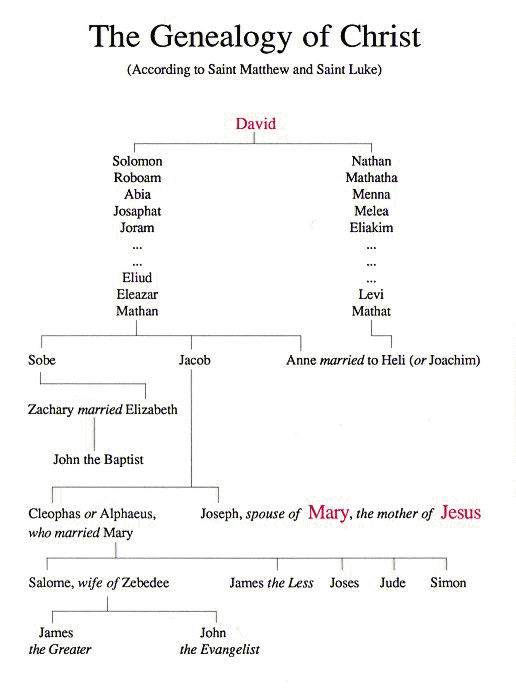
I have to ask, Were does the scriptures say that James the son of Alphaeus did not have a brother named Joses? Again , Mr. Jackson attempts to build a illogical straw man argument, with no scriptural evidence. There is no scriptural objection to James the son of Alphaeus and Joses being brothers, just as there is no scriptural objection to their mother being Mary wife of Cleopas (mentioned only in John 19:25). Many Bible scholars agree that this is very possible, for example the "Nelson’s New Illustrated Bible Dictionary" says:
Clopas [KLOE puhs]- the husband of Mary, one of the women who was present at the crucifixion of Jesus (John 19:25; Cleophas, KJV). According to tradition, Clopas was the same person as Alphaeus, the father of James the Less and of Joses (Matt. 10:3; Mark 15:40). Most scholars agree that Clopas is not the same person as Cleopas (Luke 24:18). (Nelson’s New Illustrated Bible Dictionary, copyright 1995) [More Examples are listed further Down]
[Mr. Jackson's] Would three of the four evangelists have omitted Jesus' mother from the list of women at the Cross and Tomb?
This has no beating on the topic at all, the scriptures were focused on the life of Christ, his miracles, his teachings, his death and his resurrection. They were not focused on the whereabouts of his mother. So far Mr. Jackson has failed to prove a single point.
[Mr. Jackson's] If "the other Mary" is Jesus' mother, she would have to had other children. See the Messianic Psalm 69:8, when the Messiah says, "I have become an alien to my mother's children."
Mr. Jackson's is trying to claim that St. John in his gospel records a fulfilled prophesy from from the book of Psalms 69:8-9, in which Jesus tells us He has brothers and sisters.
John 2:17, And his disciples remembered that it was written, The zeal of thine house hath eaten me up. Psalms 69:8-9 I am become a stranger unto my brethren, and an alien unto MY MOTHER'S CHILDREN. For the zeal of thine house hath eaten me up; and the reproaches of them that reproached thee are fallen upon me. Mr. Jackson's is dishonestly miss-applied these verses of sacred scripture. First we must note the Hebrew word for Children is "ben" which has a very wide meaning including grandson, subject, nation, quality or condition,
Hebrew: ben: From HSN1129; a son (as a builder of the family name), in the widest sense (of literal and figurative relationship, including grandson, subject, NATION, quality or condition, etc., [like HSN0001, HSN0251, etc.]): (Strong's Ref. # 1121)
The reason why apostles to apply these certain verse from David's Psalm to a Christ is obvious, by the zeal in which consumed him to protect his Father's house. This indeed did bring upon the reproach of the Jews (his Mother's "ben" NATION ) standing by. It is important to note, There is nowhere in the surrounding Scene that refer to any blood Brothers, sisters. Lets read the scene:
"Jesus went up to Jerusalem. And found in the temple those that sold oxen and sheep and doves, and the changers of money sitting: And when he had made a scourge of small cords, he drove them all out of the temple, and the sheep, and the oxen; and poured out the changers' money, and overthrew the tables; And said unto them that sold doves, Take these things hence; make not my Father's house an house of merchandise. And his disciples remembered that it was written, The zeal of thine house hath eaten me up. Then answered the JEWS (his Mother's "ben" NATION ) and said unto him, What sign shewest thou unto us, seeing that thou doest these things? Jesus answered and said unto them, Destroy this temple, and in three days I will raise it up. Then said the JEWS (his Mother's "ben" NATION ), Forty and six years was this temple in building, and wilt thou rear it up in three days? But he spake of the temple of his body. When therefore he was risen from the dead, his disciples remembered that he had said this unto them; and they believed the scripture, and the word which Jesus had said." (John 2:13-22)
[Mr. Jackson's] The fact that Jesus' mother had other children is borne out by Matthew 13:55. Wait a minute, our Roman Catholic friend will say. The word "brethren" is used in other parts of the New Testament to denote male relatives who are not blood brothers. This is true,
Here we have a very funny irony, in the first sentence Bill holds Matt.13:55 up as solid proof for his claim. In the second sentence he acknowledges that this verse is easily answered by Catholics. Then he goes on to admit that the Catholic answer is write. Bill almost seems to debating himself, he sure is making my job easy.
[Mr. Jackson's] but the word "sisters" in Matthew 13:56 is never used of a female relative other than a blood sister. So the mother of the Messiah had other children, and they were alienated from him (John 7:5).
Here Mr. Jackson attempts to build a argument based on his faulty understanding of the Greek term "adelphe" (i.e. Sister).
"adelphe; gen. adelphes, ... A sister by the same mother (Luke 10:39, 40; John 11:1,3); a sister in general (Matt. 19:29; Mark 3:35); a near kinswoman, a cousin (Matt. 13:56; Mark 6:3[cf. Matt. 12:50; Mark 3:35]); a sister in common faith, a Christian woman (Rom. 16:1; 1 Cor. 7:15; 9:5; James 2:15) " (The Complete Word Study Dictionary New Testament, Edited by Spiros Zodhiates Th. D., 1992, Pg. 79)
adelphe: a sister, near kinswoman, or female relative; a female member of the Christian community" (The Analytical Greek Lexicon, By Harold K. Moulton, copyright 1970, pg. 6)
adelphe: a sister, near kinswoman, or female relative; a female member of the Christian community" (Mounce's Complete Expository Dictionary of old and New Testament words, Edited by William D. Mounce, copyright 2006, pg. 1072)
adelphe: a sister, near kinswoman, or female relative; a female member of the Christian community" (A Greek-English Lexicon to the New Testament, by Rev. Thomas Sheldon Green, copyright 1970, pg. 3)
adelphe: a sister, near kinswoman, or female relative; a female member of the Christian community" (The New Analytical Greek Lexicon, By Wesley J. Perschbacher, copyright 2006, pg. 8)
As we can see, that "adelphe" (i.e. Sister) CAN mean a cousin, or any female relative (including aunts and grandparents) and that's exactly what it does means in in Matt. 13:56. So another of Bill's Defective arguments falls apart under the scrutiny of the truth, and his ignorance of the topic is exposed again.
[Mr. Jackson's] So the mother of the Messiah had other children, and they were alienated from him (John 7:5).
John 7:5 has already been addressed, but for the sack completeness I will address it again. This verse proves nothing, the "brethren" mentioned in John 7:5 are not even identified by name, they could be anyone. The Greek term used here is "adelphos" and can mean any male relatives that is not a blood brothers including cousins, uncles and grandparents. As we can see this verse is vague that it proves nothing. Bill is grasping at straws and failing to provide any proof to his unbiblical claim that Mary had other children.
[Mr. Jackson's] The entire Catholic argument rests on the identity of "James the Less." If he can be linked to James the son of Alphaeus, then he can be linked to Mary Mother of Cleopas (very likely the same as Alphaeus).
Not only is this the Catholic position it is the only logical one. I invite the reader to examine the Chart of the genealogies of the "Brethren". But this understanding of the identity of "James the Less." goes beyond, just Catholics. Many, Many Many for the most respected Protestant Biblical scholars, and Biblical reference books also agree with it. I will provide just a few examples:
[Mr. Jackson's] BUT if he be James the son of Alphaeus, he CANNOT be the James of Matthew 13:55, one of the brethren of Jesus.
Why not? Mr. Jackson has failed to provided one reason why we should not accept the two as the same person. He has failed to make a case, or provide one solid piece of scriptural evidence to support his claim.
Alphaeus- the husband of one of the Marys, and father of James the less and Joses (Mat. x.3; Mark xv. 40). (A Dictionary of the Bible copyright 1954)
Alphaeus. Father of James the Less, the apostle, and writer of the epistle, and "brother (i.e. cousin) of Our Lord" (Matt. x. 3, Mark iii. 18, Luke vi. 15, Acts i. 13); also of Joses (Mark xv. 40). Husband of the Mary who with Jesus’ mother stood at the cross (John xix. 25). The same as Clopas (as it should be written, not Cleophas), both names being Gr. Variations of Heb. Chalpai, or Hhalpai. Possibly the Cleopas of Luke xxiv. 18. If the translation Luke iv 16 be correct, "Jude, brother of James," A. was his father also. In Mark ii. 14 Levi (Matthew) is called the son of Alphaeus. Whether he be the same is not certain; probably not. (Bible Cyclopedia, by Rev. A.R. Fausset, Ma., copyright 1909, p. 30.)
James the son of Alphaeus another of the twelve apostles, probably the same as James the less, the son of Mary. By the less is meant his age or height in relations to James the son of Zebedee(3,458 Bible People & Places, printed by Thomas Nelson Inc. copyright 1993, pg. 170)
James the son of Clopas (the younger)... It is Mark who calls him 'the younger', which may refer to his age or his size. (Who's Who in the Bible, by Joan Comay and Ronald Brownrigg, copyright 1971 pg.146)
Alphaeus, father of the lesser James (Matt. 10:3.) He is called Cleopas in John 19:25.(The New Combined Bible Dictionary and Concordance, copyright 1965)
Clopas [KLOE puhs]- the husband of Mary, one of the women who was present at the crucifixion of Jesus (John 19:25; Cleophas, KJV). According to tradition, Clopas was the same person as Alphaeus, the father of James the Less and of Joses (Matt. 10:3; Mark 15:40). Most scholars agree that Clopas is not the same person as Cleopas (Luke 24:18). (Nelson’s New Illustrated Bible Dictionary, copyright 1995)
Alphaeus or Alpheus personal name. 1. Father of apostle called James the Less to distinguish him from James, the son of Zebedee and brother of John (Matt. 10:3; Mark 3:18; Luke 6:15; Acts 1:13). Mark 15:40 says James’ mother, Mary, was with Jesus; mother at the cross. John 19:25 says Mary the wife of Cleophas was at the cross. This would seem to indicate that Cleophas and Alphaeus are two names for the same person. (Holman Bible Dictionary, copyright 1991)
James the son of Alphaeus and 1 of the apostles of Our Lord (matt. 10:3; Mark 3:18; Luke 6:15; Acts 1:13) Nothing further is certainly known about him. It is natural, however, as it has been usual, to assume that the James of Matt. 27:56; Mark 15:40; 16:1 is this James, in which case we may observe that he bore the surname "The Less" (The New Westminster Dictionary of the Bible, copyright 1965, pg 443)
"Called James the 'great/major' to distinguish him from James the son of Alphaeus , 'the Less/Minor"(Eerdmans Dictionary of the Bible, copyright 2000, pg. 669)
James the son of Alphaeus and one of the apostles of Christ (Matt. 10:3; Acts 1:13). Nothing more is known about him. He is usually identified with James the little or the less, the brother of Joses and son of Mary. (The Zondervan Pictorial Bible Dictionary, copyright 1963, page 401)
James the son of Alphaeus and Mary. He is called 'the Less' in Mark 15:40 KJV (Today's Dictionary of the Bible, Compiled by T.A. Bryant, copyright 1892 pg. 323)
James the son of Alphaeus, another apostles, usually identified with James 'the younger' (Mk.15:40) (The New Concordance Bible Dictionary, Edited by Derek Williams, copyright 1989, pg. 253)
James the son of Alphaeus (probably identical with Clopas of Jn 19:25 RV), styled "the little (not "the less") , probably on account of his shortness of stature, to distinguish him the other apostle James the son of Zebedee " (Hastings' Dictionary of the Bible, Edited James Hastings, copyright 2001, pg.423)
Alphaeus- The husband of one of the Marys, and father of James the Less and Joses (Matt. 10:3; Mark 15:40); often identified with Clopas, in AV CLeophas (John 19:25; Mark 15:40). While their identification has the support of tradition and appears probable. (The New Westminster Dictionary of the Bible, copyright 1965)
James the son of Alphaeus and 1 of the apostles of Our Lord (matt. 10:3; Mark 3:18; Luke 6:15; Acts 1:13) Nothing further is certainly known about him. It is natural, however, as it has been usual, to assume that the James of Matt. 27:56; Mark 15:40; 16:1 is this James, in which case we may observe that he bore the surname "The Less" (New Illustrated Davis Dictionary of the Bible, By John D. Davies, 1973 p. pg 369)
This list could easily be doubled, but I see no need to, the point has been sufficiently proven.
[Mr. Jackson's] There is no biblical link between James the Less and James the son of Alphaeus.
St. Jerome (A.D. 383) address this very issue in his reply to Helvidius. St. Jerome explains this topic with a biblical clarity and preciseness that that verges on perfection. Here is a Link to St. Jerome's Reply to Helvidius. The Protestant translators of the KJV of very for special praise:
"S. Jerome a most learned father, and the best linguist without controversy, of his age, or of any that went before him o undertake the translating of the Old Testament, out of the very fountain with that evidence of great learning, judgment, industry, and faithfulness, that he had forever bound the Church unto him, in a debt of special remembrance and thankfulness...S. Jerome maketh no mention of the Greek tongue, wherein yet he did excel" ( "THE TRANSLATORS TO THE READER", The Original Preface to the King James Version 1611, pg 5)
[Mr. Jackson's] There is no disgrace to Mary's having had other children.
The disgrace is that it is a falsehood, no where in article has Bill proven his unbiblical claim. Bill has his displayed his blatant dishonesty by his intentional misinterpretation of the scriptures. He has also displayed his extreme ignorance of the Biblical Greek with his attempts to twist the truth.
[Mr. Jackson's] I'm glad no part of my salvation rests upon a Church that has decreed the unscriptural doctrine of the Perpetual Virginity of Mary.
The Perpetual Virginity of Mary of Mary has a very scriptural bases, there are lots of Catholic articles on the web explaining this very point. On of the Best was written by the early Church father, and respected Biblical scholar St. Jerome (A.D. 383) contains a rebuttal to Helvidius, who denied the faith of the entire Christian world by suddenly asserting, contrary to virtually all earlier authors, that Mary had children besides Jesus. Here is a Link to St. Jerome's Reply to Helvidius. I highly recommend it to any honest person who wishes to know the truth on this subject.