The Post-Christ Jews strongly disliked the Septuagint Bible because the Christians were useing it.
+++ (Jewish encyclopedia 1955)" the appearance of the septuagint(which the jews of
the Christian centuries rejected) was greeted enthusiasm everywhere; but with the rise of the Christian sect, and its adoption of the version of
the Bible, the jews began to denounce it vehemently, accusing the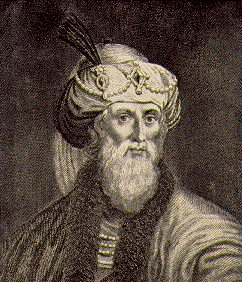 Christians of falsifying the Greek texts"(p. 593)
+++(A Dictionary of the Bible, 1954 p.799)"After the destruction of Jerusalem in A.D. 70, the Septuagint lost favor among the Jews, because of the successful use made of it by the Christians in establishing the claims of Jesus"
+++(A Dictionary of the Bible, 1954 p.799)"The translation by Aquila, a native of Pontus and a proselyte to Judaism. He lived in the time of the emperor Hadrian, and he undertook to make a literal version of the Hebrew Scriptures in order to counteract the use of the Septuagint made by the Christians in advancing their doctrines."
+++(The Deutero Canonicals 1995)"The Apostles and Christians in general, used the 'Septuagint', also called LXX, as their Bible in the first century. This upset the Jews, so they decided to call a council to deal with the matter. The Septuagint is the Old Testament translation into Greek from Hebrew, which the Jews completed at Alexandria in the second century B.C., and it had all 46 books including the Deuterocanonicals.The Jews decided to translate anew and they wanted to remove references that would be useful to Christians."
+++(Encyclopedic Dictionary of the Bible 1963) "At first the LXX [Septuagint] was highly regarded by all the Jews; it spread from Egypt to the whole Jewish Diaspora and became the official Bible Greek-speaking Judaism. The New Testament writers, writing in Greek for Greek-speaking people, usually quoted from the Old Testametn according to the LXX [Septuagint]. Naturally, therefore, the LXX also became the official Old Testament of the early Church, and it is still the official OT of the Greek Church, of both the Uniate and the Schismatic Christians. However, after the destruction of Jerusalem in 70 A.D., when Jewish opposition to Christianity became more pronounced and Judaism crystalized in its rabbinical form, the LXX [Septuagint], though originally made by Jews for Jews, was frowned on by the Jews as a quasi-Christian book."
+++(History of the Early Church 1949)"It was the great success of the early Christians in apologetics That flaired the Jewish resentment towards the Septuagint Bible."
+++(Scripture alone? 1999)"The decision of a Jewish council which was held more than 50 years after the resurrection of Christ are not binding on the Christian community just as the ritual walls of Judaism are not binding on the Christians.... The council was to some extent a polemic directed specifically against the "sect" of Christianity, therefore, was inherently opposed to Christianity. These Jews most likely accept the shorter Pharisaic Canon precisely because the early Christians accepted the longer Septuagint canon the decisions of this council represented the judgment of just one branch of Judaism within Palestine not of Judaism as a whole"
+++(The New World Dictionary Concordance to the New American Bible 1970.)"The Christian Church made the Septuagint its own, and this text assumed enormous importance in the disputes between Christians and Jews. This undoubtedly explains why Judaism detached itself more and more from the ancient translation and attempted new ones."
+++(New Catholic Encyclopedia 1967)"Doubts began to develop in the East in the 4th century. These doubts seem to have emerged as an aftermath of the Christian polemic with the Jews. Since the Jews from the time of the Synod of Jamnia no longer recognized the Deutero-Canonical literature, it would have been futile for Christian apologists to make use of them. Justin Martyr says this expressly (Dial. Tryphon). These hesitations gradually evolved into misgivings about the Canonicity itself of the books…"
+++(Errata of the King James 1965 p.345)"Doubtless it was the quick spread of Christianity and the Christian's overall acceptance of the septuagint Bible that led many Jews such as Josephus to openly reject it. Most Jews came to look upon the Septuagint as a 'Christian' book."+++ Josephus wrote his history declaring only 22 books sacred about 100 A.D. after the council of Javneh (90 A.D.) throughout the Deutero Canonical books.
+++(Errata of the King James 1965 p.345)"Doubtless it was the quick spread of Christianity and the Christian's overall acceptance of the Septuagint Bible that led many Jews such as Josephus[100 A.D.] to openly reject it. Most Jews came to look upon the septuagint as a 'Christian' book."
+++ (Jewish encyclopedia 1955)"It was not until about ten years after the council of Javneh 90 A.D. that Josephus wrote his declaration that the Jews had twenty two sacred books."
+++(Background To The Bible, An introduction to Scripture Study 1978. p.124)"Josephus A contemporary of the apostle Paul writings about A.D. 100 and speaking for his nation says: ' we have but twenty two [books] containing the history of all time, books that are justly believed in."
+++(Valentine's Jewish Encyclopedia 1962)"About the year 100 A.D. Josephus tells us that the Jews of his time excepted only twenty two books as sacred stating:' we have but twenty two [books] containing the history of all time, books that are justly believed in...Five belong to Moses, which contain his laws and the traditions of the origin of mankind till his death.From the death of Moses to Artaxerxes the prophets who were after Moses wrote down what was done to their time in thirteen books.The remaining four book contain hymns to God an precepts for the conduct of human life."
+++(The Books of The Bible 1997 p.407)"It was at the end of the first century 100 A.D. at the Jewish historian Josephus explains the Hebrew people excepted only twenty two books as worthy of belief...Five belong to Moses, which contain his laws and the traditions of the origin of mankind till his death.From the death of Moses to Artaxerxes the prophets who were after Moses wrote down what was done to their time in thirteen books.The remaining four book contain hymns to God an precepts for the conduct of human life."
+++(History of the Early Church 1949)"It was after the council of Javneh 90 A.D. that the famous Jewish historian Josephus wrote:' we have but twenty two [books] containing the history of all time, books that are justly believed in."