
Dispelling the Myth's of the KJV Onlyist

The phoneme of the King James only movement is a relatively new mutation of Protestant doctrine. This belief has developed only over the last century. If we go back only a hundred year we find that it was generally accepted by Protestant scholars that although the KJV was a fairly accurate translation it was not perfect, the translators themselves never even deemed it so. It was not uncommon for various publishers of the KJV to point out its problems, and errors. In this quick look at the myths of the King James only movement, we shall examine a few of the publishers notes in comparison to the modern beliefs held by the fanatics:
MYTH: The King James Bible is the only true word of God
The very translators of the King's Bible would [and] disagree with this point, they said:
"Now to the latter we answer; that we do not deny, nay we affirm and avow, that the very meanest translation of the Bible in English, .... containeth the word of God, nay, is the word of God."
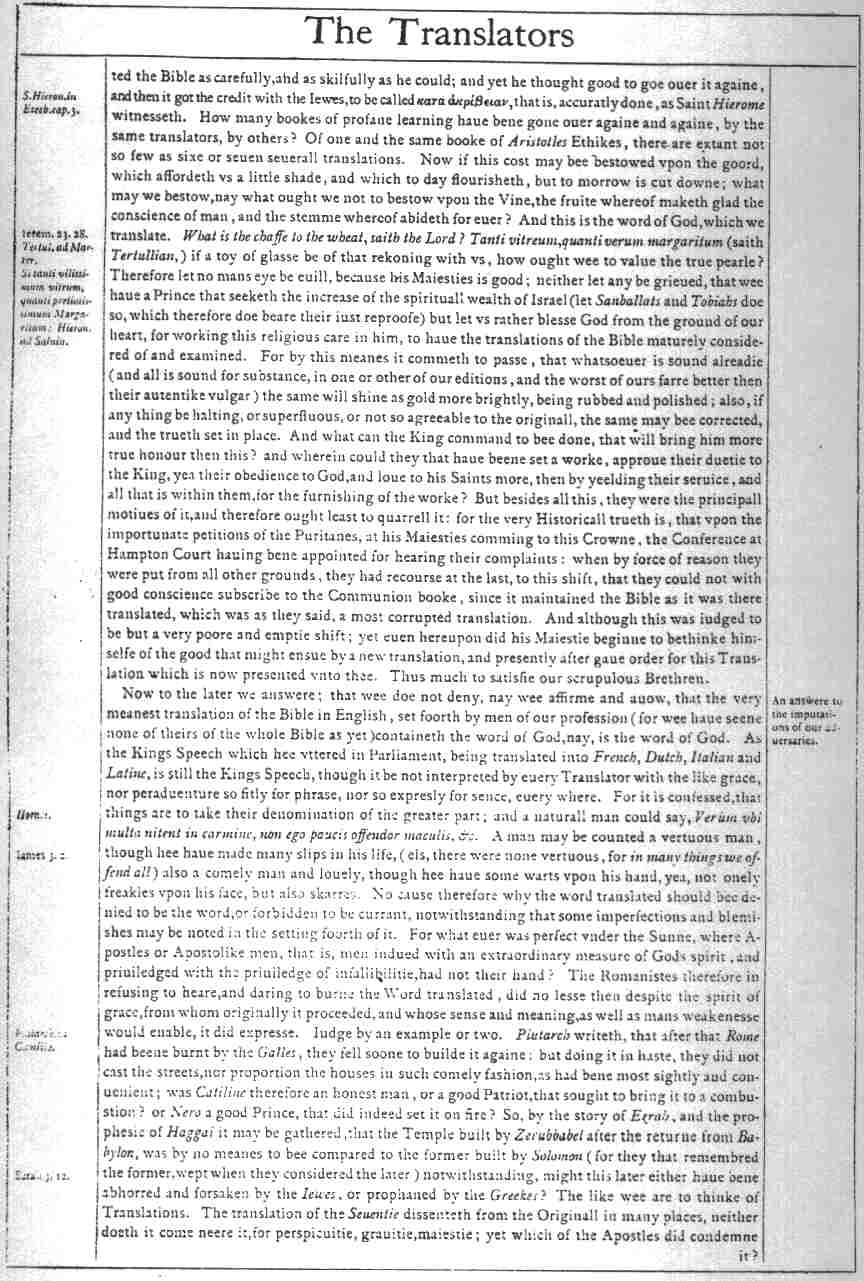
The 1611 translation comity held that any translation even if it should have "some imperfections and blemishes" should not be denied as "the word of God", or forbidden to be used:
"No cause therefore why the word translated should be denied to be the word, or forbidden to be current, notwithstanding that some imperfections and blemishes may be noted in the setting forth of it."
MYTH: The translators of the 1611 King James Version were in there work guided by God.
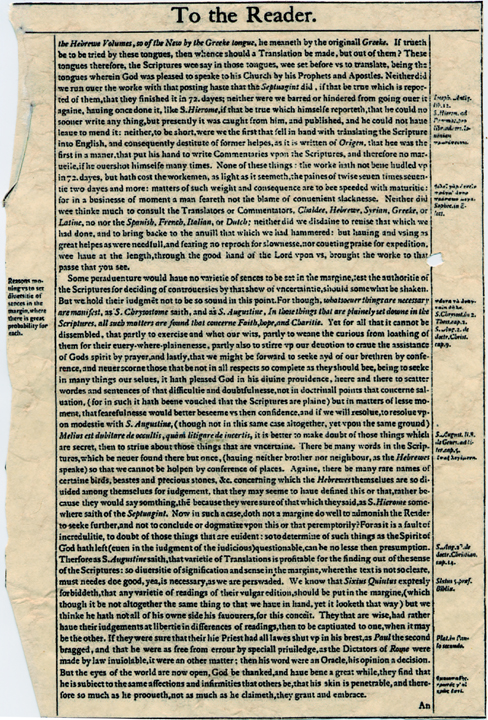
It may come as a shock to many Protestants it know that in The original Preface to the King James Version of the translators themselves admitted there were many Hebrew and Greek words (lexicons) and whole sentences They did not understand, They were forced to GUESS there meanings. If they had to guess the meaning of the words were was God's was guiding hand?
"It hath pleased God in His divine providence, here and there to scatter words and sentences of that difficulty and doubtfulness, not in doctrinal points that concern salvation (for in such it hath been vouched that the Scriptures are plain), but in matters of less moment, that fearfulness would better beseem us than confidence, ...There be many words in the Scriptures which be never found there but once (having neither brother nor neighbor [ipax legomena], as the Hebrews speak), so that we cannot be holden by conference of places. Again, there be many rare names of certain birds, beasts and precious stones, etc., concerning which the Hebrews themselves are so divided among themselves for judgment
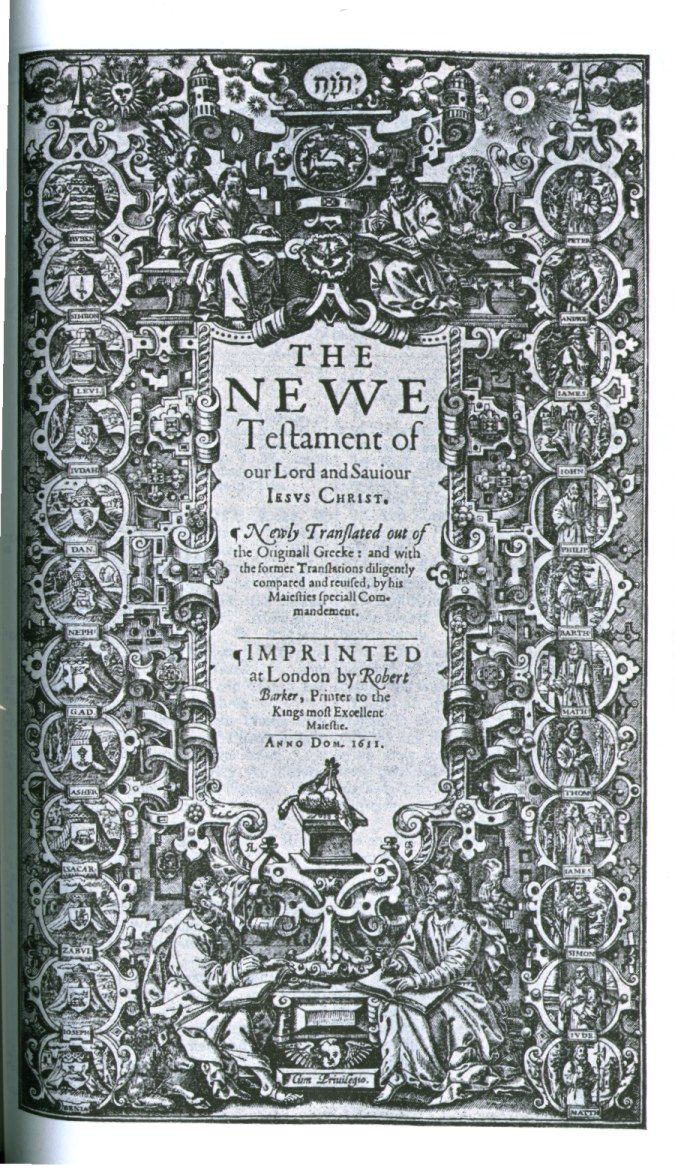
MYTH: God's Word does not have a Copyright on it. The Scriptures in the King James Bible have no copyright on it. The Scripture belongs to God, and He hasn't felt to profit from man for His Word.
Well the 1611 KJV, DID have a copy write on it. At the bottom of the title page for the New Testament in the 1611 edition the phrase, "Cum Privilegio". These Latin words literally mean "with privilege" or "right", that is, with the right of reproduction retained, or, in a word, "copyrighted."
This scans is from the bottom of the opening page of the New Testament in the 1611 King James Version. This scan is from the Oxford University Press (1911) reprint of the 1611 KJV. Click here to see a scan of the full opening page of the New Testament from the Reprint of the 1611 KJV.

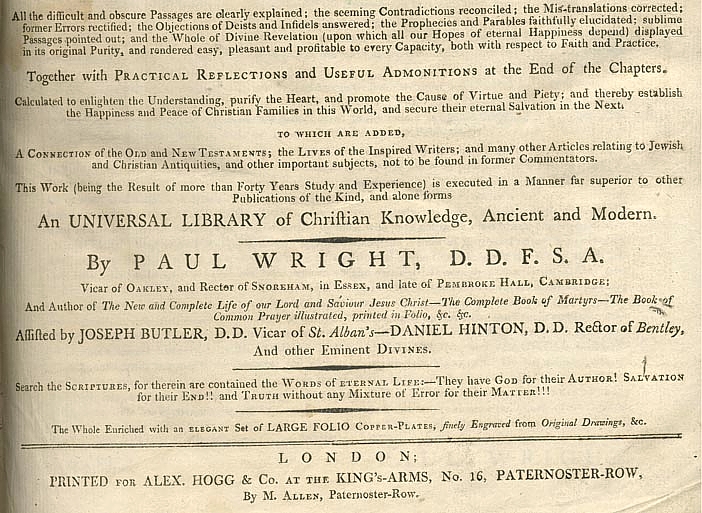
The title page of the 1785 King James Version British Family Bible [Printed in London for Alex Hogg & Co.] Makes a very Interesting admission that the previous printed KJV's all had "obscure passages, contradictions, mis-translations, and errors."MYTH: the 1611, was a perfect translation.
MYTH: All of the error corrected in the King James Version through the years have been, printing errors
No, as we have seen above even the printers of the 1785 King James Version Acknowledge that there were "mis-translations" in the text of the KJV.
MYTH: All of the changes and verations found in the different editions King James Version through the years have been spelling and punctuation.
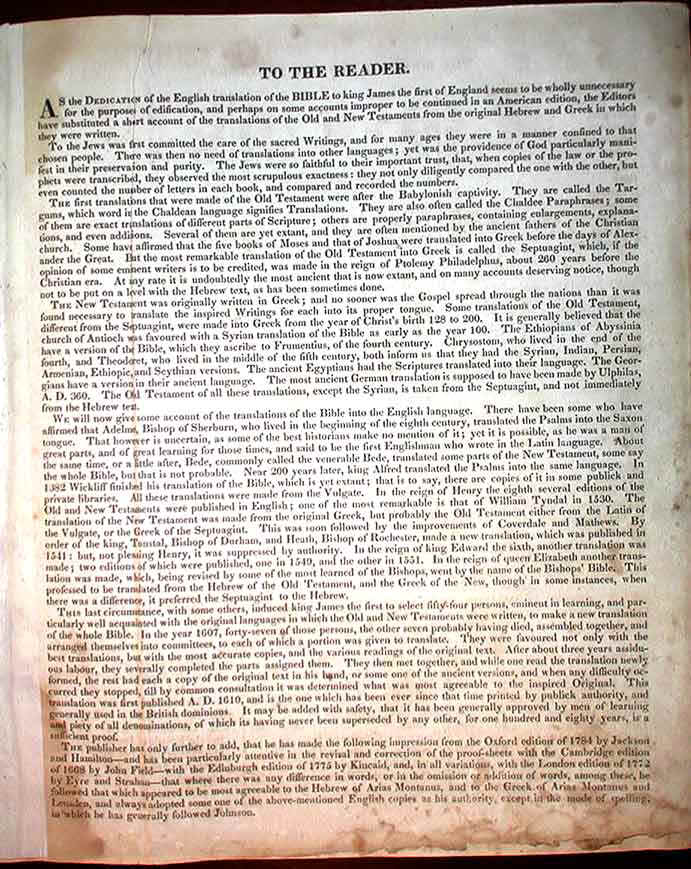
Of course this is not true, even Isaac Collinsin his time explains that there were differences in wording found in the different editions of his time. In the preface ["To the Readers"] of his 1791 printing of the King James Version [which became the standard of the KJV for American Printers for over a hundred years] said "in the omission or addition of words"
MYTH: The KJV is is based on the pure Greek of the textus receptus.
While it is true that the Greek used for translating 1611 KJV was primarily "textus receptus". The Greek texts used in many of the over one Hundred revisions veried. As we see above Mr. Collinsin chose to use the "Greek of Arias Monfanus and Leusden". So we see that the present KJV does not come from one pure strand of Greek, but has been muddied with many variations and strains of the Greek Texts.
MYTH: The text of the King James Version has been constant and unchanging
Mr. Collinsin points out in the preface ["To the Readers"] of his 1791 printing of the KJV, that the three leading British editions [Oxford, Cambridge, and Edinburgh,] had many variations.
MYTH: Any Variations that may have been in the text were not in important places.
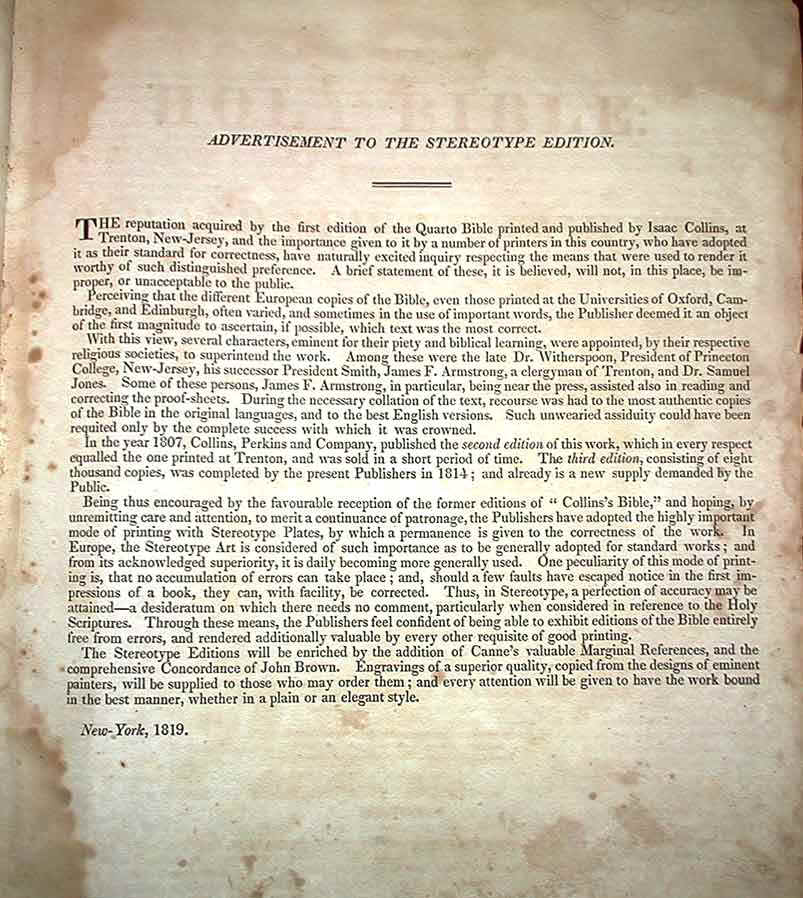
In 1824 preface of the KJV, we find that the King James version was being printed in a whorl wind of confusion and text differences:
"Perceiving the different European copies, even those printed at the universities of Oxford, Cambridge, and Edinburgh, often varied, and some times in the use of important words the publisher deemed it an object of the first magnitude to ascertain if possible, which text was the most correct" [from the preface to the 1824 Sterotyped for Collins & Co. by B & J. Collins. Boston Published by C. Ewer & T Bedlington]
MYTH: The King James Version was given to all, for all to understand.
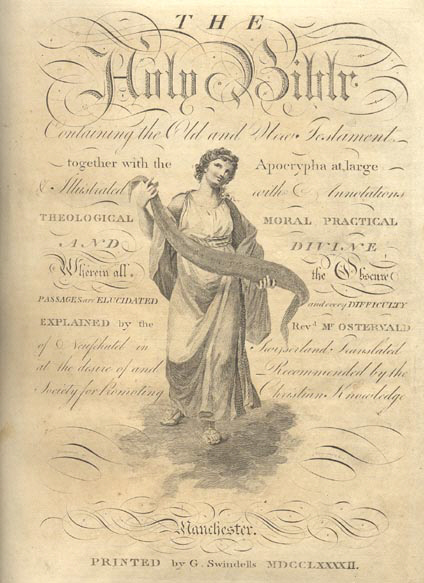
Than why does the 1792 edition of the King's Bible [Printed in Manchester by G. Swindells] tell us that it [the KJV] contains "obscure passages" and "difficult" passages that required fallible men to explain.?
"Wherein all the obscure passages are elucidated and every difficulty explained by the Rev Ostervald."
This page has helped
People find the truth since November 1999