
"Graven Image" Of Pagan Origin,
as were Found in The King James Version
GRAVEN: to carve or cut into a hard surface: engrave[(C)1996 Merriam-Webster Inc.]

For allmost four hundred years the King James Bible has been the standard for English speaking Protestants, what most people realize is that this Bible has a long history of "graven image". the very fist edition of the KJV known as the Great "HE" Bible printed by Robert Barker had many illustrations called woodcuts. the images were created by taking a wooden block [ later copper and steel plates were used ], and carving a pictorial or design in to it's surface. This image was used as a sort of stamp, ink was applied to its carved surface and it was pressed against the parchment of paper.
Some of the 1611's woodcuts are remarkable for there quality. Some, are are remarkable for other reasons, not so nice reasons, such as Nudity, and some are remarkable for there clearly of Pagan origin, the following are two such examples.
The idia of finding Images of Pagan Creachers in
the King James Version is not shocking when one considers the fact that the 1611 KJV also
contained the Pagan Zodiac in it calender. We should also
consider the Fact that the very text of the KJV is loaded with
Creatures pulled straight out of Pagan Greek Mythology, such creatures as Unicorns,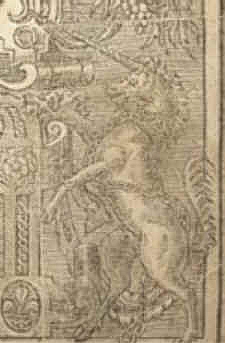 Witches, Night Monsters and Sea
Monsters, Satyrs, Cockatrice and Dragons and other creatures such as the Behemoth and the
Leviathan.
This Graven image is from the Title Page of the 1616 printing of the KJV. This was actually printed while King James, who authorised this translation, was still alive and just five years after the original was printed. Click here to see the Title page of this edition.
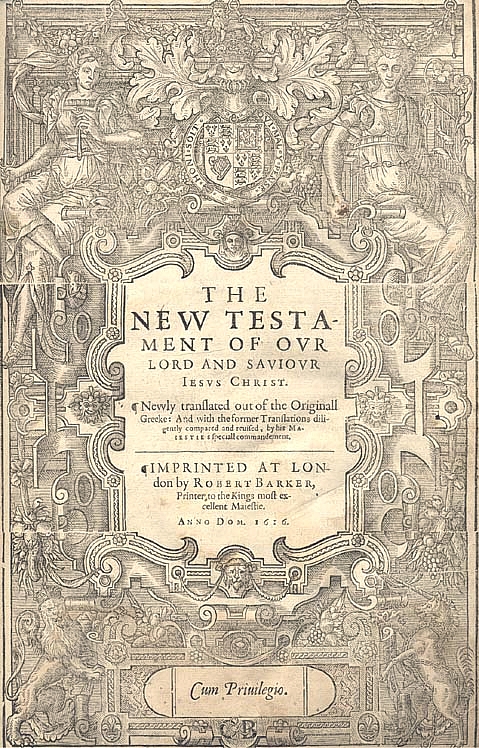
Unicorns are legendary, one-horned animals described in ancient Pagan literature. Although there is no evidence that such an animal ever lived. Unicorns first appear in Pagan writings About 2,400 years ago, a Greek physician named Ctesias wrote about a strange animal said to live in India. This animal resembled a wild ass and had a white body, blue eyes, and a single horn on its forehead. Unicorns make an appearance nine times in the KJV. Here's the verses: Numbers 23:22, 24:8; Deuteronomy 33:17; Job 39:9, 10; Psalms 22:21, 29:6, 92:10; Isaiah 34:7.
But some of these Images found in the Early Printings of the KJV, were of even more evil Mythological creatures. Here we have a graven image of the Greek Mythological monster called the Chimaera, placed at the top of a page in the 1625 printing of King James version. Click here to see a scan of the page.
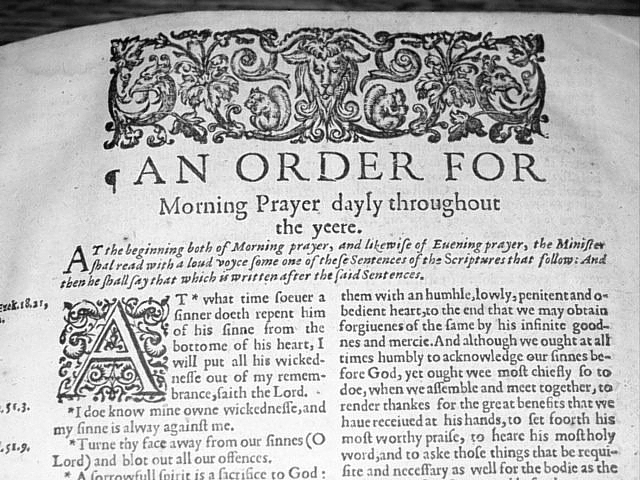
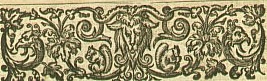 The Chimaera is a legendary beast taking its shape
from both a goat and a lion. Some stories say that it had the hindquarters of a snake and
the head of a lion on the bodyof a goat. Others claimed that it had two heads, one goat
and one lion, and it breathed fire. This being was brought up by Amisodares, the king of
Caria at Patera. The king of Lycia, Iobates, commanded Bellerophon to kill it since the
monster made many raids on his kingdom; with the help of Pegasus, the winged horse,
Bellerophon succeeded. The Chimaera often appears in architecture, although the monster is
usually greatly changed from the form known to classical Greek mythology.
Mythologically the goat played a prominent part. Silenus, chief of the Satyrs, attendants of Dionysus, also of Bacchus, was half goat. The Fauns, also half goat, were familiars and servants of Pan, the Arcadian God of the shepherds, huntsmen, country people. He is represented as horned, long eared, a man with the lower half of his body a goat. He plays a pipe made of reeds of various lengths, the Pan's Pipes or Syrinx. He is supposed to have been of terrifying appearance, when he wished - our word "panic" comes from the terror he is said to have inspired. but mythology makes him on the whole a gentle deity with elfin characteristics. Except for scaring the countryside, he is depicted as mischievous rather than dangerous.