
WHY DID THE 1611 KJV INCLUDE THE APOCRYPHA?
This is a refutation of a deceitful Protestant article by the same name written by Baptist named David Cloud. This article is typical of the trash was found at the militant Anti-Catholic BibleBelievers.net and the Way of Life websites.
EZCODE CENTER START
[Mr. Cloud] The King James Bible and the Apocrypha, It is true that early editions of the KJV (as well as many other Reformation Bibles, including the German Luther Bible) contained the Apocrypha, but these books were included for historical reference only, not as additions to the canon of Scripture.
First it is important to note that it is true that these books do have historical value, but this was not the reason for there being placed in the 1611 KJV. Here again Mr. Cloud show his ignorance of the topic, the original 1611 KJV had a calendar for each month of the year. Bellow are scans of the 1613 KJV calendars for the months of:
May June July August September October All of these leafs were printed by Robert Barker at London, England in 1613. The page size is A HUGE 11" X 16" these are Original leafs from the true Second Folio of the King James Bible. Black and red Letter English language text arraigned in double columns in "Gothic print type".
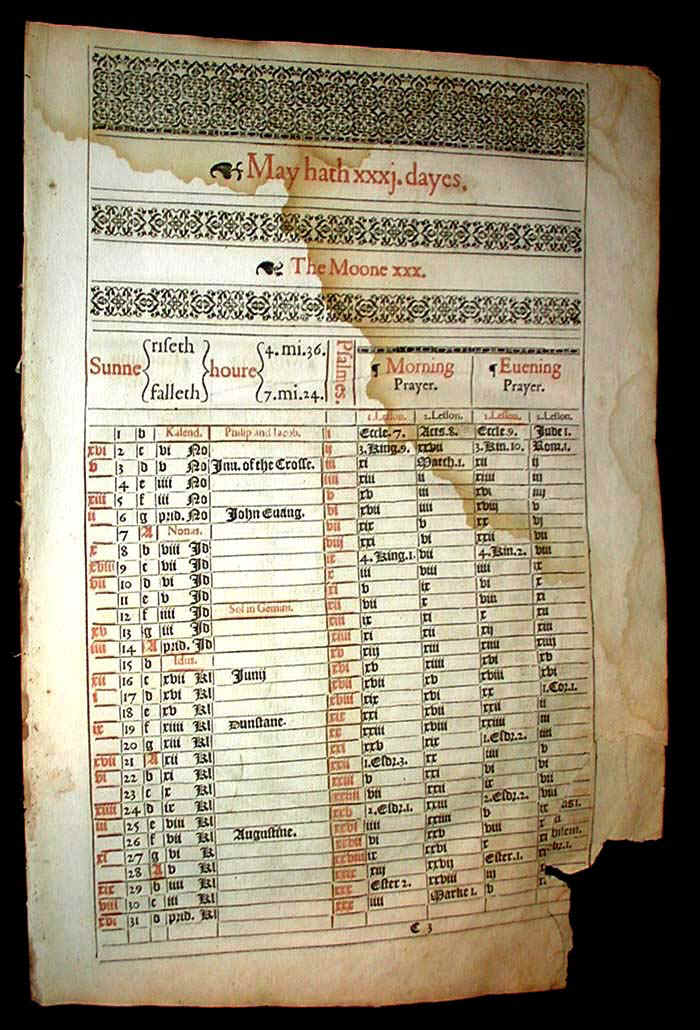
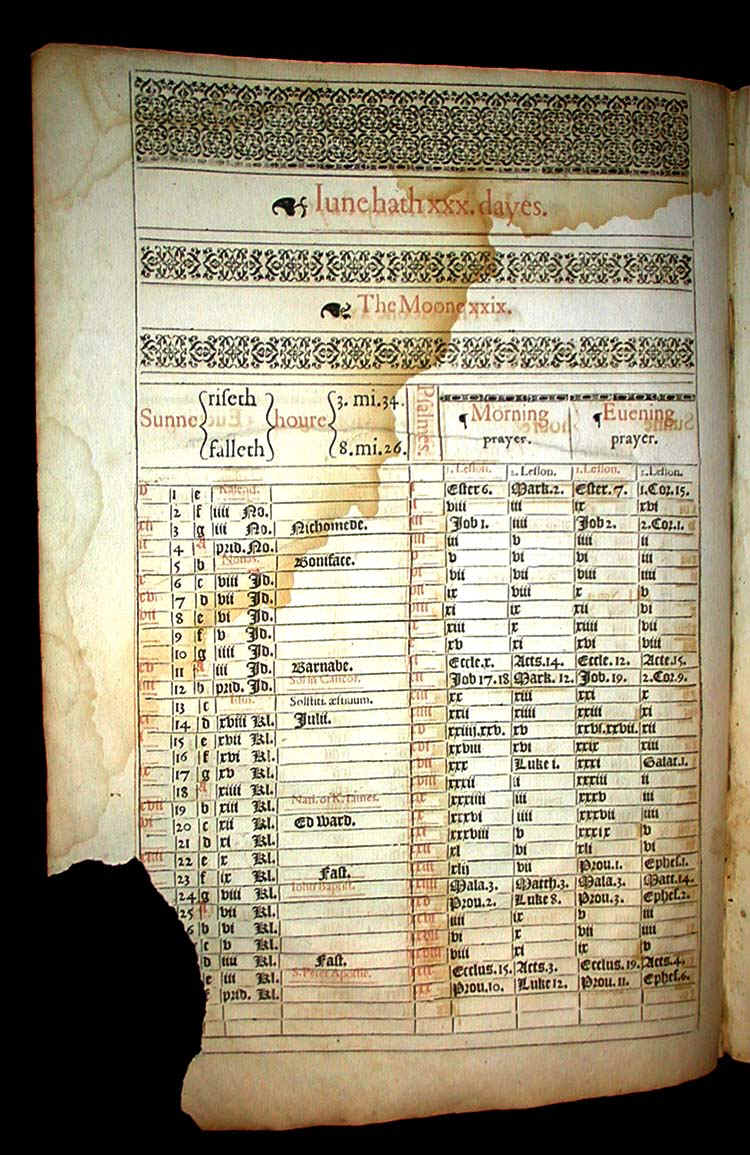
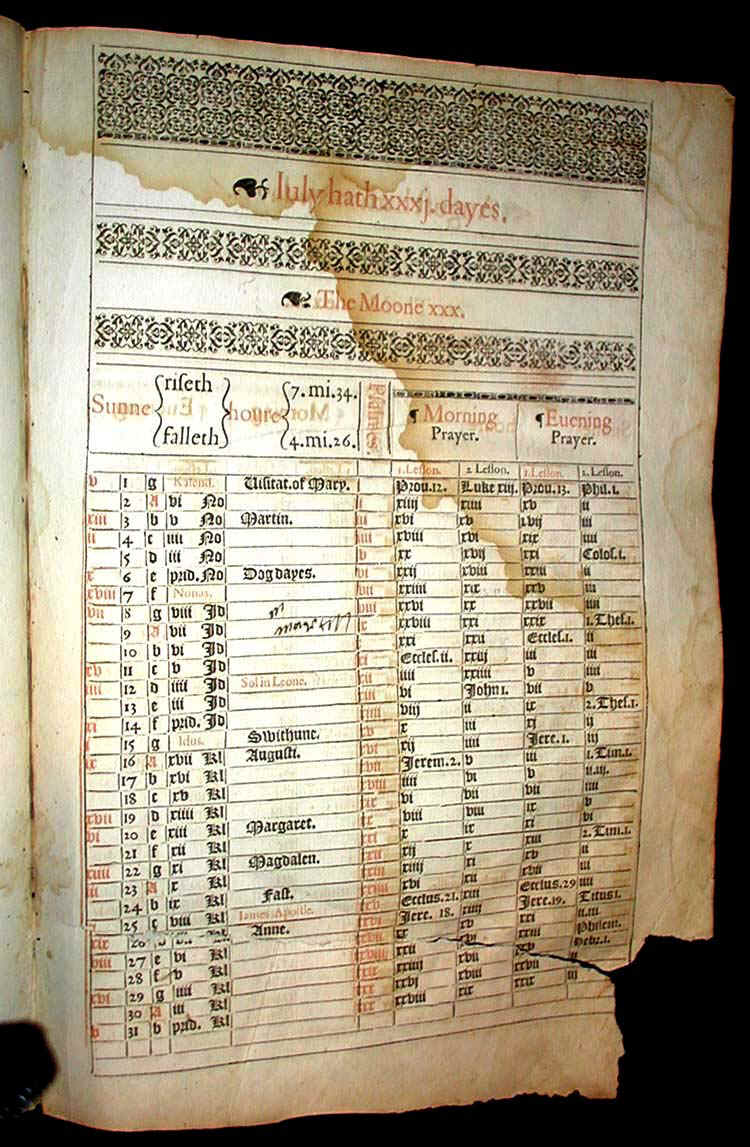
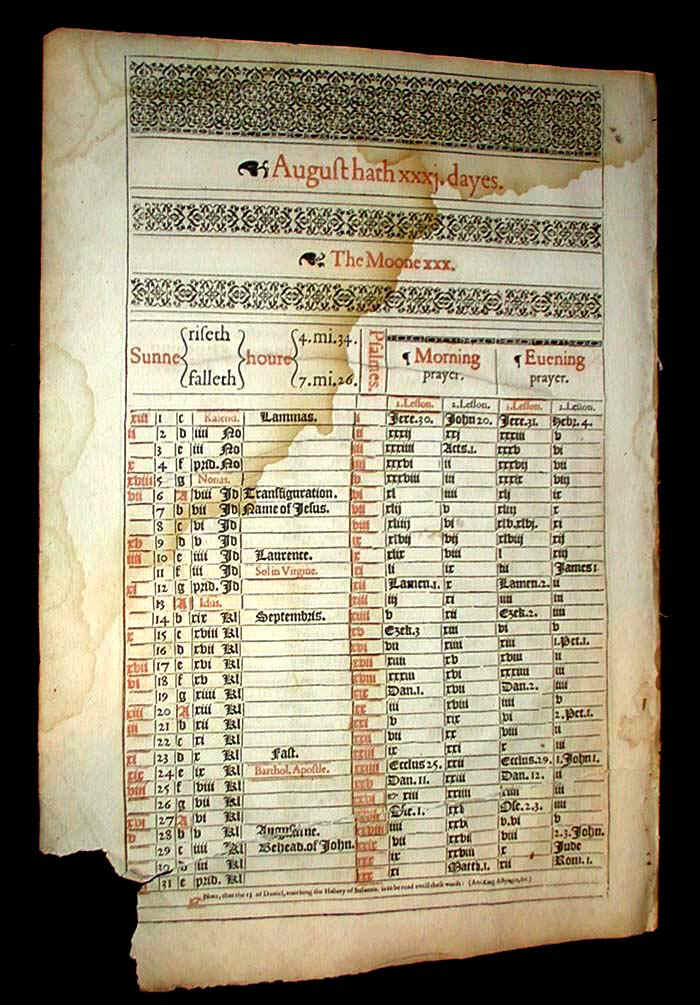
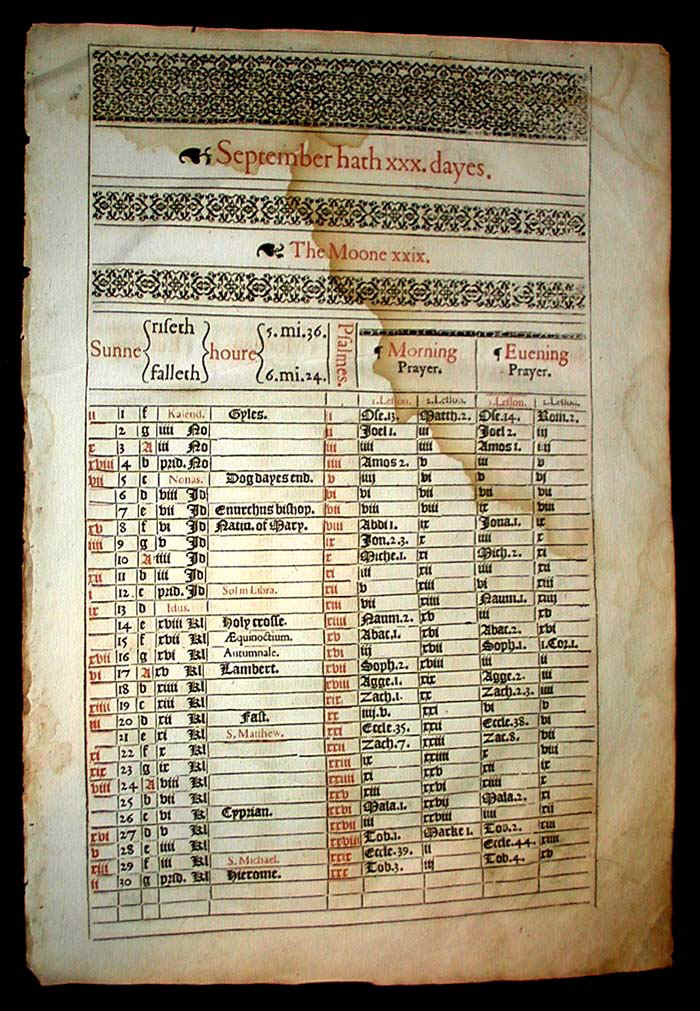
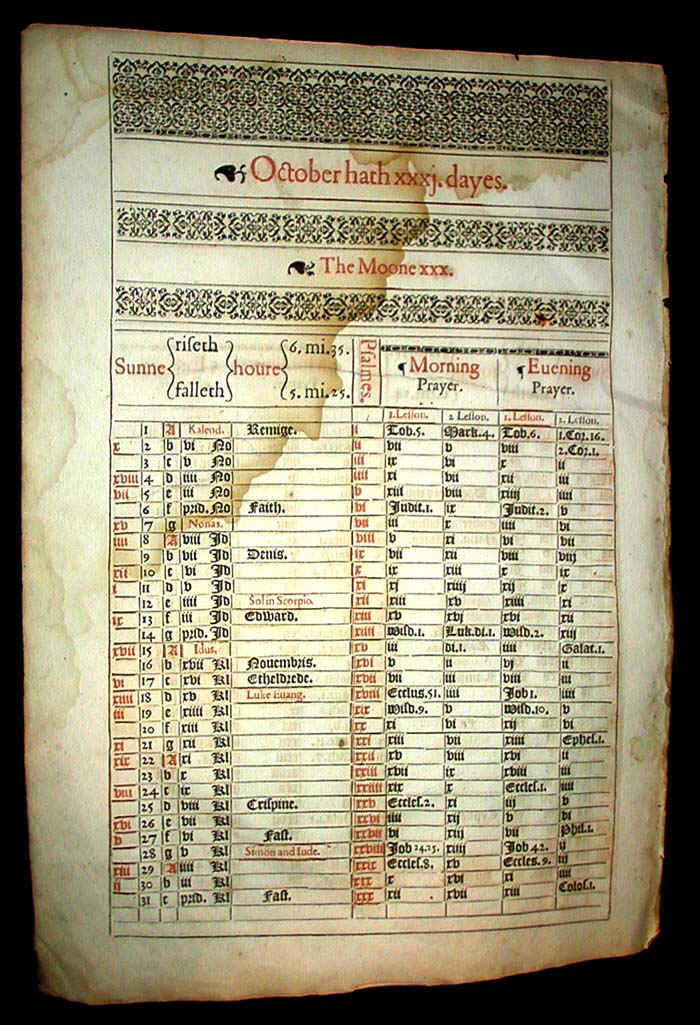
These calendars contained [shown in the scan above] contained such things as a schedule of Scripture readings for morning and evening prayer which includes passages from the "Apocrypha":
2 Esdras May 27-29;
Judith, Oct. 6-13;
Wisdom, Jan. 25; Feb.3; Feb. 24; Oct. 14-17; Nov. 1;
Ecclesiasticus, Jun. 29; July 25; Aug. 24; Oct. 18;
Among the Pages of the 1611 KJV was a Chart showing the scriptural Lessons to be taught at the different saint's holy days. It included lessons from the "apocrypha" Books. The above scan is from a facsimile of the first impression the original 1611 edition of The King James Bible was produced in 1961 for the World Publishing Company
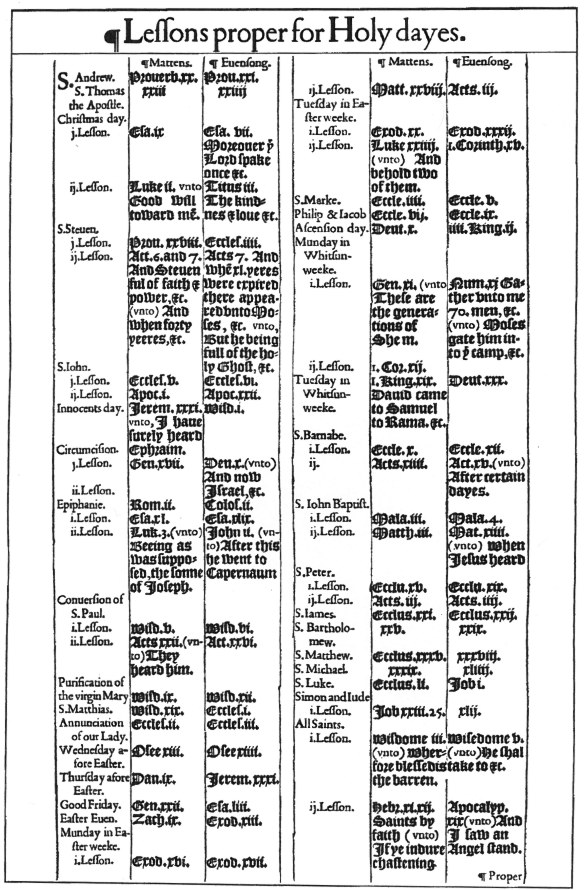
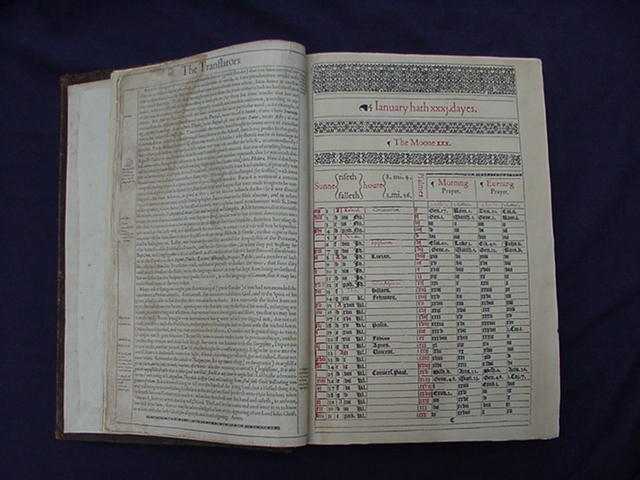
The 1611 KJV encourages rather than discourages the use of the Apocrypha in devotional reading and public worship, which is strange if the "Apocrypha" is not considered in some way inspired and authoritative Scripture. Clearly, the original translators of the 1611 King James Version held the Deuterocanonical books as authoritative or Scriptural, and worthy of public prayer and worship. It is also important to note the occasions of the use of these "Apocrypha" books in the calendars.
We observe the creators of the Kings Bible chose to use the book of "Ecclesiasticus" and "Wisedome" for Public prayer on the special holy days and for many of the days in honor of the Apostles of Christ, some examples are:
Jan. 25 is the holy-day in honor of the "Conuerf [conversion] of Paul" the book of "Wisedome" was chosen
Feb. 2 is the holy-day in honor of "Purification of Mary" the book of "Wisedome" was chosen
Feb. 24 is the holy-day in honor of "S. Matthias" the book of "Ecclesiasticus" was chosen
Jun. 29 is the holy-day in honor of "S. Peter Apostle" the book of "Ecclesiasticus" was chosen
July 25 is the holy-day in honor of "S. James Apostle" the book of "Ecclesiasticus" was chosen
Aug. 24 is the holy-day in honor of "S. Barthol. Apostle" the book of "Wisedome" was chosen
Oct. 18 is the holy-day in honor of "S. Luke. Apostle" the book of "Wisedome" was chosen
Nov. 1 is the holy-day in honor of "All Saints" the book of "Wisedome" was chosen
[Mr. Cloud] Alexander McClure, a biographer of the KJV translators, says: "...the Apocryphal books in those times were more read and accounted of than now, though by no means placed on a level with the canonical books of Scripture" (McClure, Translators Revived, p. 185).
If this were so than why did the translators of the 1611 KJV hold that eleven times Christ and the Apostles referred to or quoted from the "Apocrypha" books. The translators cross-referenced these eleven New Testament passages with the Apocrypha.
| Mat 6:7 | Ecclesiasticus 7:14 |
| Mat 23:37 | 2 Esdras 1:30 |
| Mat 27:43 | Wisdom 2:15-16 |
| Luke 6:31 | Tobit 4:15 |
| Luke 14:13 | Tobit 4:7 |
| John 10:22 | 1 Maccabees 4:59 |
| Rom 9:21 | Wisdom 15:7 |
| Rom 11:34 | Wisdom 9:13 |
| 2 Cor 9:7 | Ecclesiasticus 35:9 |
| Heb 1:3 | Wisdom 7:26 |
| Heb 11:35 | 2 Maccabees 7:7 |
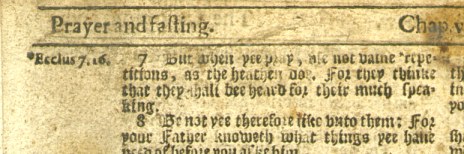
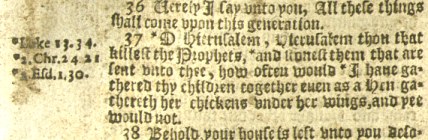
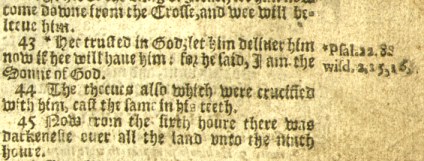
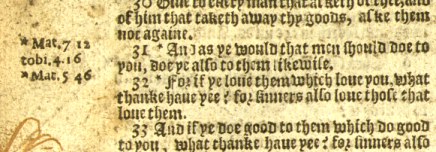
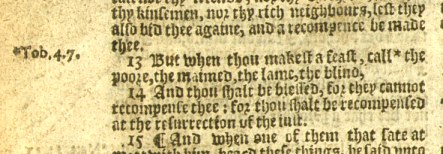
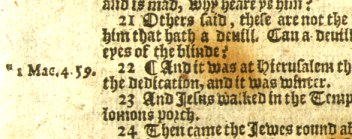
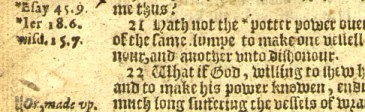

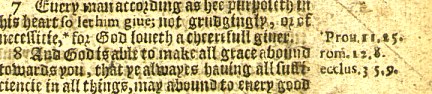
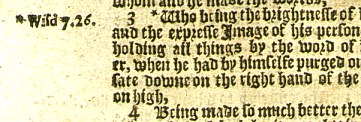
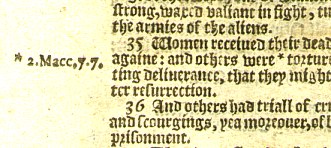
The above links are to images taken from the 1625 King James Version, Printed by Bonham Norton and John Bill The "printers to the Kings moft excellent Majestie". This Bible is part of my collection.
If we look over the pages "Apocrypha" books in 1611 King James Version we find over 840 times the translators cross-referenced these books to those of the "ligament" canon. This is a clear sign that these books were held as Sripture by the translators. We find in the general rules set forth By King James himself for the translation of this Bible that these cross-referencing were only allowed for "one Scripture to another" :
"7. Such Quotations of Places to be marginally set down as shall serve for the fit Reference of one Scripture to another." [As found in "The Church History Of Britain" by Thomas Fuller, Oxford, M.DCCC.XLV]
And last, we know for a fact, that the translators held these books as sacred and wish them to be part of there Bible, by the measures they took to keep part of the KJV. In 1615, the Anglican Archbishop [George] Abbott, a High Commission Court member and one of the original translator of the King James Version, "forbade anyone to issue a Bible without the Apocrypha on pain of one year's imprisonment" (Moorman, Forever Settled, p. 183).
[Mr. Cloud] He [Alexander McClure] then lists seven reasons assigned by the KJV translators for rejecting the Apocrypha as inspired.
Not so, in his 1858 book the "Translators Revived", Alexander McClure assigns the reasons that he believed were why the 1611 translators might have rejected these books. This listing has been answered by Catholics many times, follow this link to see a one such refutation.
[Mr. Cloud] The Thirty-nine Articles of the Church of England clearly states that the Apocrypha have no scriptural authority. "...[the Church of England] doth not apply to them to establish any doctrine."
Actually, the text does not say they held these books as no having scriptural authority. What it say's is that they do "not use "to them to establish any doctrine." in other words they held them to have no doctrinal authority, the difference is obvious. This fact is born out in that the 1611 KJV encourages the use of the Apocrypha in devotional reading and public worship.
[Mr. Cloud] The Westminster Confession says, "The books commonly called Apocrypha, not being of divine inspiration, are no part of the canon of the Scripture; and therefore are of no authority in the Church of God, nor to be any otherwise approved, or made use of, than other human writings."
Here again Mr. Cloud shows his ignorance, the two main reasons why the Westminster Confession does not apply the 1611 King James Version are:
- The Westminster Confession was put together by The 121 English Puritan ministers, It affirmed a strong Calvinistic position. Whereas the KJV was translated by the Anglican Church.
- The Westminster Confession of Faith was completed in 1646 this was thirty-five years after the KJV was translated.
[Mr. Cloud] Luther included a note on the Apocrypha which stated, "These are books not to be held in equal esteem with those of Holy Scripture..."
In the first place as we have already shown the 1611 KJV was translated by the Anglican church not the Lutherans.
Second, so what if Luther did not hold the Apocrypha books with high regard, for Luther also rejected several books of the new testament as well. If we look at Luther's German translation of the Bible, he took Hebrew, James, Jude and Revelation and placed them at the end of the New Testament. He categorized them as inferior to the rest of the Bible. The book of James which contradicts Luther's principle of Justification by Faith Alone. James 2:24 says "See how a person is justified by works and not by faith alone." Rather than change his theology, Luther just denied that, James the Apostle, was the author of James and removed it from his canon.
For more on this Visit : Did The 16th Century the Protestant "Reformers" Reject Parts of The New Testament?:
[Mr. Cloud] It is important to note that in the early King James Bibles the Apocryphal books were placed between the Old and New Testaments rather than intermingled within the O.T. itself as is done in Catholic Bibles. In the Jerusalem Bible (a Catholic Bible), for example, Tobit, Judith, and the Maccabees follow Nehemiah; the Book of Wisdom and Ecclesiasticus follow Ecclesiastes; Baruch follows Lamentations; etc.
First, Mr. Cloud seems to have fallen in to a common
misconception, the truth is in the early
King James Bibles the Apocryphal books were NOT placed between the Old and New
Testaments, they was placed at the end
of the Old Testament. 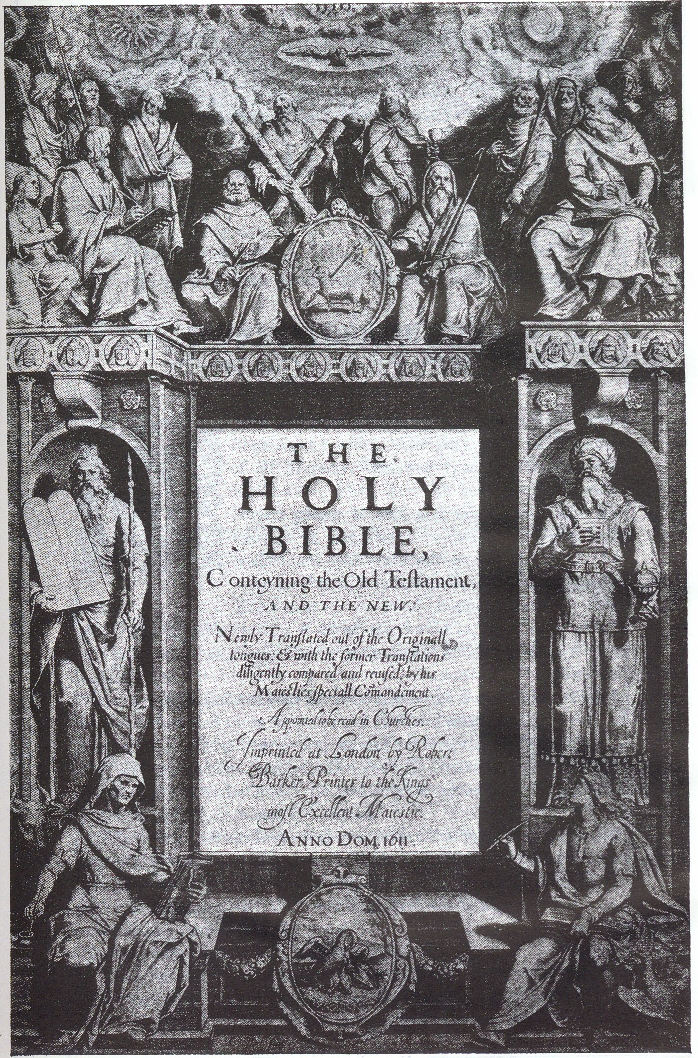 If we examine this scan of the beautify engraved title page of the
1611 KJV we see it Simply say " The Holy Bible, Conteyning the Old testament,
and the New" with no designation separating the "Books called Apocrypha"
from the Old Testament. The creators of the 1611 KJV went to great lengths to form a
separation between the Old and New testament even placing a special elaborately engraved
title page marking the beginning of the New testament. Yet they placed NO SUCH distinction
between the end of the Old Testament and the "Apocrypha". Again this show
acceptance of these Books as part of the Old Testament.
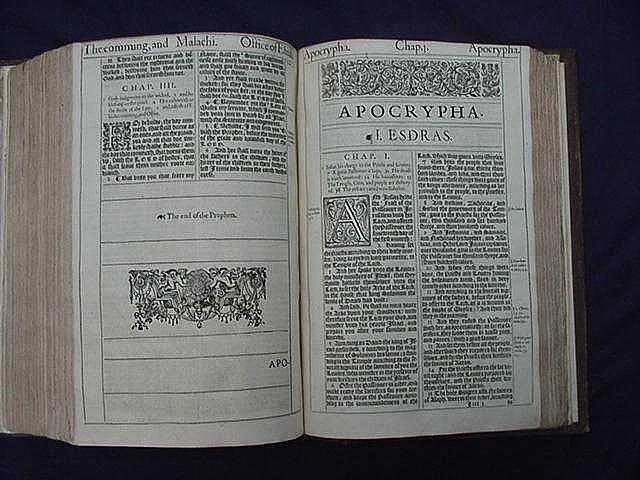
Another example of this is at the wording found at the bottom of the last page of the book of Malachi, [which most Protestants today consider the end of the Old Testament], just before the beginning of the First Esdras, we find the words "The end of the Prophets". As we can see the translators did not designate this as the end of the Old Testament [which they could have], they simply called it the end of the books of the Prophets, a grouping of books of the Old Testament. Click on the following link to see a photo of this point, the image is from a original 1611 printing of the King James Version printed by Robert Barker: Click here to see the image.
Second, the order of the sacred books of the Bible proves nothing, it is not a admission or denial of anything, nor does it determine the importance of any book. God never set forth any specific order of books for us to follow, a simple examination of the Jewish OT in comparison to that used in the Protestant Bible shows this:
The Jewish Bible (or Tanak) contains twenty-four books in three sections: the Torah, the Prophets, and the Writings.
The Protestant Old Testament contains the same books as the Tanak, but in four sections and in a different order: the Pentateuch, the Historical Books, the Poetical Books, and the Prophets. In addition, the Protestant canon contains thirty-nine books, not twenty-four, because it counts separately several books that comprise single books in the Jewish Bible. For example, the one Book of the Twelve Minor Prophets in the Jewish canon becomes the twelve books of the Minor Prophets in the Protestant Bible.