The Special Honors Paid To The Blessed Virgin and The Saints
In The Original King James Version.
King James himself said "And I freely confess that she (Mary) is in glory both above angels and men, her own Son (that is both God and man) only excepted. But I dare not mock her...In Heaven she is in eternal glory and joy...and there I leave her with her blessed Son, our Saviour and hers, in eternal felicity." [A Premonition to All Most Mighty Monarchs, Kings, Free Princes, and States of Christendom Works, ed. James Montague, Bp. of Winchester (1616), pp. 301-308.]

HONORING MARY WITH SONG.
These verses not only received special emphasis as being put to music but were openly dedicated to Mary, the most blessed, and intended for singing at Sunday services, as well as during daytime prayer,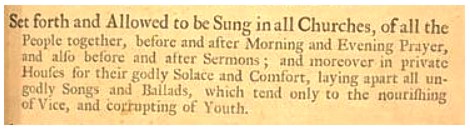
Click to Here see a complete Scan of this page .
by the authors, and printers, of the KJV. As we shall see, various aspects of the following verses were emphasized, and expounded upon, for the glory of the Mother of Christ, by the authors and printers of the KJV.
|
|
| This is a scan of The
Song Honoring The Blessed Mother Of Christ. This is an original leaf (page) from
The 1613 King James Version, it is from the psalms Collected into English meter, by Thomas Sternbold, John Hopkins,
and others, conferred with apt Notes to sing them withall. This leaf is part of Part of my personal collection. |
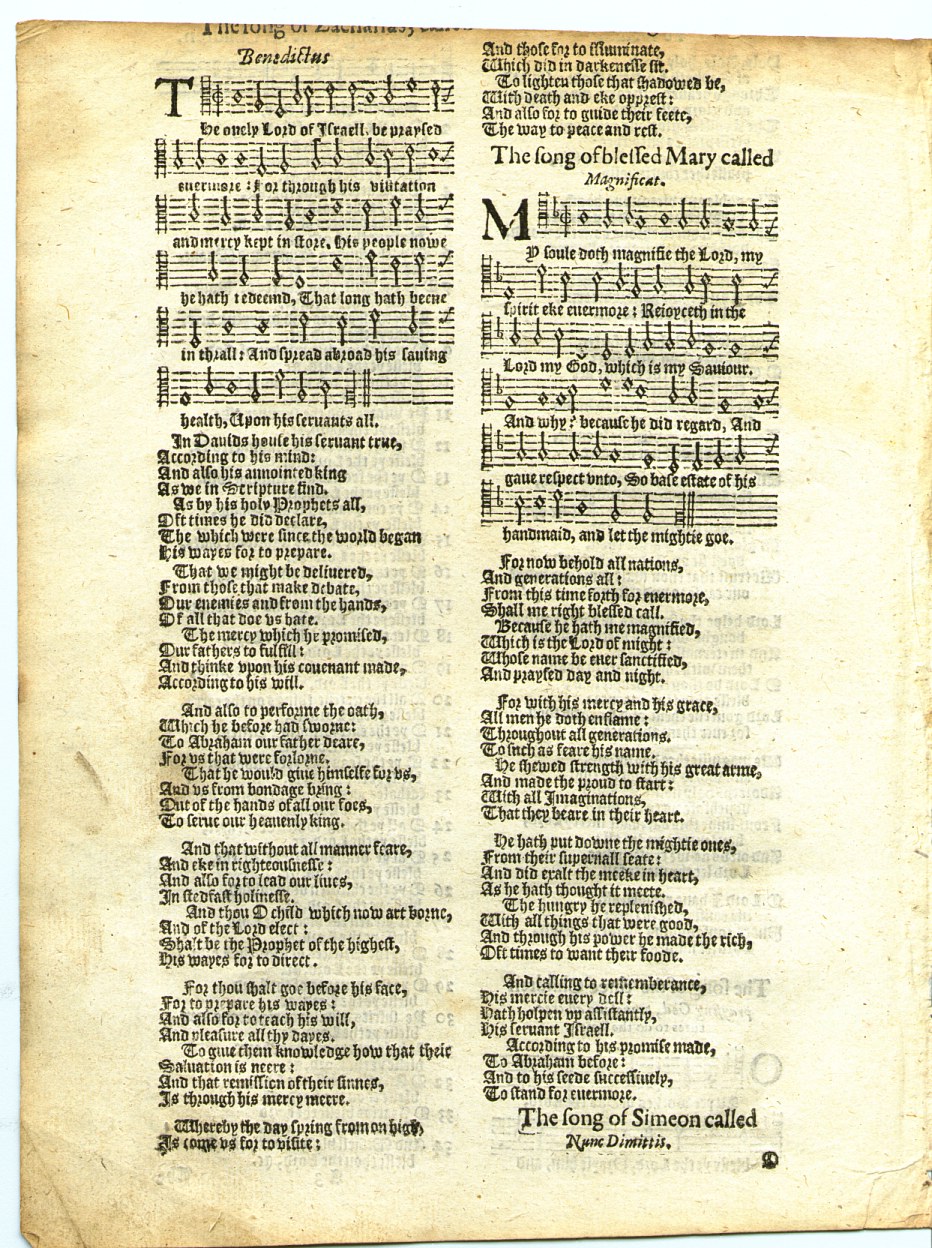
Not only did the translators and printers of the KJV hold the following verses and song to
be in such esteem as to be used as praise of God, and in God’s honor, but worthy of
being printed in the Bible. The following leaf and verses come directly out of a 1613 King
James Version.
"My soul doth magnify the
Lord,"
Essentially what is being said here by the Blessed Mother of the Lord, is that her soul
glorifies the Lord - showing the incredible status of her soul, and the condition of her
soul. In other words, to put it simply, the condition of her soul was a glory to God.
The 1613 KJV goes on to expound on this indescribable point, adding the words:
"my spirit eke (Archaic: “also”) evermore: Rejoiceth in the Lord my
God, which is my Saviour."
In other words, for eternity, from this point on, evermore, her soul would be rejoicing in
God. To put it simply, she was, for all practical purposes, saved. Even before
Christ’s Birth, thirty years before His death, without having read a single line of
the Gospels, Mary had already achieved that special level of sanctification to which every
Christian is called - to an even greater extent than any Christian could ever hope to
achieve.
This miraculous, special, significant, gift from God, was given to Mary, His Mother, even
before His Sacred Birth. Thirty three years before He died and redeemed the rest of
humanity, she was already redeemed. His own Mother received first place at the wedding
table, and was exalted because of her humility.
This incredible Catholic doctrine is magnified and clarified in the wording of the 1613
KJV.
"And why: because he did regard, and gave respect unto, so base estate of his
handmaid, and let the mighty go."
These verses make it plain that one of the primary reasons why He redeemed her, before the
rest of humanity, was because of her great humility. Now, out of the entirety of the Old
Testament, no one else has received this singular honor, but the Blessed Mother of the
Lord - in other words, she was greater in humility than even David when he was writing the
Psalms.
Further, this is the woman who had just been declared by Saint Elizabeth, under the
inspiration of the Holy Ghost, as the Mother of God (Luke 1:42). This is the greatest
praise and honor that can be given to a human being - and was being paid to her, by the
Holy Spirit, through the mouth of Elizabeth. Mary’s response is one of absolutely
astounding humility. She immediately gives all credit and glory for her wonderful gift and
position to God, declaring herself to be His lowliest handmaid - showing a complete
mastery of the virtue which we are all commanded to exercise by Christ Himself in Matthew
11:29.
Christ Himself stated “Verily I say unto you, Except ye be converted, and become as
little children, ye shall not enter into the kingdom of heaven. Whosoever therefore shall
humble himself as this little child, the same is greatest in the kingdom of heaven.”
(Matthew 18:3-4)
And yet we see that Mary was not only humbler than the greatest prophets and figures of
the Old Testament, for she, before any of them, merited to be redeemed.... and that long
before the actual physical Birth of Christ, and His death on the Cross, and was even
humbler than the humblest child at that time, or before that time - for none of them were
redeemed by God before the Birth of Christ, as she was. None of them were exalted to so
high a position as being the very Mother of God, even Saint John the Baptist realized the
position of Mary, and leapt with very joy at the Presence of her, and her Divine Child.
And yet Mary, in this highly exalted state, knelt before God, and declared herself to be
the most lowly of His servants.
"For now behold all nations, And generations all: from this time forth
evermore shall me right blessed call. Because he hath me magnified, which is the Lord of
might: Who's name be ever sanctified, And prayed day and night."
Here we see a change introduced into the KJV,
with the obvious goal of increasing one’s devotion to the Blessed Mother of the Lord.
Whereas Scripture merely states “All generations shall call me blessed,” the
1613 KJV expounds on this by pointing out that not just all generations, but all nations,
for “evermore” - that is, “forever,” “constantly.” The 1613
states that she will be called blessed forever, that is, for eternity.
To put it in other words, even after the destruction of the world, and the judgment of the
righteous, the saints will be forever rightfully calling Mary blessed, and giving her that
honor in heaven.
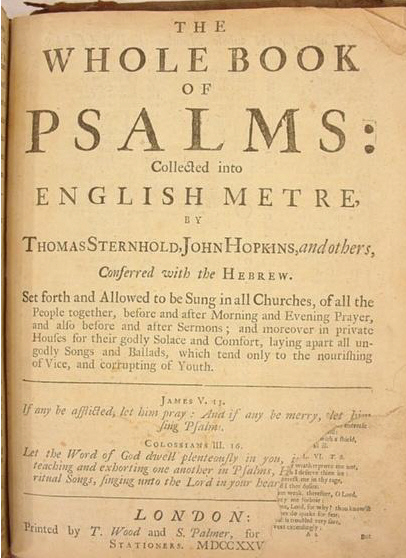
| Also the Anglican Psalter or Psalms of David (by Sternhold and Hopkins), printed in the 1611 KJV, were Several of the songs attributed to the Early Church Saints , there presence and use in public worship is a form of honor to the Saints. | |
|
The Creed of S. Athanasius |
The Song of S. Ambrose. |
| These scans are from a facsimile of the first impression the original 1611 edition of The King James Bible was produced in 1961 for the World Publishing Company | |
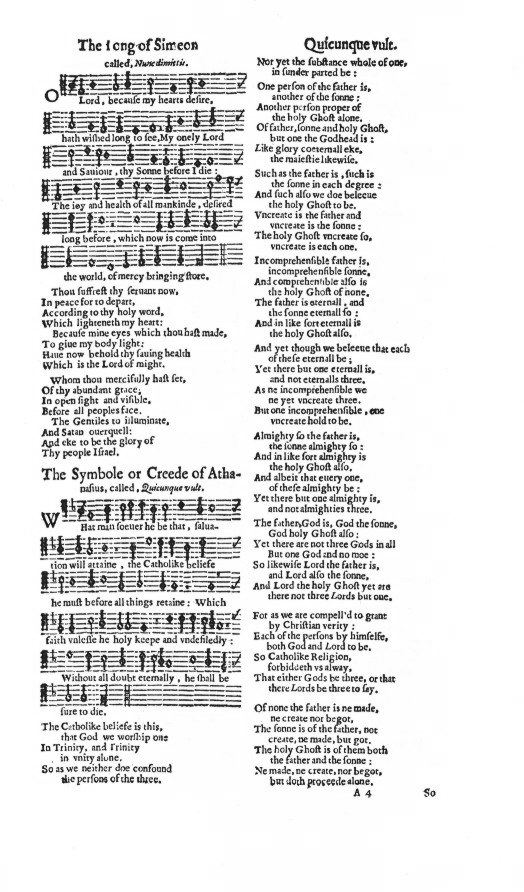
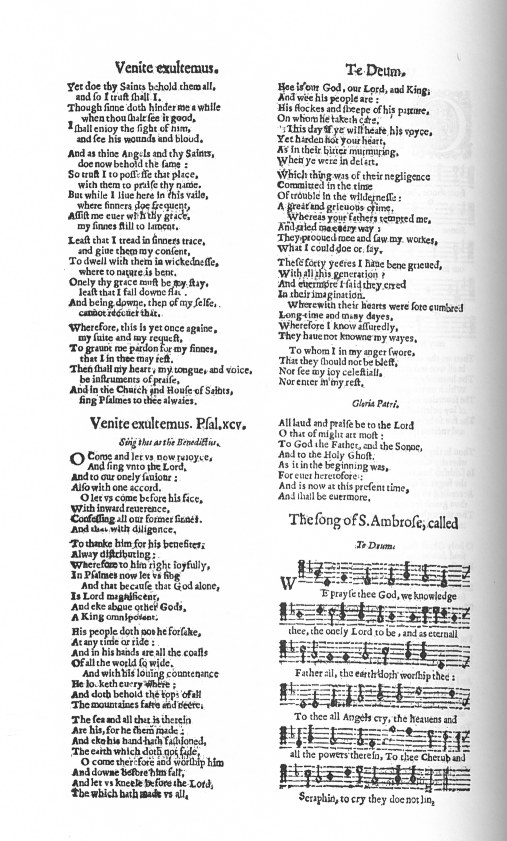
The verses immediately following that, and preceding it, state the reason very simply -
because she is the Mother of the Lord. Because of this fact, she shall be honored by all
of the living who follow the teachings of the Gospels, and all of the saints in heaven,
even after her death (yet again, please read the words “evermore”).
Another point of interest is the addition of the word “right,” so that the verse
reads “shall me right blessed call.” This addition moves the honor of Mary from
being something that we offer her of our own free accord, to something that we are obliged
to offer her, something we are obligated to offer her, because it is her right to have it.
The earlier portion of the prophecy makes this quite clear as well.
It necessarily follows from all that we have said above that the practice of honoring an
individual after their death is perfectly permissible, according to the 1613 KJV. Even
going so far as to call them blessed. Hence, we see not only the honoring of Mary in this
verse, but this verse also indicates the honoring of all the saints, though clearly not at
the level at which we honor Mary. The concept of honoring physically dead saints is very
much considered a “Romanist” concept by the protestants of today, and yet we see
this self-same “Popish” doctrine taught in the 1613 KJV - not only taught, but
set forth to music, to be sung with honor, during their prayers and religious services.
The fact that they formulated the Magnificat to music, is evidence enough that they were
following this concept, and had absolutely no qualms about singing songs in honor of a
physically dead person during their religious services. This is of no surprise, for many of
the Protestant reformers accepted the honor do Mary for example, Martin Luther made it a
point to preach on her feast days and Honor to Mary:
"The veneration of Mary is inscribed in the very depths of the human heart." [Martin Luther, Weimar edition of Martin Luther's Works (Translation by William J. Cole) 10, III, p.313.]
"Is Christ only to be adored? Or is the holy Mother of God rather not to be honoured? This is the woman who crushed the Serpent's head. Hear us. For your Son denies you nothing." [Martin Luther, Weimar edition of Martin Luther's Works, English translation edited by J. Pelikan, Volume 51, 128-129.]Luther made this statement in his last sermon at Wittenberg in January 1546.
This leaf is from the original first printed of the King James Version, the Great "HE" Bible. It was printed by Robert Barker at London, England in 1611, Measuring 16 by 10 inches. |
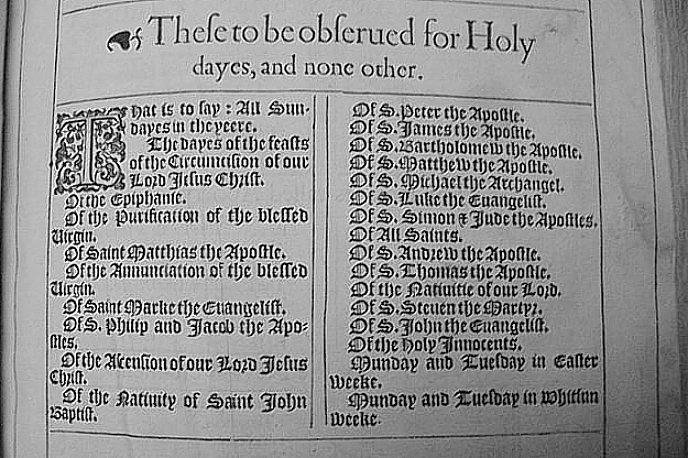
THE LITURGICAL CALENDAR OF HOLY DAYS.
The translators and organizers of The King
James Version took this honor bestowed upon Mary and the saints one step further, not only
honoring them in songs during their services, but actually Had a liturgical calendar declaring certain
days to be holy days in their honor. Not festivals, not holidays, but HOLYdays. This
distinguishing honor is paid to Mary twice in the listing of holydays found in the 1611
KJV, and, on both occasions, we must note that, yet again, they do not miss the
opportunity to use the term “blessed” in reference to her. The 1611 has the
feasts of “The Annunciation of the Blessed Virgin,” and the feast of “The
purification of the Blessed Virgin.”
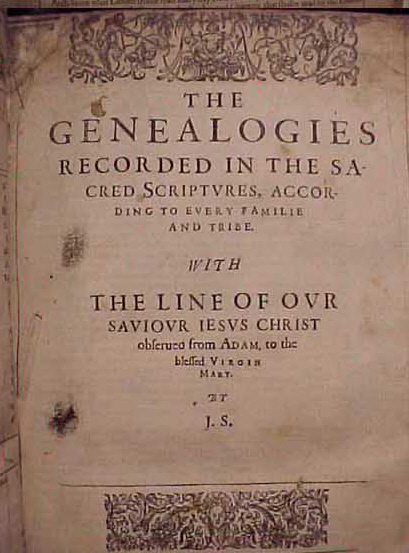
This is not the only place the 1611 KJV Refers to Mary as "Blessed". We
find Mary listed in the "The Genealogies Recorded in the Sacred Scriptures, According
to every Familie and Tribe" as the “blessed virgin Mary”. As we can see in this scan from the 1613 [KJV].
King James I himself also held in great respect and reverence above angels and men:
"And first for the blessed virgin Mary, I yield her that which the Angel Gabriel pronounced of her...I reverence her as the Mother of Christ" ("Basilicon Doron" by King James I)
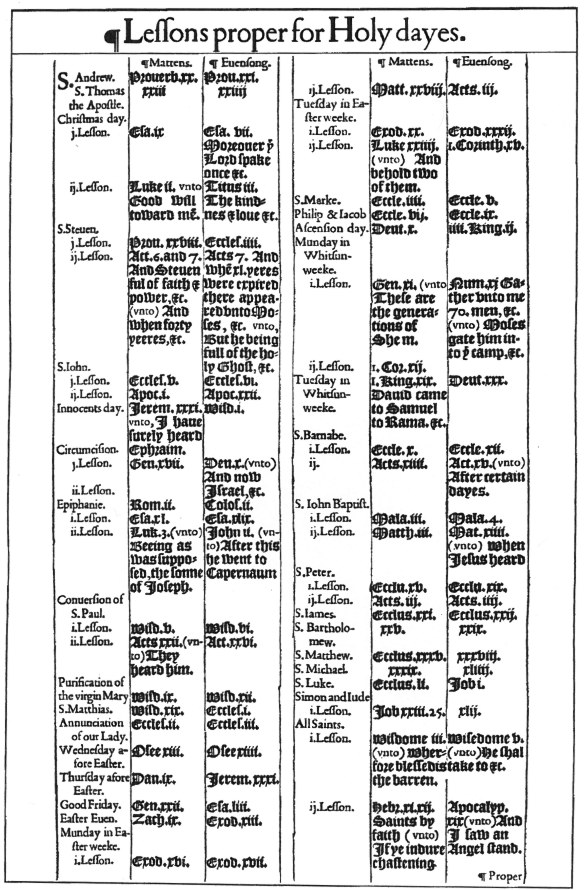
Among the Pages of the 1611 KJV was a Chart showing the scriptural Lessons to be taught at the different saint's holy days. the above scan is from a facsimile of the first impression the original 1611 edition of The King James Bible was produced in 1961 for the World Publishing Company "And I freely confess that she (Mary) is in glory both above angels and men, her own Son (that is both God and man) only excepted. But I dare not mock her...In Heaven she is in eternal glory and joy...and there I leave her with her blessed Son, our Saviour and hers, in eternal felicity." [A Premonition to All Most Mighty Monarchs, Kings, Free Princes, and States of Christendom Works, ed. James Montague, Bp. of Winthester (1616), pp. 301-308.]
And was it not King James I that the translators of the 1611 KJV called "not only as to our King and Sovereign, but as to the principal Mover and Author of the work "[Epistle Dedicatory to the Authorized King James of 1611 ]
Another interesting point is the fact that
the 1611 KJV even has “All Saints Day” listed in its listing.
In other words, they did not honor just a few of the saints, but, as the leaf says, all
the saints - including those not mentioned in the listing. Once again, the concept of an
“All Saints Day” is considered a very Catholic and “popish” thing, by
many protestants today.
But aside from this general Holyday in honor of all the saints, many saints are
specifically pulled out
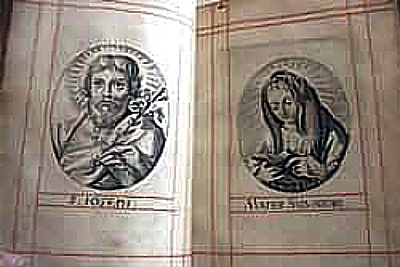 |
| These are original leafs (pages) from
The King James Version. One of the first Bible printed after the Restoration of
King Charles the 2nd in 1660. Showing Graven Images
honoring such special Saints as Mary and Joseph.
Protestants today would consider these very "popish" and "Romanist". These leafs are part of Part of my personal collection. |
and assigned their own individual Holyday. For example, the feast of Saint Philip, Saint Matthias, Saint Peter, Saint James, and Saint Bartholomew. Additional saints would be Saint John the Baptist, Saint Stephen the Martyr, Saint Michael the Archangel, and not to mention the Holy Innocents and Saint John the Evangelist.
The Fact that this calendar was a official
sanctioned part of The King James Bible is shown by the King's own approval of it:
"As for the Saints departed, I honor their memory, and in honor of them do we in
our Church observe the days of so many of them as the Scripture doth canonize for
saints" [From A Premonition to All Most Mighty Monarchs, Kings, Free Princes, and
States of Christendom Works, ed. James Montague, Bp. of Wint hester (1616), pp.
301-308.]
A point that is interesting is the inclusion of the feats of the Nativity of Our Lord,
ChristMass - which was historically celebrated on the 25th of December -, and the feast of
the Resurrection of the Lord, Easter.
Many protestants and KJB-Onlyists consider these feasts to be taken from pagan rituals,
and to have stemmed from the self-same heathen religions. Some go so far as listing the
use of the 25th of December for ChristMass, as a mixing of Christianity, and paganism. And
yet here we find the 1611 King James Version of the Bible listing these among it’s
official Holydays (which all the realm was required to observe), and given a place of
honor and prestige.
THE MONTHLY CALENDARS OF SPECIAL FEAST DAYS.
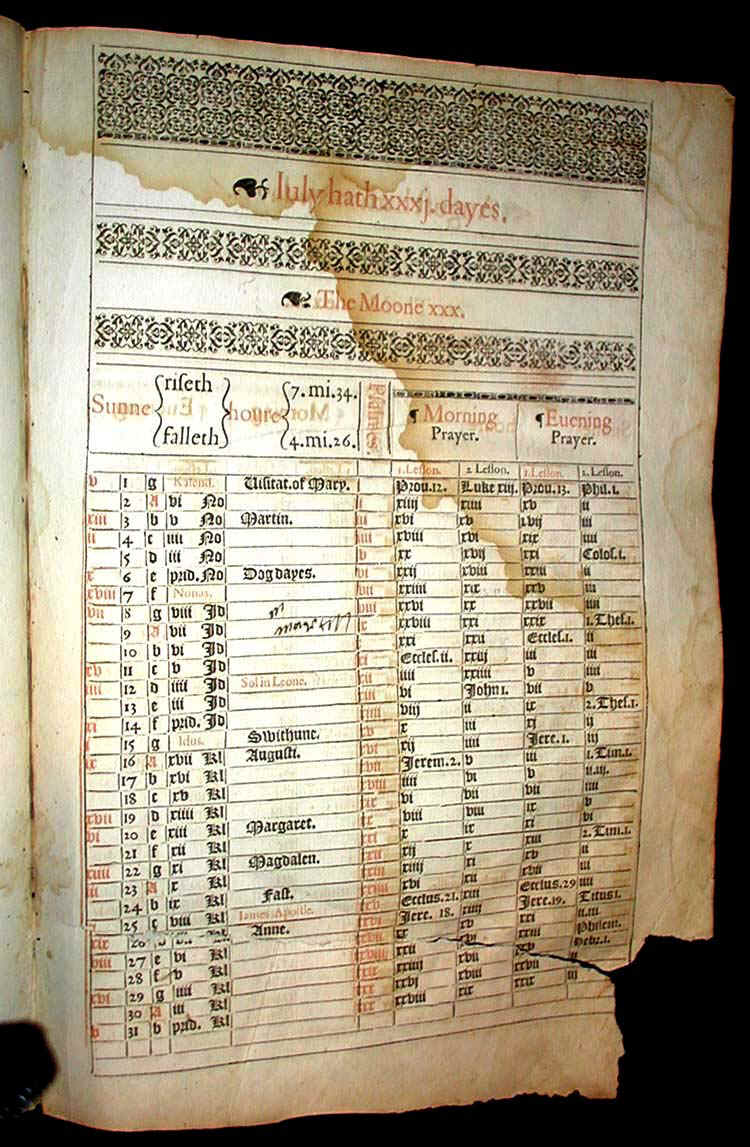
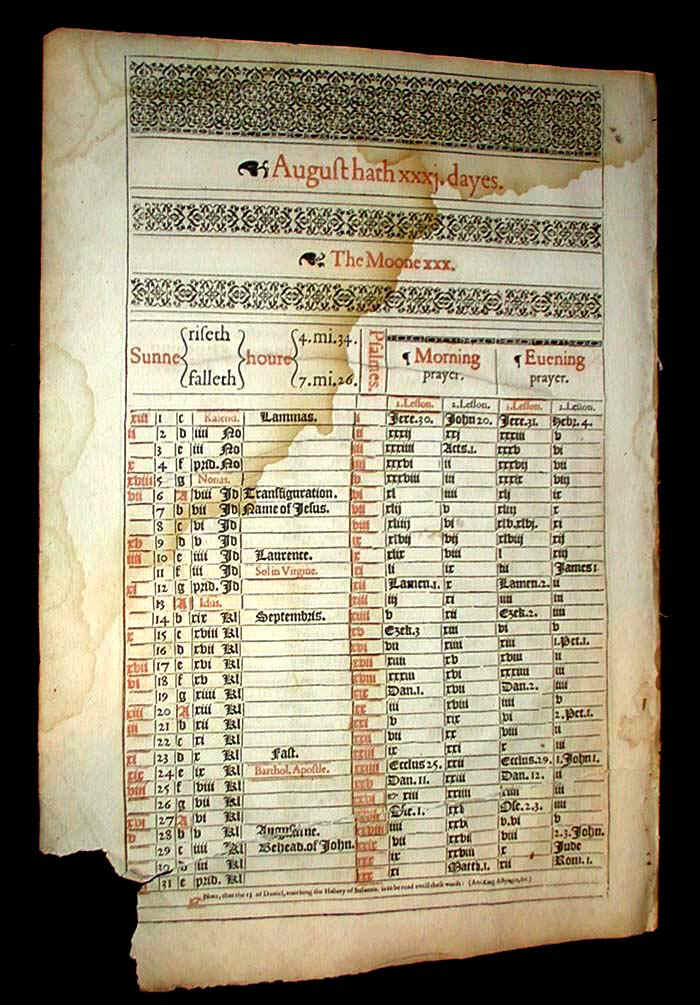
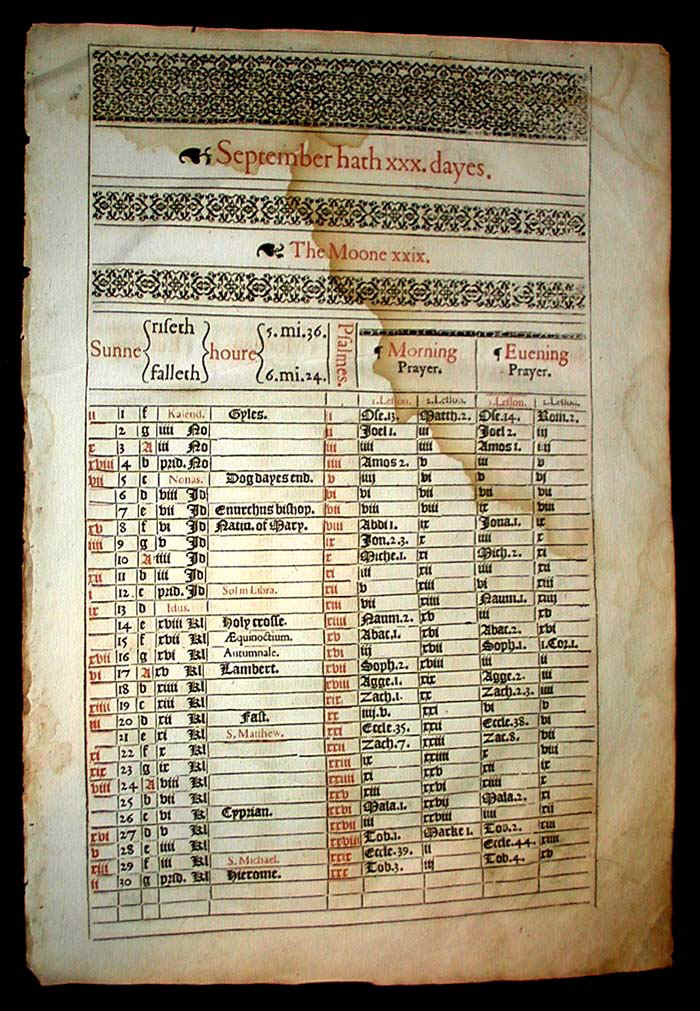
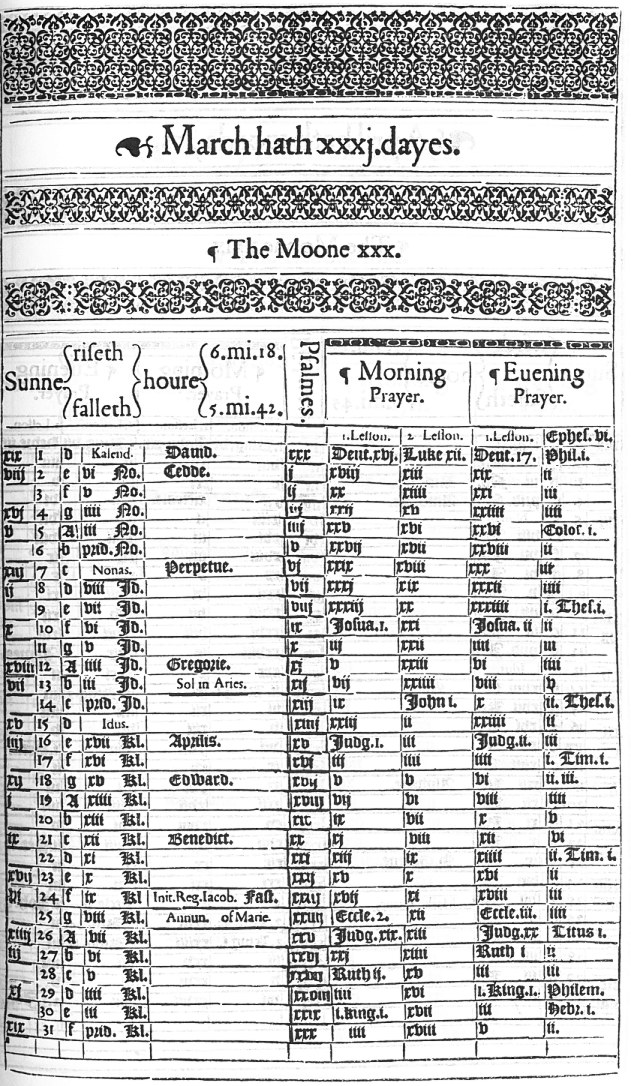
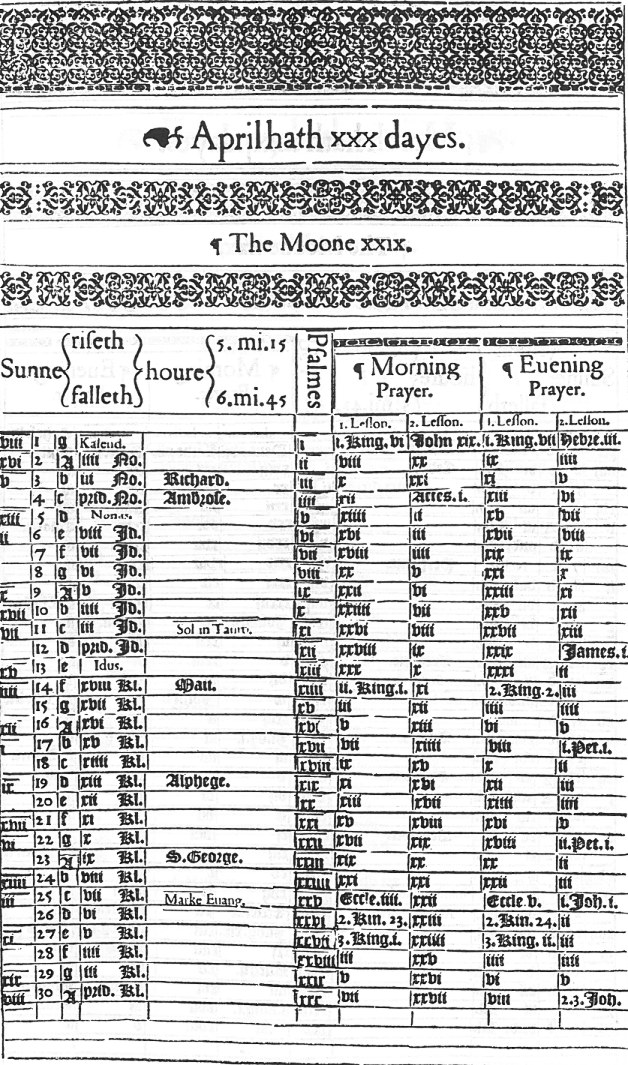
It is well known that Besides the liturgical calendar, The original printings of the King James Version also contained a Calendar / Almanac for each individual month of the year. These included many more feast paying honor to Mary and Catholic Heroes and Saint and early Fathers. Here are a few Examples [the mounth's of May- Oct. a total of 6 months] from leafs I have collected:
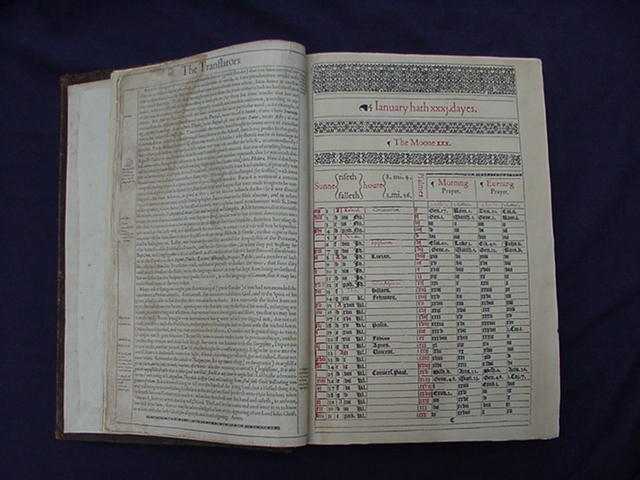
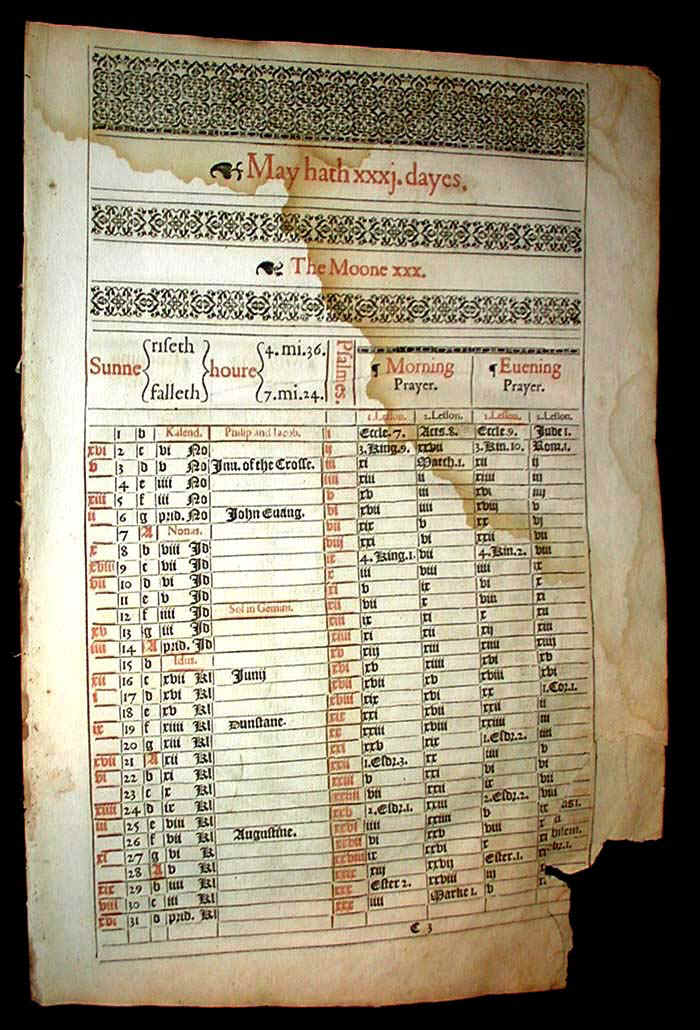
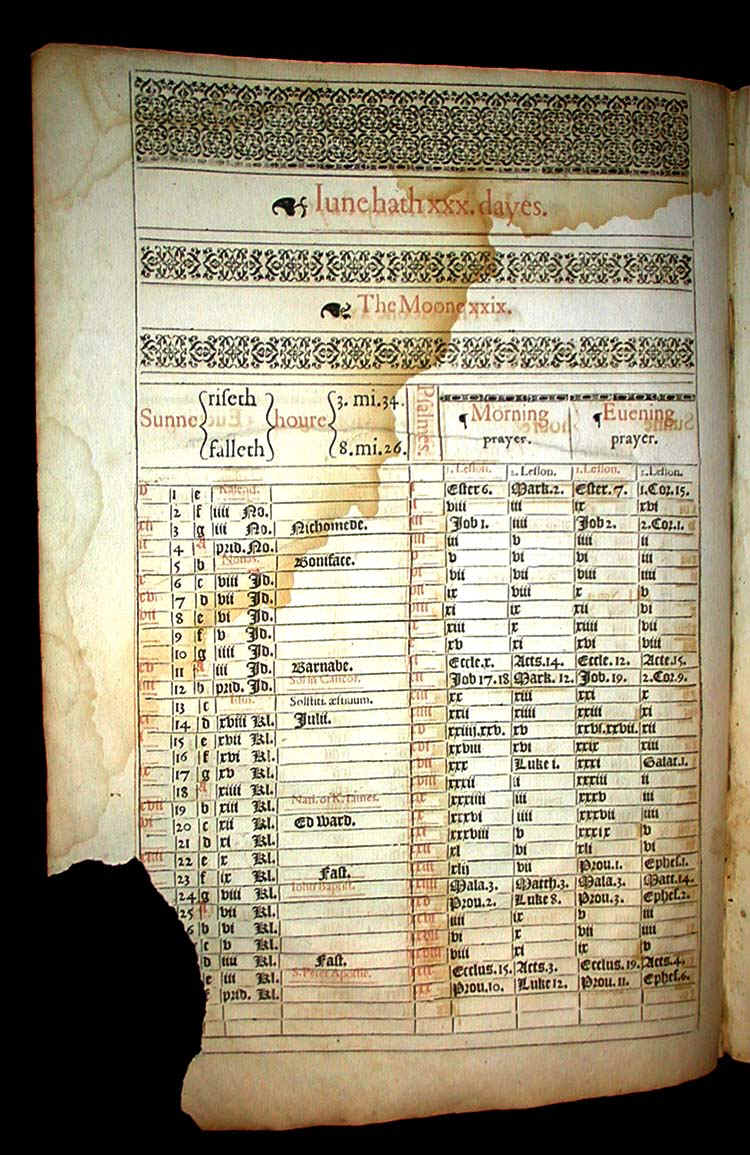
The original 1611 KJV had a calendar for each month of the year. Bellow are scans of the 1613 KJV calendars for the months of:
| May | June | July | August | September | October |
 |
 |
 |
 |
 |
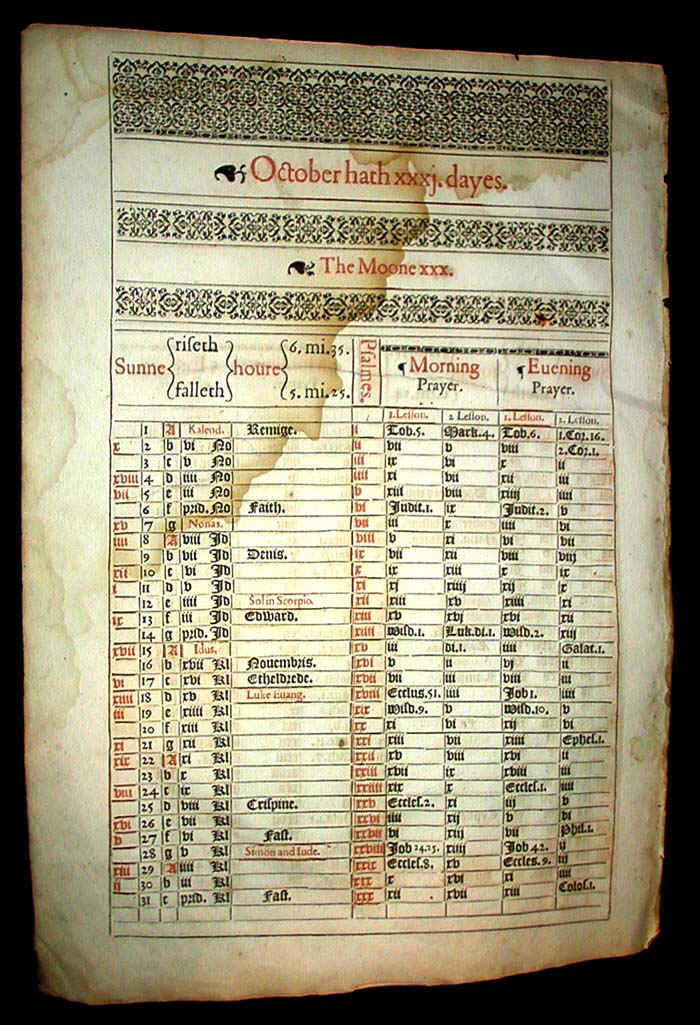 |
All of these leafs were printed by Robert Barker at London, England in 1613. The page size is A HUGE 11" X 16" these are Original leafs from the true Second Folio of the King James Bible. Black and red Letter English language text arraigned in double columns in "Gothic print type". The following links at to scans of the remaining months, these scans are from the Nelson reprint of the KJV: Nov , Dec, Jan, Feb, Mar, Apr.
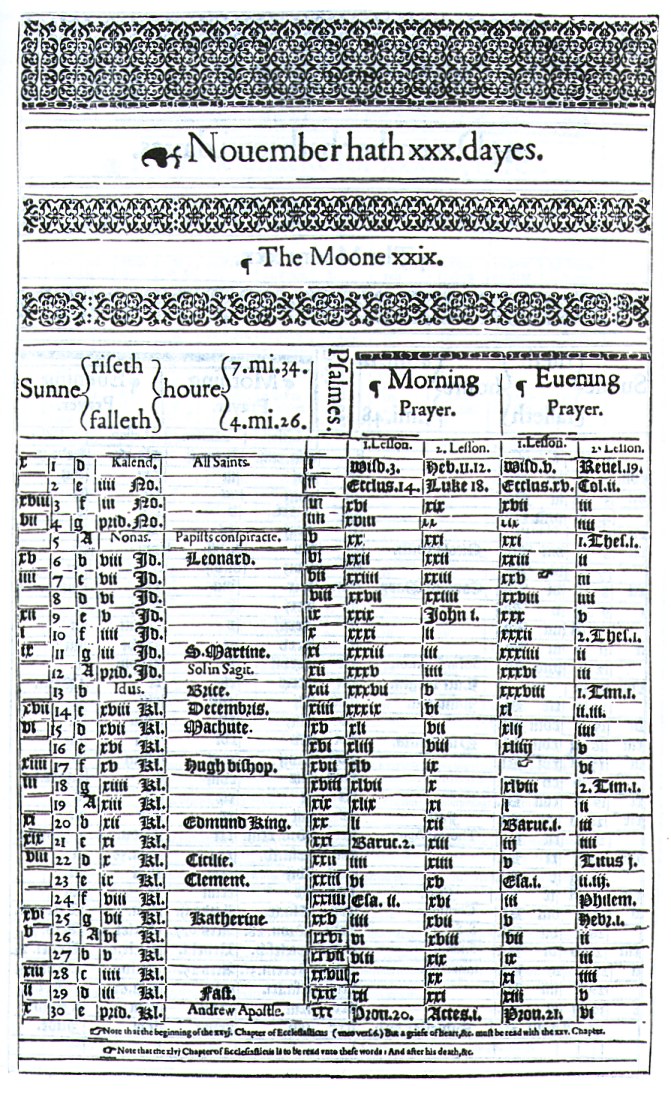
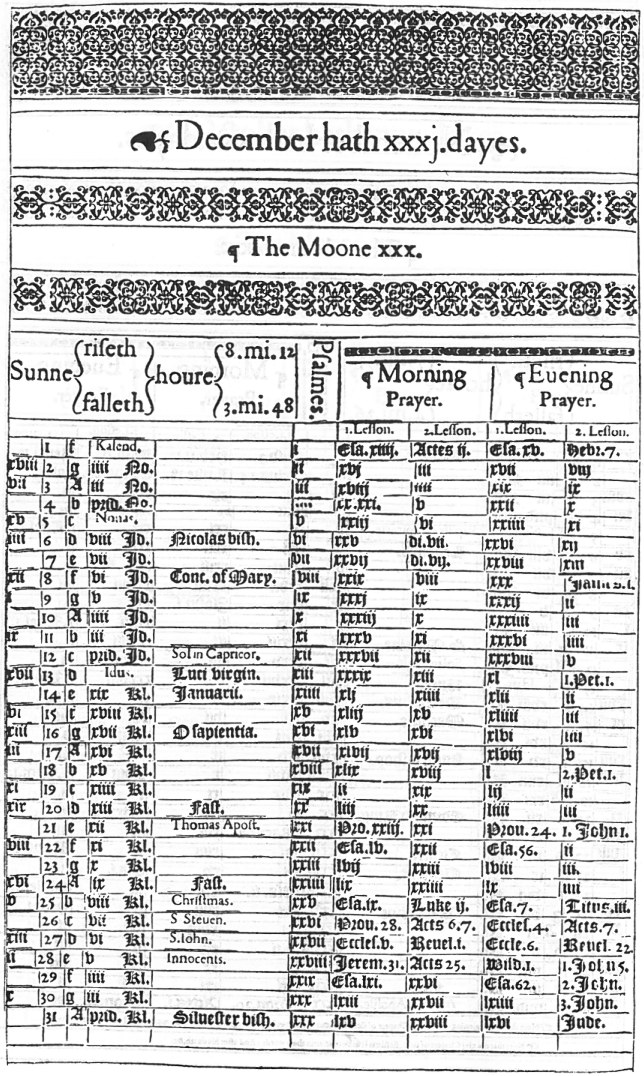
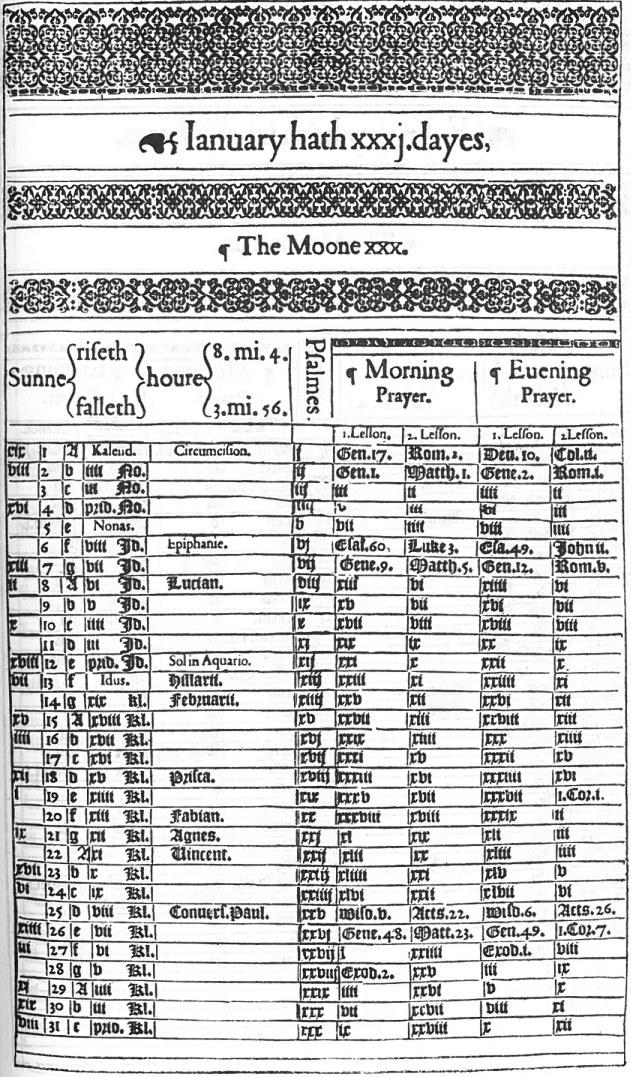
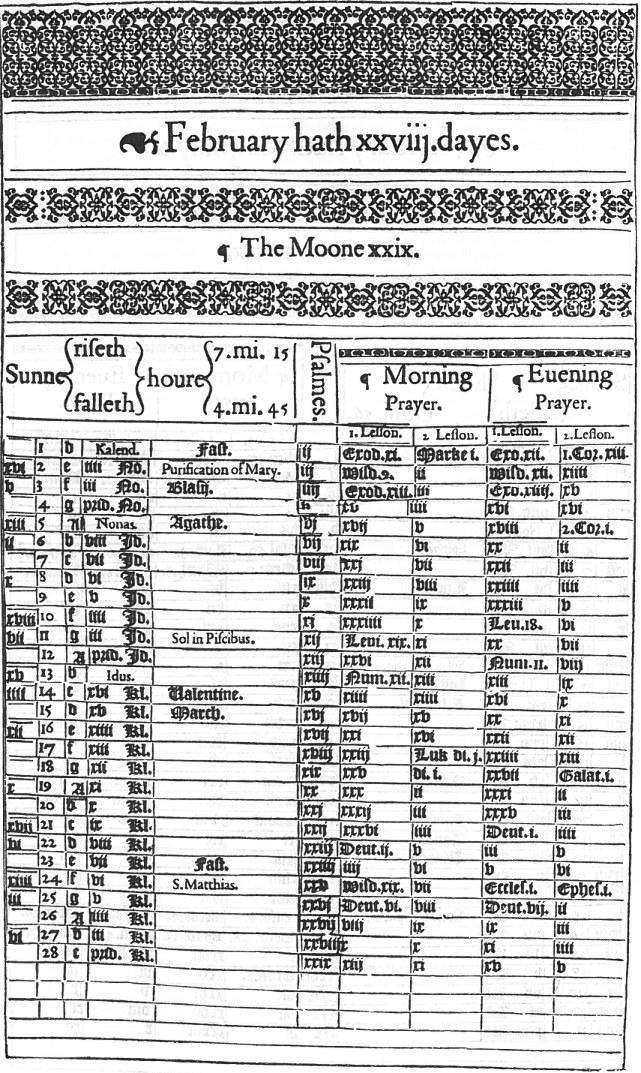
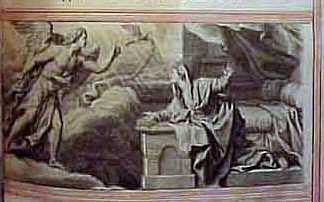 |
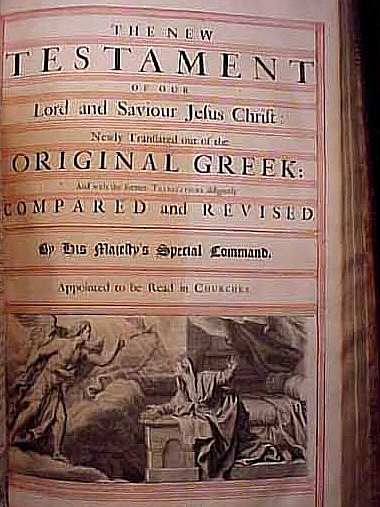
| This Beautiful graven image of the Annunciation of the Angle Gabriel to the blessed Virgin Mary,
graced the Title page of the New Testament in the 1717 Printing of the KJV. Click here to see the full Scan. This leaf is part of Part of my personal collection. |
Jan. 20 [St.] Fabian
Jan. 21 [St.] Agnes
Jan. 22 [St.] Vincent
Feb. 14 [St.] Valentine
Feb. 24 S. Matthias
Mar. 12 [St.] Gregorie [NOTE: A Pope of the Catholic Church]
Mar. 21 [St.] Benedict
Mar. 25 Annunciation of Mary
April 23 S. George
April 25 [St.] Mark the Evang.
MAY:
May 6 [St.] John the Evang.
JUNE:
Jun. 5 [St.] Boniface
Jun. 11 [St.] Barnabe
Jun. 24 [St.] John Baptist
Jun. 29 S. Peter Apostle
JULY:
July 1 Visitation of Mary
July 3 [St.] Martin
July 20 [St.] Margaret
July 22 [St.] Magdalen
July 25 S. James Apostle
July 26 [St.] Anne [NOTE: Mary's Mother]
Aug. 1 [St.] Lammas
Aug. 10 [St.] Laurence
Aug. 24 S. Barthol. Apostle
Aug. 28 [St.] Augustine
Sept. 1 [St] Cyles
Sept. 8 Nativity of Mary
Sept. 17 [St.] Lambert
Sept. 21 S. Mathew Apostle
Sept. 26 [St.] Cyplian
Sept. 29 [St.] Michael
Sept. 30 [St.] Jerome [NOTE: St. Jerome was the translator of of the official Catholic Bible, the "Latin Vulgate"]
Oct. 9 [St.] Denis
Oct. 13 [St.] Edward
Oct. 18 [St.] Luke Evang.
Oct. 26 [St.] Crispine
Oct. 28 [St.] Simon
Oct. 28 [St.] Jude
Nov. 1 All Saint
Nov. 11 S. Martine
Nov. 23 [St.] Clement [NOTE: A Pope of the Catholic Church]
Nov. 25 [St.] Katherine
Nov. 30 [St.] Andrew Apostle
Dec. 6 [St.] Nicolas birth
Dec 21 [St.] Thomas Apost.
Dec 26 S. Steven
Dec. 27 S. John
